Historic Tax Credits

$1.5 Million Federal

New Markets Tax Credits

$9.5 Million

Total Project Cost

$10.2 Million

Project Partner

Self-Help Ventures

Impact

Small Business Support

Historic Angier Avenue
History

Historic Angier Avenue

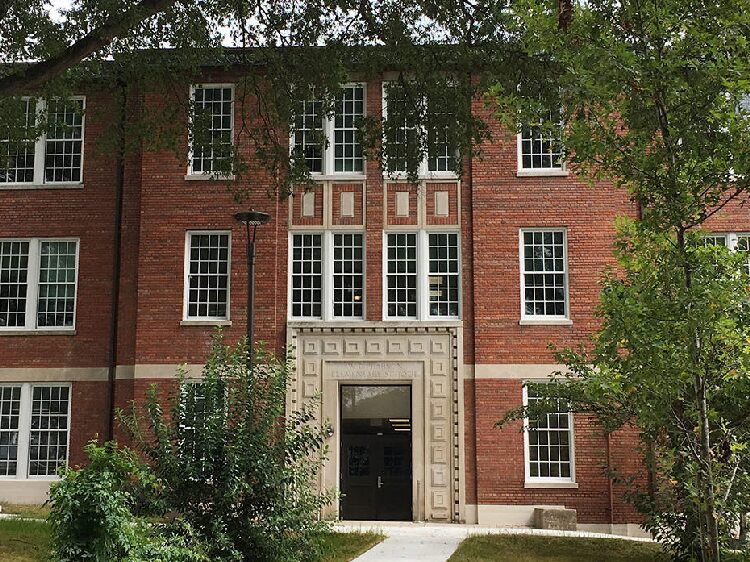
In the 1880s, the founding members of Angier Avenue Baptist held Sunday school classes out of a “small wooden structure known as the Oak Grove School.” At this time, East Durham had not yet been incorporated into the city of Durham. It was a separate town with its own officials and did not yet have electricity, running water, or paved streets. In search of a permanent location for the church, the founders decided that the intersection of Angier Avenue and Driver Street would be the location for their new church. It was completed in 1889 and lit with kerosene lamps and heated with coal-burning stoves. The sanctuary was further expanded in 1924 and remained a community fixture for nearly a century.

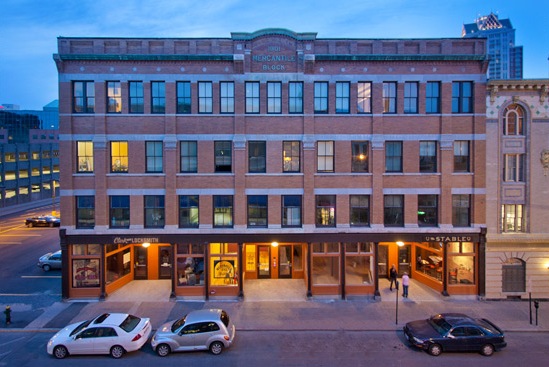
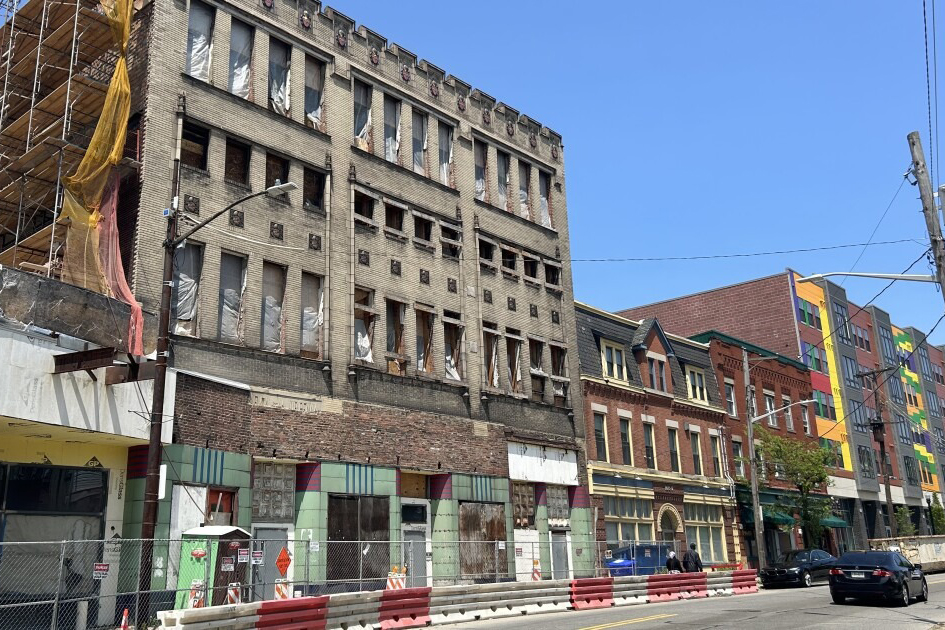
The project also includes the revitalization of three additional storefront buildings lining the central thoroughfare. They’ve hosted many local businesses since they were originally constructed in the 1920s but have been vacant or underutilized for years. The parish experienced declining memberships in recent years, and the building was purchased along with the neighboring buildings by Self-Help Credit Union, a locally headquartered member-owned mission-driven credit union, nonprofit loan fund, and policy advocacy organization.

A Hub of Support
Revitalization Efforts

A Hub of Support

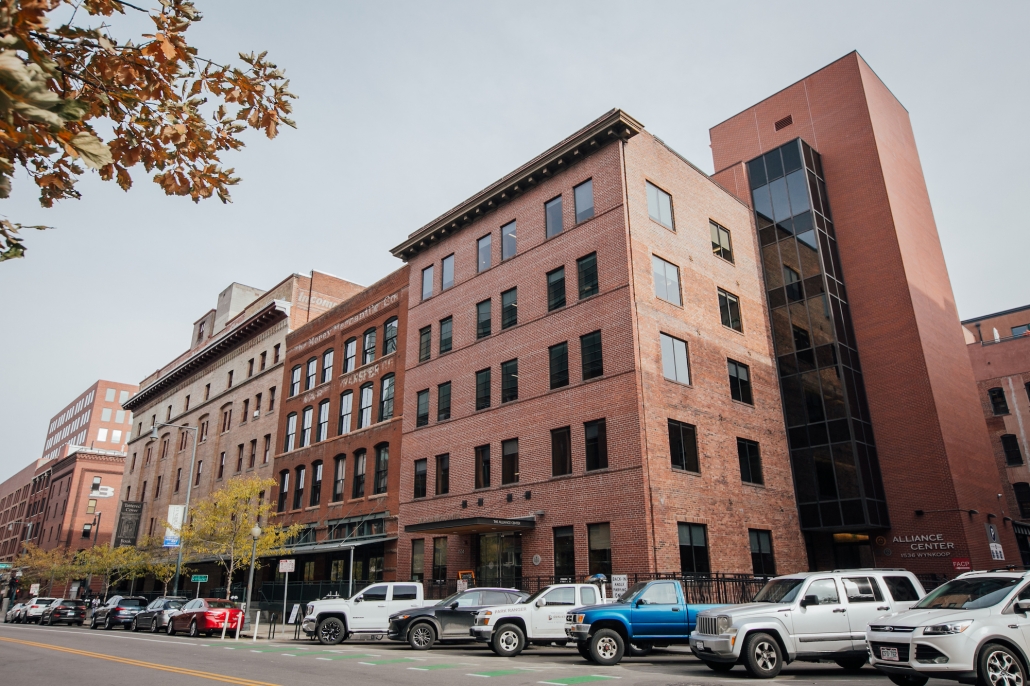
The former church and collection of buildings are now the Angier Business & Children’s Center (ABC), a hub of support for the children and families of East Durham, as well as a space for local businesses and nonprofits to grow. The five historic buildings representing 45,000 square feet of office and retail space are now leased to businesses owned or nonprofits run by community members.

Community Impact

Supporting Children and the Community

The creation of the ABC Center provided new space for the Durham Children’s Initiative (DCI) and All my Children to grow and better serve their predominantly low-income community. DCI was able to roughly double the number of children and families they support on an annual basis, bringing the number to around 2,000. The revitalized commercial spaces have been home to a variety of businesses

that are desperately needed in the community including independent pharmacies and affordable office and retail space for local entrepreneurs. In total, the project created 40 construction jobs and 120 permanent jobs in the community and helped to revitalize the historic East Durham business district.

2,000

Individuals Supported by DCI Annually

45,000 sq ft

of Leasable Space

40

Construction Jobs Created

120

Permanent Jobs Created

NTCIC & Progress

Economic Impact

The ABC Center was made possible, in part, by NTCIC through an equity investment in the $1.5 million in federal Historic Tax Credits (HTC) generated by the project as well as a $9.5 million New Markets Tax Credit (NMTC) allocation.

Want to Discuss Your Next Project? Talk With Our Team Today.

We bring clear insight, deep experience, and strategic focus to every project, whether you're structuring complex capital or shaping long-term, legacy-driven development.

Name(Required)
Want to Discuss Your Next Project? Talk With Our Team Today.

Historic Tax Credits

$3.7 Million Federal

New Markets Tax Credits

$4 Million

Total Project Cost

$27 Million

Project Partner

The Model Group

Impact

Affordable Housing
Small Business Support
Economic Development

Over-The-Rhine
History

Over-The-Rhine

Over-The-Rhine (“OTR”) is one of the country’s largest, most intact, nineteenth-century urban historic districts and is believed to contain the nation’s largest contiguous collection of nineteenth-century Italianate Architecture. While the specific details of the eight buildings included in the Jobs Cafe at Findlay Market project aren’t fully known, most of OTR’s ornate brick buildings were originally built by German immigrants from 1865 to the 1880s.

The neighborhood has suffered from significant neglect in preserving the historic heritage of the community and its economic condition. Since 1930, approximately half of OTR’s historic buildings have been destroyed, and in 2006, the National Trust for Historic Preservation named OTR one of the eleven most endangered historic places in America.

Transforming a Neighborhood
Revitalization Efforts

Transforming a Neighborhood

The Model Group, one of the most experienced developers in Cincinnati, led the transformation efforts of these historic scattered buildings into connective services that help nurture new businesses, grow the housing stock, and further revitalize the nearby Findlay Market. These transformations become the catalysts for or the continued momentum of broader neighborhood revitalization strategies.

The Model Group began acquiring the scattered historic properties over a two year period starting in 2014 with a vision of a vibrant, mixed-use, and mixed-income Market District anchored by Findlay Market, Ohio’s oldest continually operated public market.

Today, the Jobs Café project has created a mixture of  nearly 70 mixed-income residential units, as well as an expansion on the greater Jobs Café at Findlay Market project, a social enterprise restaurant concept that provides job training and placement for restaurant industry positions.

Several of the restored storefronts are leased back to graduates of the existing Findlay Kitchen incubator program at below-market rates, so small businesses can grow to scale and maintain their own street-facing storefronts.

Community Impact

Nurturing a Community

The eight mixed-use apartment buildings restored by this development include a mixture of residential and commercial elements, helping to transform this community into a true live/work environment.

The residential component created housing opportunities for individuals and families at a mix of income levels; 30% of the units are restricted to households earning 120% of area median income; 26% are restricted to those earning 80% of area median income; and the remaining 44% are market-rate.

The Jobs Café is part of the greater Jobs Café at Findlay Market project, and provides job training and placement for positions that pay a livable wage with benefits and offer advancement opportunity within the local restaurant industry. This program targets low-income persons and residents of the surrounding severely distressed low-income community. It is a partnership between CityLink Center, an integrative social services nonprofit devoted to breaking the cycle of poverty in Cincinnati, and the Corporation for Findlay Market. The Jobs Café trains and places 75-100 individuals annually.

The Corporation for Findlay Market leases several retail storefront spaces and subleases back to graduates of their existing Findlay Kitchen incubator at below market rates as part of a small business development program. Findlay Kitchen is a non-profit organization that supports local new and existing food entrepreneurs by providing affordable access to commercial-grade kitchen equipment and ample storage space, all within a licensed kitchen facility adjacent to the Project. Findlay Kitchen partners with external programs and organizations to provide the necessary training, mentorship, and resources to aid business growth. Findlay Kitchen also serves as a conduit to wholesale and institutional customers, helping local entrepreneurs to get their products in more places.

Other retail tenants include local small businesses and a restaurant that staffs with graduates of the Jobs Café program. The office space is leased in its entirety by a local architecture firm that was already located adjacent to the Project, but it required additional space to grow its business.

68

Housing Units

56%

Income Restricted

75-100

Jobs Cafe Participants Annually

22,687 sq ft

of Commercial Space

NTCIC & Progress

Economic Impact

Jobs Cafe at Findlay Market was made possible, in part, by NTCIC through an equity investment in the $3.7 million in federal Historic Tax Credits (HTC) generated by the project as well as a $4 million New Markets Tax Credit (NMTC) allocation.

Want to Discuss Your Next Project? Talk With Our Team Today.

We bring clear insight, deep experience, and strategic focus to every project, whether you're structuring complex capital or shaping long-term, legacy-driven development.

Name(Required)
Want to Discuss Your Next Project? Talk With Our Team Today.

Historic Tax Credits

$18.2 Million Federal
$5 Million State

New Markets Tax Credits

$5 Million

Total Project Cost

$110 Million

Project Partner

Buffalo Urban Development Corporation

Impact

Workforce Development

Niagara Machine and Tool Works
History

Niagara Machine and Tool Works

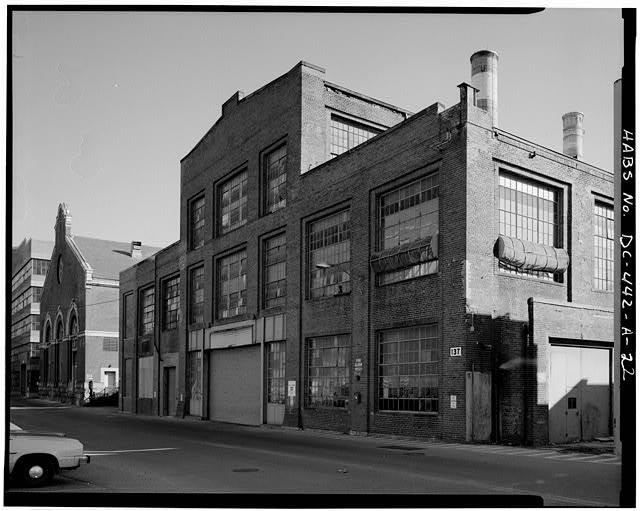
The Project was originally home to Niagara Machine and Tool Works (NM&TW) that built stamping presses and press brakes for sheet metal. Its equipment was shipped to automobile and appliance manufacturers worldwide. NM&TW’s facility consists of three distinct contributing buildings related to specific functions of the manufacturing facility and the factory evolution: the Headquarters and Main Factory, built in multiple building campaigns from 1910-1981, the Pattern Shop, built in 1913, and the Metal Fabricating Plant, built in 1953. The Headquarters, the Main Factory, and the Pattern shop are what makeup Northland Central. The multiple building campaigns consist of a continuous series of irregular masses and volumes that were added as capacity, technology, and manufacturing needs were required. Depending on the time construction took place, the spaces vary in style and design from utilitarian industrial, ceremonial, and purely utilitarian. NM&TW was sold to a London-based international manufacturing company in 1992 and most of the company’s manufacturing activities ceased around 1999 and the buildings remained vacant.

Supporting the Local Economy
Revitalization Efforts

Supporting the Local Economy

The 683 Northland development transformed the historic Niagara Machine and Tool Works complex through major stabilization, remediation, and redevelopment efforts. Anchored by the Northland Workforce Training Center, part of New York’s $1 billion “Buffalo Billion” initiative, the project serves as the centerpiece of revitalization in Buffalo’s 35‑acre Northland Corridor. This investment responds to a growing need in the region’s manufacturing sector, which employs over 66,000 people but faces more than 20,000 projected job vacancies over the next decade. The rehabilitated 240,000‑square‑foot facility now provides essential space for training a skilled workforce and supporting innovation-driven manufacturing and energy businesses.
Community Impact

Providing a Path Forward

683 Northland houses two co-located training facilities: The Workforce Training Center for Advanced Manufacturing and Electric Utilities and the Utility of the Future & Clean Energy Training Center, to increase the number and quality of local candidates prepared for energy and advanced manufacturing careers. Northland provides for-credit, certificate, and degree programs as core offerings through its educational partners, SUNY Alfred State College and SUNY Erie Community College, incorporating evidence-based placement strategies, such as co-ops, apprenticeships and internships, and an emphasis on permanent employment.

Northland Workforce Training Center (“WTC”) is uniquely designed to reduce all the major barriers that prohibit students from enrolling and completing post-secondary education such as transportation, childcare, academic readiness, and affordability. Northland Workforce Training Center is committed to providing for-credit education at little to no cost to all individuals with financial needs and supporting students throughout the process by providing intensive wraparound and supportive services.

The WTC hosts roughly 300 annual participants, of which at least 90% are low-income people or residents of the surrounding low-income community. At the WTC, students train for entry-level operator jobs in

machinery, welding, and other positions. Program managers help graduating students secure unionized positions at the local electric utility and other manufacturing companies. The WTC targets high school graduates, current workers who seek to improve their skills, and members of high-distress communities. It also works in partnership with local community and faith-based organizations and public agencies to coordinate wrap-around services, such as GED-support, transportation assistance, child-care assistance, and other soft skills for participants in the training program.

Buffalo Manufacturing Works (“BMW”), one of the building tenants, partners with at least 100 businesses annually. These partnerships allow businesses working with BMW to deliver better products, grow, and better compete. The project created and retained 191 quality jobs paying the City of Buffalo’s Living wage with benefits at financial closing.

Buffalo Urban Development Corporation, the project sponsor, pledged to recruit up to 20 individuals into the Buffalo Building Trades Pre-Apprenticeship Program for the City of Buffalo. The pre-apprentices are provided paid instruction in a trade of their selection and a direct entry into selected trade upon completing the program.

300

Annual Participants

90%

Low Income Individuals

100

Business Partnerships Annually

191

Quality Jobs Created Annually

20

Individuals in Buffalo Apprenticeship

NTCIC & Progress

Economic Impact

The Northland Workforce Training Center was made possible, in part, by NTCIC through an equity investment in the $18.2 million in federal Historic Tax Credits (HTC) and $5 million in state Historic Tax Credits (HTC) generated by the project as well as a $5 million New Markets Tax Credit (NMTC) allocation.

Want to Discuss Your Next Project? Talk With Our Team Today.

We bring clear insight, deep experience, and strategic focus to every project, whether you're structuring complex capital or shaping long-term, legacy-driven development.

Name(Required)
Want to Discuss Your Next Project? Talk With Our Team Today.

Historic Tax Credits

$900,000 Federal

New Markets Tax Credits

$1.2 Million

Total Project Cost

$5.7 Million

Project Partner

Shiawassee Chamber of Commerce

Impact

Rural Investment

Constructed in 1915
History

Constructed in 1915

The Owosso Michigan National Guard Armory was constructed in 1915. During World War I, Company M deployed from the Armory for France. These soldiers took part in the Battle of Argonne-Seuse and were among the first American troops to set foot on German soil during the war. By mid-century, the Armory was home to the 144th National Guard unit. In addition to housing the 144th, the Armory served as a community space by hosting debates, prize fights, weddings, and artists including Grand Funk Railroad and Alice Cooper. In 2007 the 144th left the nearly century-old building for a modern facility and the Armory has been vacant since. The Armory is located in the Owosso Downtown Historic District.

Supporting the Local Economy
Revitalization Efforts

Supporting the Local Economy

The Owosso Armory project is led by the local community and designed to catalyze economic development. The idea for the project originated from within the Shiawassee Chamber of Commerce whose mission is to stimulate economic development in Owosso and Shiawassee County. The goal of the Armory is to create and spin out new businesses into the community by offering a range of office spaces including turnkey office spaces, cubicle-like spaces, and individual desks. Businesses who relocated to the Armory include the Shiawassee Chamber of Commerce (Chamber) and the Shiawassee Economic Development Partnership (SEDP), as well as nine other local business owners.

Community Impact

By the Community, for the Community

The project has received overwhelmingly strong support from the City of Owosso financially and organizationally. It was approved for a Brownfield Reimbursement Agreement that functions in a manner similar to a tax abatement; a “call to action letter” generated $12,000 in annual sponsorship income in under a month; the Michigan Strategic Fund provided a $1,402,000 grant under its Michigan Community Revitalization Program; and letters of support have been provided by Owosso Mayor Christopher T. Eveleth and State Rep. Ben Frederick of the 85th District.

The Armory serves as a hub to encourage small business development

and entrepreneurship. The Chamber, SEDP, and Kettering University made contributions to hire a part-time small business development counselor dedicated to supporting 70 people and helping start-up businesses secure over $700,000 in capital. The Chamber also hosts numerous networking and professional development to support young professional and members of the business community. Additional events at the community space include a winter farmer’s market, nutrition classes, dance classes, and a micro-business development class for teenage entrepreneurs.

NTCIC & Progress

Economic Impact

Without the capital made possible with the Historic and New Markets tax credits, this project would not have been possible. Prior to receiving tax credit commitments, the development team had exhausted all options in assembling public and private sources. The relatively small size of the project precluded the project from favorable historic tax credit pricing on a stand-alone basis. Despite the range of sources including funds from the Michigan Strategic Fund and a local bank, a financing gap persisted as the loan-to-value

calculation did not support additional debt financing for the unique office use and the sponsor had modest means to close the gap.

The Owosso Armory was made possible, in part, by NTCIC through an equity investment in the $900,000 in federal Historic Tax Credits (HTC) generated by the project as well as a $1.2 million New Markets Tax Credit (NMTC) allocation.


Want to Discuss Your Next Project? Talk With Our Team Today.

We bring clear insight, deep experience, and strategic focus to every project, whether you're structuring complex capital or shaping long-term, legacy-driven development.

Name(Required)
Want to Discuss Your Next Project? Talk With Our Team Today.

Historic Tax Credits

$1.4 Million Federal

New Markets Tax Credits

$10 Million

Total Project Cost

$11.7 Million

Project Partner

Alembic Community Development & St. Rose Community Development Corporation

Impact

Education Access, & more

First Built in 1880
History

First Built in 1880

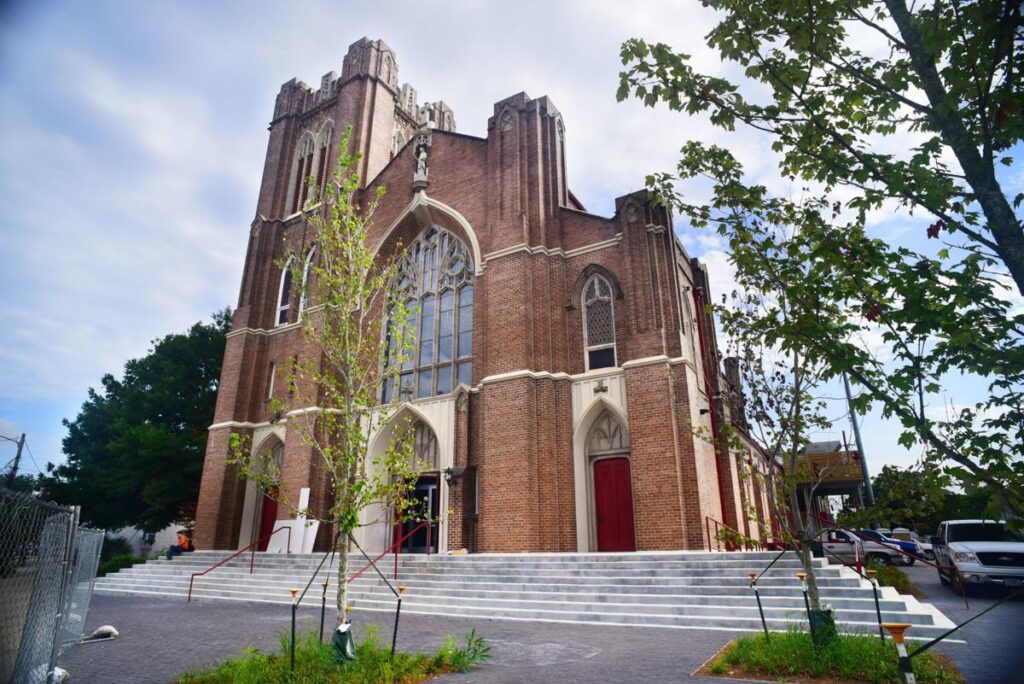
The Rose Collaborative Project consists of the adaptive reuse of the former St. Rose de Lima Catholic Church and two adjacent schoolhouses in the Treme neighborhood of New Orleans into a community-serving arts, education, and entrepreneurship hub.

The church portion of the Project was originally built by the St. Rose de Lima congregation in 1880. The original church building was destroyed by a fire in 1913 but was rebuilt in 1915. The Catholic Church deconsecrated the property following Hurricane Katrina and the church remained vacant until acquired by Rose CDC and Alembic in 2016.

The schoolhouse portions of the property were built following the 1915 reconstruction of the Church. The first schoolhouse was built in 1925 and is similar in size and scale to the church. The second schoolhouse was built in 1938. The Orleans Parish School Board occupied the schoolhouses until Hurricane Katrina forced them to abandon the property.

From Church to Cultural Hub
Revitalization Efforts

From Church to Cultural Hub

The Project transformed the vacant St. Rose de Lima Catholic Church building and two schoolhouses into a cultural hub for the arts and education featuring a performing arts venue, a non-profit school, and small business incubation and co-working space.

Community Impact

Creating Accessible, Skilled Positions

During post-Katrina planning efforts, community leaders recognized a need for targeted investment in the arts and education and conceived the Rose Collaborative. Throughout its planning process, the development team worked extensively with community stakeholders to implement a shared community vision for the adaptive reuse of these historic properties.

Subsidy generated by the NTCIC investments allow for every project tenant to provide financial assistance to community members and program participants through tuition assistance, grants, and below market rents.

The Project’s performing arts venue allows the Southern Rep Theatre to expand its “School to Stage Pipeline” arts education to low-income communities. The “School to Stage Pipeline” programming includes

in-school intensive activities, afterschool workshops, summer camps, and apprenticeships. The Waldorf School increased the number of students it served from 150 to approximately 225 students at the Project.

To accommodate various tenant scheduling constraints, three temporary community-based tenants occupied the Waldorf School’s ultimate space during the Project’s first year. Operation Spark, whose mission is to help jumpstart software development careers for low-opportunity individuals, operated trainings at the Project serving 140 adults and youth. The New Orleans Career Center helped at least 120 high school students earn industry-based credentials and certifications. New Harmony High School, an ecology-focused high school, also opened its doors.

225

Students Served

140

Individuals Trained in Software Development

120

Students Earn Professional Credentials

23,000 SQ FT

Of Educational Space

120

Seats in Main Stage Theater

NTCIC & Progress

Economic Impact

The Rose Collaborative was made possible, in part, by NTCIC through an equity investment in the $1.4 million in federal Historic Tax Credits (HTC) generated by the project as well as a $10 million New Markets Tax Credit (NMTC) allocation.

Want to Discuss Your Next Project? Talk With Our Team Today.

We bring clear insight, deep experience, and strategic focus to every project, whether you're structuring complex capital or shaping long-term, legacy-driven development.

Name(Required)
Want to Discuss Your Next Project? Talk With Our Team Today.

Historic Tax Credits

$6 Million Federal
$10 Million State

Investment Tax Credits

$6 Million

Total Project Cost

$52 Million

Project Partner

Sustainable Community Associates & Friends of Mendelsohn

Impact

Education Access, Sustainability, & more

History

World-Renowned Architect Designs House of Worship

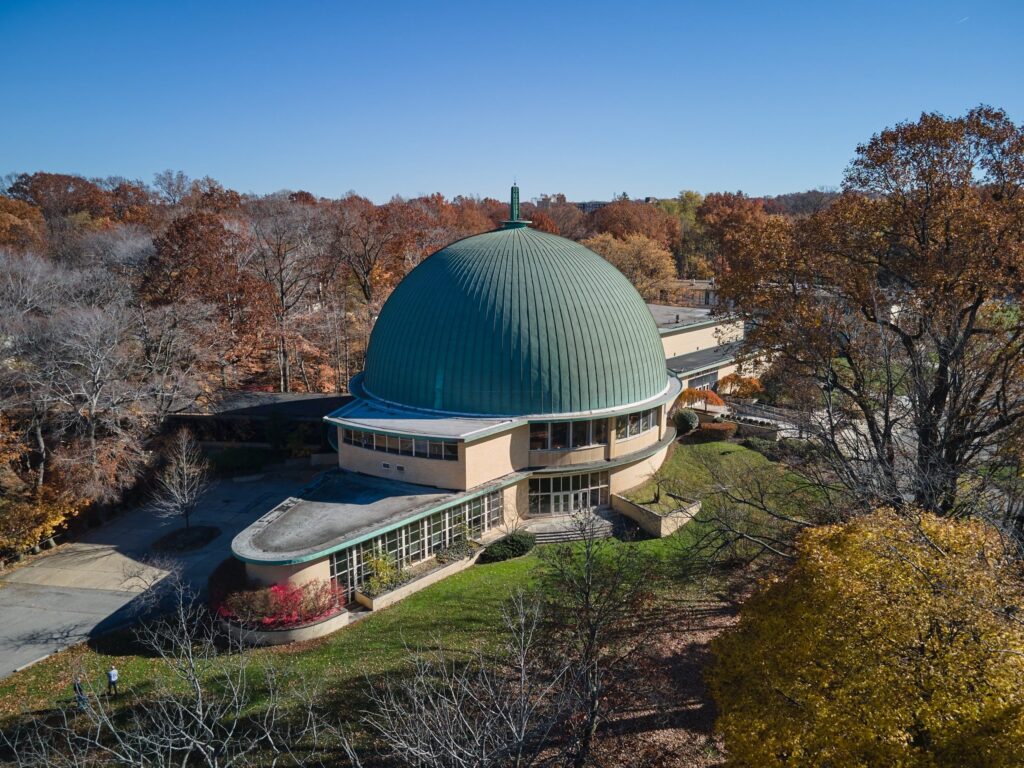
Park Synagogue was designed by world-renowned architect Eric Mendelsohn as a new home for the Anshe Emeth Beth Tefilo Congregation following the community’s move to Cleveland Heights after World War II. Conceived as a modern synagogue integrating worship, education, and community life, the building is widely regarded as one of the most important examples of modern religious architecture in the United States. Its iconic copper-clad dome and sculptural concrete forms reflect Mendelsohn’s Neo-Expressionist design philosophy. Park Synagogue served as the congregation’s primary place of worship and gathering for decades.

After the congregation established a new facility in Pepper Pike in 2021, the historic building entered a new chapter, led by a development team that includes Oberlin College graduates committed to preserving Mendelsohn’s vision while reimagining the site for arts, education, and community use. 

Center for Education & Community
Revitalization Efforts

Center for Education & Community

The rehabilitation of the 70,000 square foot Park Synagogue transforms a former single congregation house of worship into a multitenant arts, education, and community campus while preserving its most significant historic spaces. The restored building will host Oberlin College’s satellite arts program, Park Arts performance and event spaces, and Colorful Minds Studio, expanding access to education, cultural programming, and community services. The sanctuary and chapel are preserved for religious observance and lifecycle events, maintaining continuity with the building’s original purpose. The vision for the project reimagines and extends Eric Mendelsohn’s original center for education and community, building on the congregation’s legacy of social engagement by opening the site to broader public use while preserving a place for Jewish life. Rehabilitation work prioritizes long-term sustainability, including a geothermal heating and cooling system and major improvements to the building envelope to improve energy performance.

Community Impact

A New Era for the Synagogue

During operations, the project’s tenants are anticipated to create and retain a total of 30 quality fulltime equivalent permanent jobs, many of which are accessible to residents of low-income communities. In addition, the project is projected to support 189 construction jobs during the development period. Once fully operational, the

project is projected to serve over 1,200 people annually across its arts, education, childcare, and community programs, over half of which are anticipated to be low-income people or residents of low-income communities, reflecting the project’s focus on inclusive access and community serving uses.  

30

Jobs Created & Retained

50

Oberlin Students Supported Annually

40

Artists Supported Annually

1,000

Parks Arts Students Supported Annually

28

Acres of Green Space Enhanced

NTCIC & Progress

Economic Impact

NTCIC supported the redevelopment of Park Synagogue by providing an equity investment in the $16 million in combined State and Federal Historic Tax Credits generated through the preservation and rehabilitation of the nationally significant landmark. In addition, NT Solar, a subsidiary of NTCIC, financed the $6.0 million in Investment Tax Credits generated by the project’s geothermal energy systems, marking the first time NTCIC and NT Solar provided tax credit financing within the same project. 

The project received substantial public and philanthropic support, reflecting broad community commitment to the redevelopment. Public financing includes State and County Brownfield grants, a Strategic Community Investments grant, County ARPA funding,

a State Cultural Facilities Capital grant, and grants from Cleveland Heights and Cuyahoga County. The project is further supported by approximately $12.4 million in philanthropic contributions raised through a capital campaign. 

NTCIC sourced the historic tax credit investment capital, underwrote the transaction, and supported closing efforts. NT Solar served as the Investment Tax Credit investment sourcer and underwriter, provided financial closing services, and will serve as ITC asset manager during the compliance period. NTCIC will also serve as historic tax credit asset manager, providing construction monitoring and ongoing oversight to support long term preservation and community outcomes. 
Want to Discuss Your Next Project? Talk With Our Team Today.

We bring clear insight, deep experience, and strategic focus to every project, whether you're structuring complex capital or shaping long-term, legacy-driven development.

Name(Required)
Want to Discuss Your Next Project? Talk With Our Team Today.

Historic Tax Credits

$8.13 Million Federal
$4.95 Million State

New Markets Tax Credits

$5 Million

Total Project Cost

$43.8 Million

Project Partner

City of Middletown

Impact

Childcare Services, Social Services

A Regional Railroad
History

A Regional Railroad

Constructed between 1892 and 1893, the New York, Ontario & Western Railway Station stands as one of Middletown’s most significant historic landmarks. Designed in the Richardsonian Romanesque style by prominent railroad architect Bradford Lee Gilbert, the station served both as a passenger terminal and as the principal offices of the Ontario & Western Railway. Expansions in 1904 and 1920, designed by local architect David Canfield, reflected the railroad’s growth and introduced new architectural elements while preserving the building’s commanding presence.  

For more than six decades, the station played a central role in Middletown’s economic and civic life, anchoring the city’s connection to regional transportation networks. After passenger service ended in 1957, the building saw a series of adaptive uses before falling vacant following a fire in 2004. Despite years of deterioration, the station has retained its defining historic character and remains a powerful symbol of Middletown’s railroad heritage.

The redeveloped facility will provide larger classrooms with accessible bathrooms, space for disability services, adequate storage, private offices and meeting rooms, a separate parent area, a large-group training space, an indoor gross-motor space, and ADA-compliant access throughout. Outdoor improvements are anticipated to include three preschool environments: an accessible playground, an active playground, and an outdoor classroom with a tricycle track, art studio, and dramatic play stage.

Head Start at the Station
Revitalization Efforts

Head Start at the Station

Once complete, the historic Ontario & Western Railway Station will consolidate Head Start and other childcare programming operated by the Regional Economic Community Action Program (RECAP) that is currently spread across two leased locations in Middletown. Today, RECAP serves 136 Head Start children in facilities housed within active churches that cannot effectively support the needs of children, families, or staff. These two locations will be relocated and expanded at the Project, enabling RECAP to serve additional students while improving the quality of its services. 

The redeveloped facility will provide larger classrooms with accessible bathrooms, space for disability services, adequate storage, private offices and meeting rooms, a separate parent area, a large-group training space, an indoor gross-motor space, and ADA-compliant access throughout. Outdoor improvements are anticipated to include three preschool environments: an accessible playground, an active playground, and an outdoor classroom with a tricycle track, art studio, and dramatic play stage.

Community Impact

Filling a Gap

The Project will significantly expand and strengthen early childhood and family services in Middletown by consolidating RECAP’s two existing Head Start locations into a single, purpose-built facility. Currently, RECAP serves 136 children ages 3–5 across leased, suboptimal sites. At the Project, RECAP will increase preschool enrollment to 146 children annually and add two new programs: one serving infants and toddlers ages 6 weeks to 3 years with an estimated enrollment of 40 children, and another serving children ages 5 and older with an estimated enrollment of 36 children. 

The new facility will allow RECAP to provide full day Head Start programming to 100% of children ages 3–5, compared to current

operations where 62 children are enrolled in part day sessions and 74 in full day sessions. All enrolled children will receive additional services, including early childhood substance abuse prevention, in class mental health support, vision and health screenings, and developmental screening. 

The Project will also expand services for families, increasing adult education and asset building services, such as financial education and debt counseling, from 124 to 135 adults annually. Onsite operations will support about 73 fulltime equivalent jobs (41 retained and 32 created), with 99% of positions paying a Living Wage or higher and offering comprehensive benefits.
222

Children Served Annually

135

Families Served Annually

26,400

Square Feet of Historic Space Restored

73

Jobs Created & Retained

90%

Population Served from Low-Income Communities

NTCIC & Progress

Financing

NTCIC provided a $5 million New Markets Tax Credit allocation, as well as an equity investment in the $13 million federal and state Historic Tax Credits generated by the Project. These investments supported the rehabilitation of the Ontario & Western Railway Station and its conversion into a community serving childcare facility. 

In addition to NTCIC’s NMTC allocation, the Project leveraged an additional $7 million in New Markets Tax Credit allocation from Empire State New Market Corporation, as well as more than $30.05MM from the City of Middletown which included cash on hand, bond proceeds, ARPA funds, and $7.9MM in NY state agency

grants, reflecting strong local and statewide support for the redevelopment.  

NTCIC served as the federal NMTC allocatee and acted as the federal and state Historic Tax Credit investment sourcer, underwriter, and closer. NTCIC also serves as the asset manager for the New Markets and Historic Tax Credits investments, and fund manager for the Historic Tax Credit investments, providing ongoing oversight and coordination across multiple financing sources to support the Project’s long-term success. 
Want to Discuss Your Next Project? Talk With Our Team Today.
We bring clear insight, deep experience, and strategic focus to every project, whether you're structuring complex capital or shaping long-term, legacy-driven development.

Name(Required)
Want to Discuss Your Next Project? Talk With Our Team Today.

Federal Historic Tax Credits

$6.5 Million

New Markets Tax Credits

$10 Million

Total Project Cost

$47.4 Million

Project Partner

Cleveland Institute of Art

Impact

Education Access

History

First Ford Factory Outside Detroit

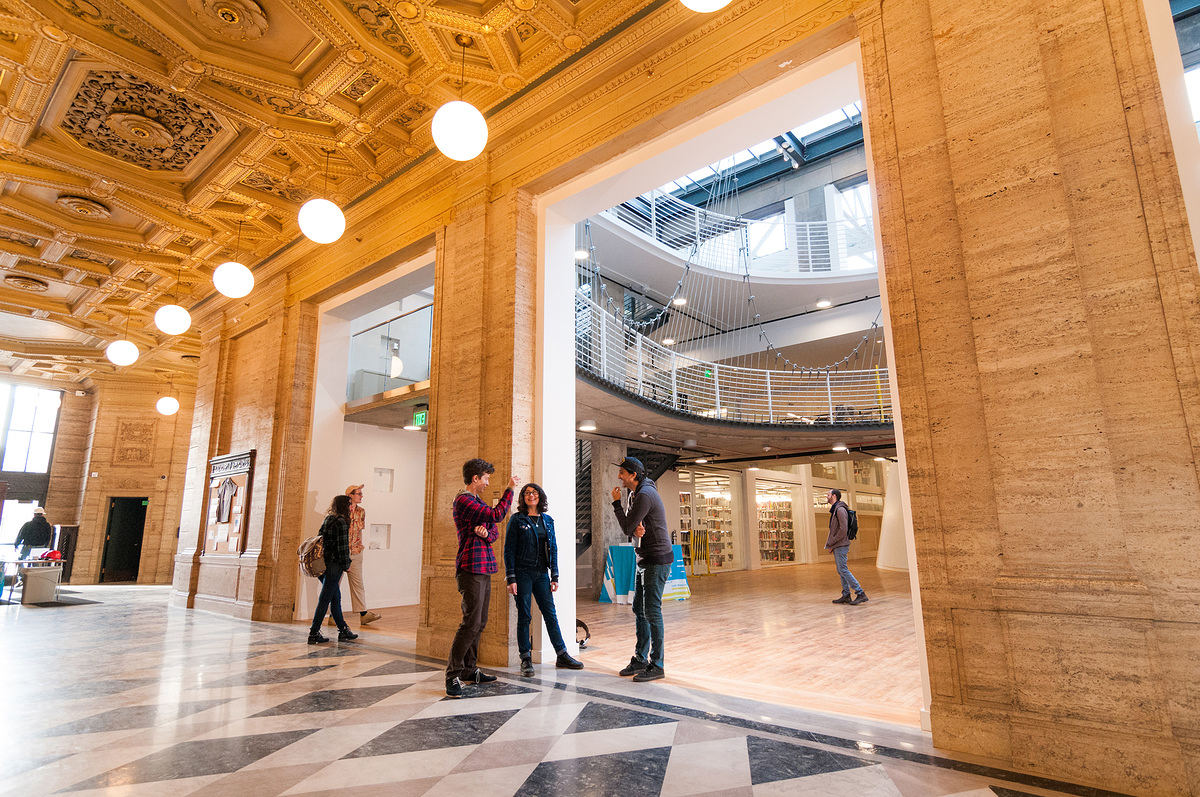
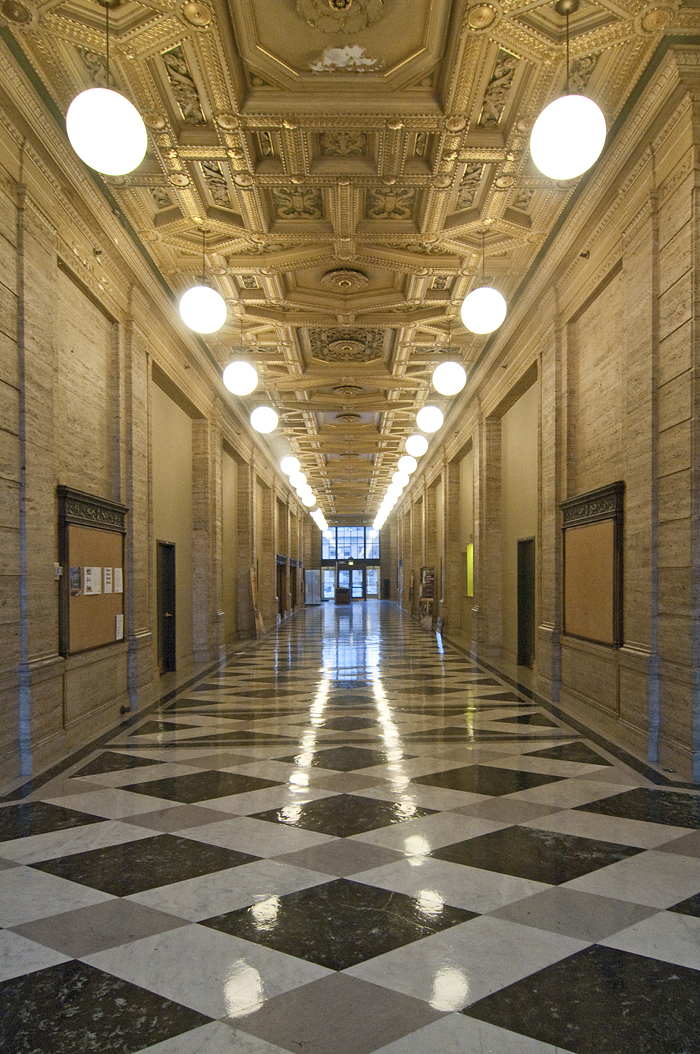
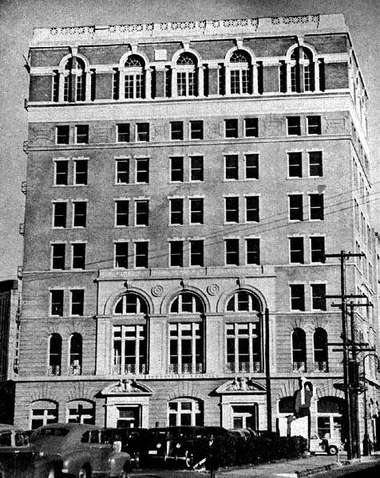
Designed by Albert Kahn, the famed “architect of Detroit,” the McCullough Center was Ford’s first assembly plant outside of the Motor City. In its 1920s heyday, hundreds of Model T’s rolled off its lot every day. But after Ford closed the plant in 1932, the building foundered for decades, serving as a sales office, a warehouse, and office space. By the time Cleveland Institute of Art (CIA) acquired the iconic 1915 building in 1981, it was already in need of considerable renovation, if not an outright overhaul.

Due to cost constraints, however, the Center’s full potential as a hub of artistic endeavor was left unrealized for 25-plus yearsDuring this time, CIA’s campus was split between two buildings separated by a half mile of parking lot – a drab, deadening asphalt gulf that students dubbed “the Beach.”

Developing 'The Center'
Revitalization Efforts

Developing 'The Center'

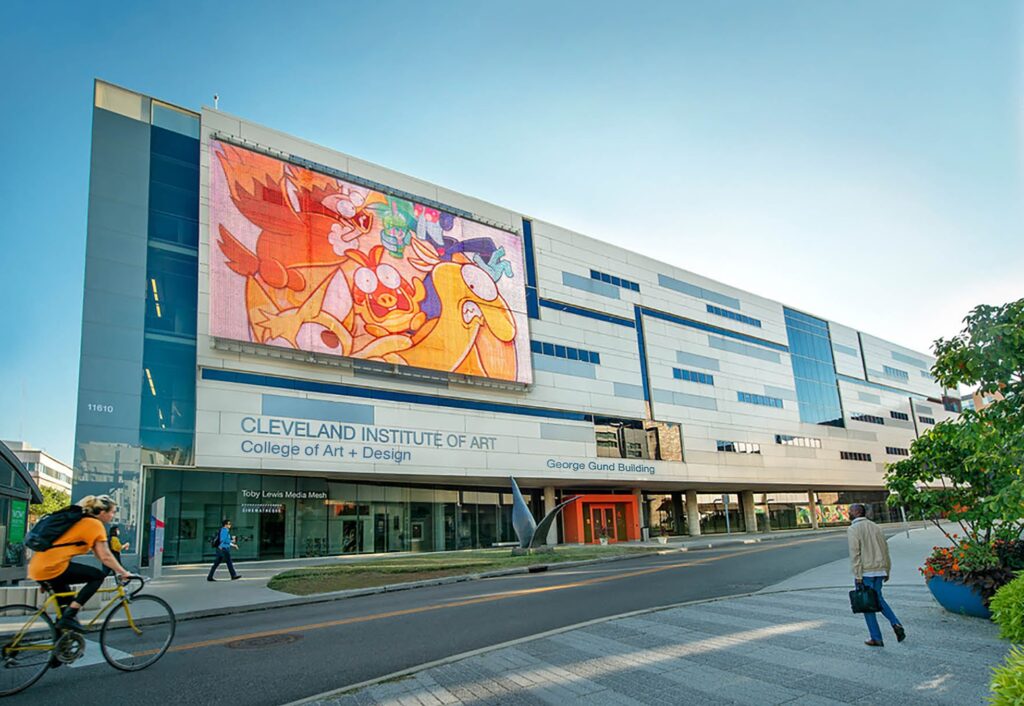
More than a century after it first opened its doors, the 250,000 square foot space in downtown Cleveland is giving young artists, designers, filmmakers, photographers, and coders a unique, adaptable space to hone their crafts, while helping to revitalize an entire Cleveland neighborhood. In 2015, the revived and expanded Center opened its doors with revamped galleries, additional classrooms accommodating CIA’s variety of aesthetic disciplines, a new library, a large atrium connecting the old and new wings, and individual creative studios for each student.

The new Center projects student art on large screens outside the complex, allowing the neighborhood to enjoy some of the innovative and dramatic creations by CIA students. It also boasts the Peter B. Lewis Theater, a state of-the-art 4K cinema complex to house CIA’s long-running and nationally recognized Cinematheque theater, which shows beloved classics, arthouse favorites, and new programming to students and members of the public alike.

Impact

Financing & Community Impact

NTCIC provided a New Markets Tax Credit allocation of $10 million and an equity investment in the $6.5 million of federal Historic Tax Credits generated by the project. Today, the Center is once again a locus of creativity, production, and economic vitality in Cleveland. More than just revive CIA, the refurbished Center has been a catalyst for the burgeoning neighborhood, now being called “Uptown.” Since the renovation broke ground, Uptown has added shops, a grocery

store, new restaurants, and additional housing, and has been nominated for national urban excellence awards. The revitalized space has allowed the school to strengthen its admissions and nearly double the number of students it can support. It also serves as an anchor in the revitalization of the Euclid-Mayfield neighborhood, which links University Circle and Little Italy, into a vibrant arts focused district.

Want to Discuss Your Next Project? Talk With Our Team Today.

We bring clear insight, deep experience, and strategic focus to every project, whether you're structuring complex capital or shaping long-term, legacy-driven development.

Name(Required)
Want to Discuss Your Next Project? Talk With Our Team Today.

Federal Historic Tax Credits

$8.3 Million

NC Mill Rehab Tax Credits

$16.5 Million

Total Project Cost

$52 Million

Project Partner

Tribridge Residential

Impact

Housing, Economic Development

History

One of North Carolina's Largest Textile Mills

Constructed between 1900 and 1922, Loray Mill is a nationally significant example of early twentieth-century industrial construction and one of the largest textile mills ever built in North Carolina. Originally developed for cotton cloth production, the mill was converted to tire fabric manufacturing following its acquisition by the Jenckes Spinning Company in 1919. Subsequent expansions in 1921 and 1922 reflected the mill’s growing role in regional industrial production and its contribution to Gastonia’s emergence as a textile hub known as “Spindle City.” 

Loray Mill is also historically notable as the site of the 1929 Loray Mill Strike, which involved more than 1,000 workers and brought national attention to labor conditions in the Southern textile industry. The strike was driven in part by the “stretch-out,” a management practice that increased worker workloads while reducing staffing levels. In the wake of the strike, Loray Mill closed and was later purchased by Firestone Tire and Rubber Company, which operated the facility until 1993. After decades of vacancy, the property began a phased historic rehabilitation in 2013, continuing to this day. 

From Vacant to Vibrant
Revitalization Efforts

From Vacant to Vibrant

The rehabilitation of Loray Mill Lofts Phase 2 completes the adaptive reuse of the historic Loray Mill by converting the long-vacant west block into 143 market-rate rental apartments and resident amenity spaces. The project builds on Phase 1 of the redevelopment, which delivered nearly 200 market-rate apartments along with commercial space and shared amenities that anchor the mill campus today. 

Phase 2 continues this momentum with one-, two-, and three-bedroom units designed to highlight the building’s historic industrial character through open floor plans, high ceilings, exposed brick, and original structural elements. New amenities include a clubroom, fitness room, and indoor garden, with residents also accessing Phase 1 amenities such as the pool, clubhouse, and outdoor gathering spaces. Together, the project represents a key component of the broader revitalization of the Loray Mill Village, restoring historic structures and returning the site to active residential use. 

Community & Economic Impact

Loray Mill Lofts Phase 2

The rehabilitation of Loray Mill Lofts Phase 2 advances the revitalization of one of Gastonia’s most historically significant industrial sites while expanding housing opportunities within an established mill village. By completing the adaptive reuse of the Loray Mill campus, the project returns a long-vacant portion of the property to active residential use, creating more affordable options in the Charlotte-area suburbs.

Residential Units Created

143

Historic Space Restored

164,000 SF

NTCIC & Progress

Financing

NTCIC provided an equity investment in the $8.3 million of federal Historic Tax Credits and the $16.5 million in North Carolina Mill Rehabilitation Tax Credits generated by the preservation of Loray Mill Lofts Phase 2. 

NTCIC served as the Federal Historic Tax Credit and North Carolina

Mill Rehabilitation Tax Credit investment sourcer, underwriter, and closer for the transaction. In addition, NTCIC will serve as asset manager throughout the compliance period, providing ongoing oversight to support successful credit delivery and long-term stewardship of the historic property.

Want to Discuss Your Next Project? Talk With Our Team Today.

We bring clear insight, deep experience, and strategic focus to every project, whether you're structuring complex capital or shaping long-term, legacy-driven development.

Name(Required)
Want to Discuss Your Next Project? Talk With Our Team Today.

Historic Tax Credits

$8.25 Million
Federal & State

New Markets Tax Credits

$4 Million

Total Project Cost

$37.7 Million

Project Partner

Impact

Education Access

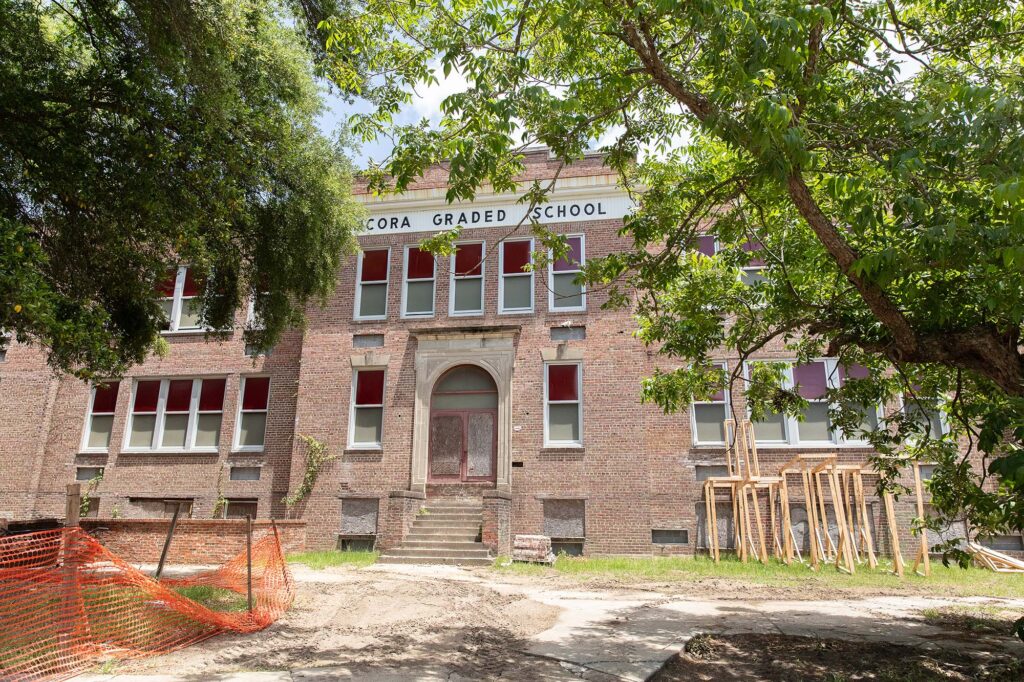
The Chicora Graded School
History

The Chicora Graded School

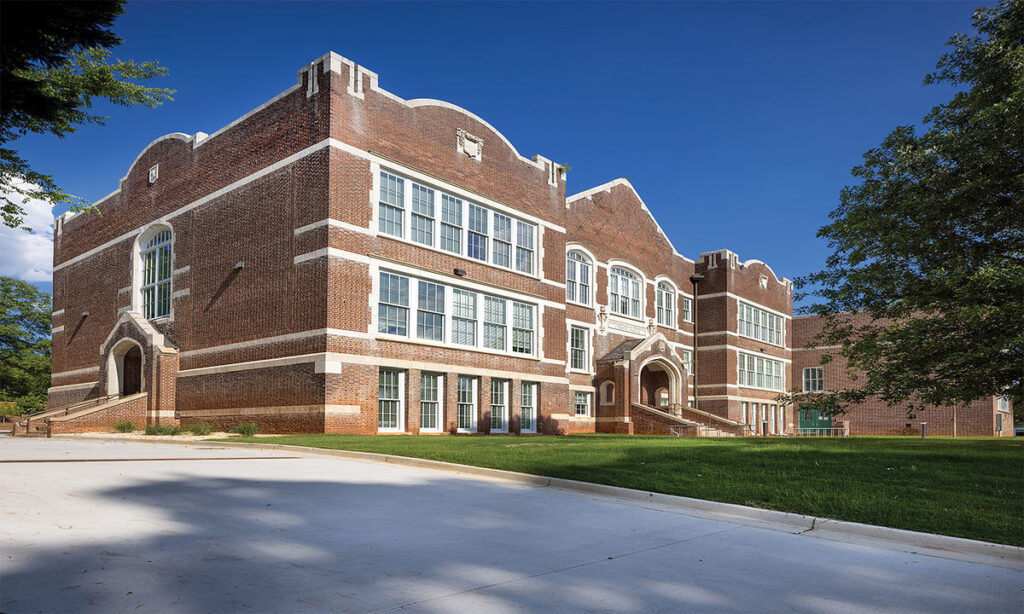
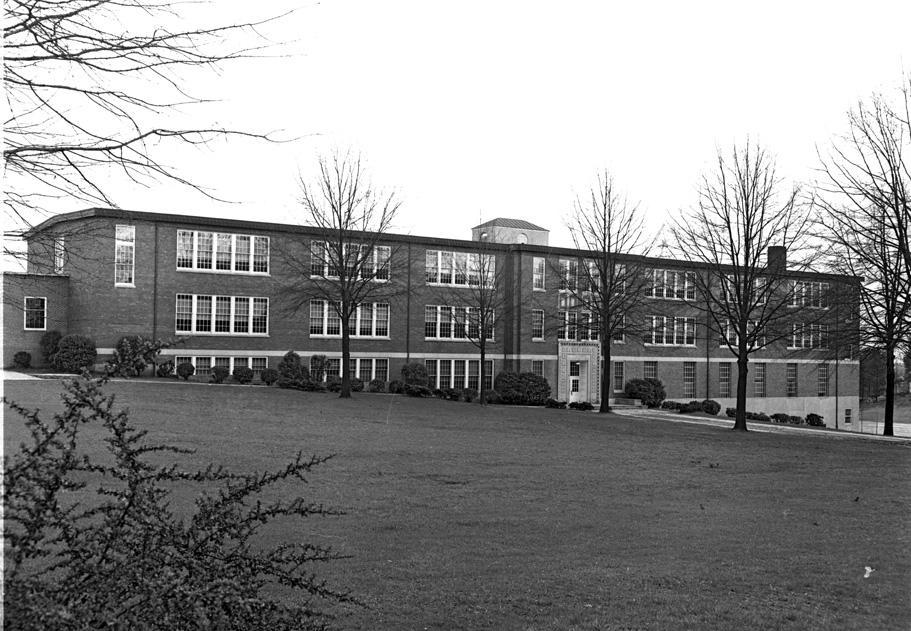
Originally constructed in 1935, the Chicora Graded School served the Chicora-Cherokee neighborhood of North Charleston, a community closely connected to employment at the Charleston Navy Yard. The school replaced an earlier facility built in 1921, which by 1929 enrolled approximately 307 students, prompting capacity expansions. As enrollment continued to grow, the campus was expanded multiple times between 1938 and 1955, adding classrooms, an auditorium, a cafeteria, and administrative space.

For decades, the building functioned as a public elementary school, first as a segregated school for white students and later as a more integrated neighborhood school. Following the closure of the Navy Yard in 1996, the surrounding area experienced economic decline and shifting demographics. By 2011, the school suffered from deferred maintenance and declining enrollment, leading to its closure. Vacant for more than a decade, the building remains significant for its role in local educational history.

A Vacant School Transformed
Revitalization Efforts

A Vacant School Transformed

Upon completion, the former Chicora Graded School will be rehabilitated into a collegepreparatory high school serving exclusively lowincome students from the greater Charleston region. The renovated facility will include modern classrooms, administrative offices, science and technology labs, a cafeteria and commercial kitchen, assembly and gathering spaces, and outdoor areas designed to support both academic instruction and workforce development programming.

The school will operate as part of the Cristo Rey network, which combines rigorous collegepreparatory coursework with a corporate workstudy model that allows students to gain realworld professional experience while offsetting the cost of tuition. Tuition at Cristo Rey operates on a sliding scale based on need, with most families not paying any tuition at all. The project is designed to accommodate up to 400 students and to create an education environment intentionally structured to expand access to opportunity for underserved families. 

Community & Economic Impact

Set Up for Success

The redevelopment of the former Chicora Graded School delivers targeted community impact by expanding access to highquality education and workforce pathways in one of North Charleston’s most economically distressed neighborhoods. 

Nearly 40% of residents in the surrounding community live in poverty, and local schools serving this area have historically been underfunded, with graduation and collegecompletion rates for students of color lagging significantly behind state and regional averages.  

In response, the project will serve up to 400 high school students, all from lowincome households, 99% of whom identify as students of color.

The school combines rigorous collegepreparatory academics with a corporate workstudy model that provides students with paid professional experience, mentorship, and exposure to career pathways while they are still in high school. In addition to educational outcomes, the project generates community benefits through permanent job creation, workforce training, and the reactivation of a longvacant neighborhood anchor.

Collectively, the project addresses educational inequity, strengthens workforce readiness, and supports longterm economic mobility for students and families across the Charleston region. 

Job Creation

51 Permanent
142 Construction

Work Study Success

94%

Students Served

400

Students of Color

99%

NTCIC & Progress

Financing & Impact

The $37.7 million project was funded through a variety of sources, including an equity investment by NTCIC in the $5.5 million federal and $2.75 million state Historic Tax Credits generated by the project and a $4 million New Markets Tax Credit allocation. The project was also funded with $2.8MM of South Carolina’s State Abandoned Building Tax Credit.

NTCIC’s roles in the project include acting as a NMTC Allocatee and Asset Manager, federal and state HTC investment sourcer, underwriter, and closer, Federal and State HTC Asset Manager, Federal and State Fund Manager, and Abandoned Building Tax Credit syndicator.

Want to Discuss Your Next Project? Talk With Our Team Today.

We bring clear insight, deep experience, and strategic focus to every project, whether you're structuring complex capital or shaping long-term, legacy-driven development.

Name(Required)
Want to Discuss Your Next Project? Talk With Our Team Today.