


Historic Tax Credits
$6.1 Million Federal
New Markets Tax Credits
$5 Million

Total Project Cost
$37.7 Million

Project Partner
Self-Help Ventures

Impact
Small Business Support, Housing, & more
History
Textile Industry in the South
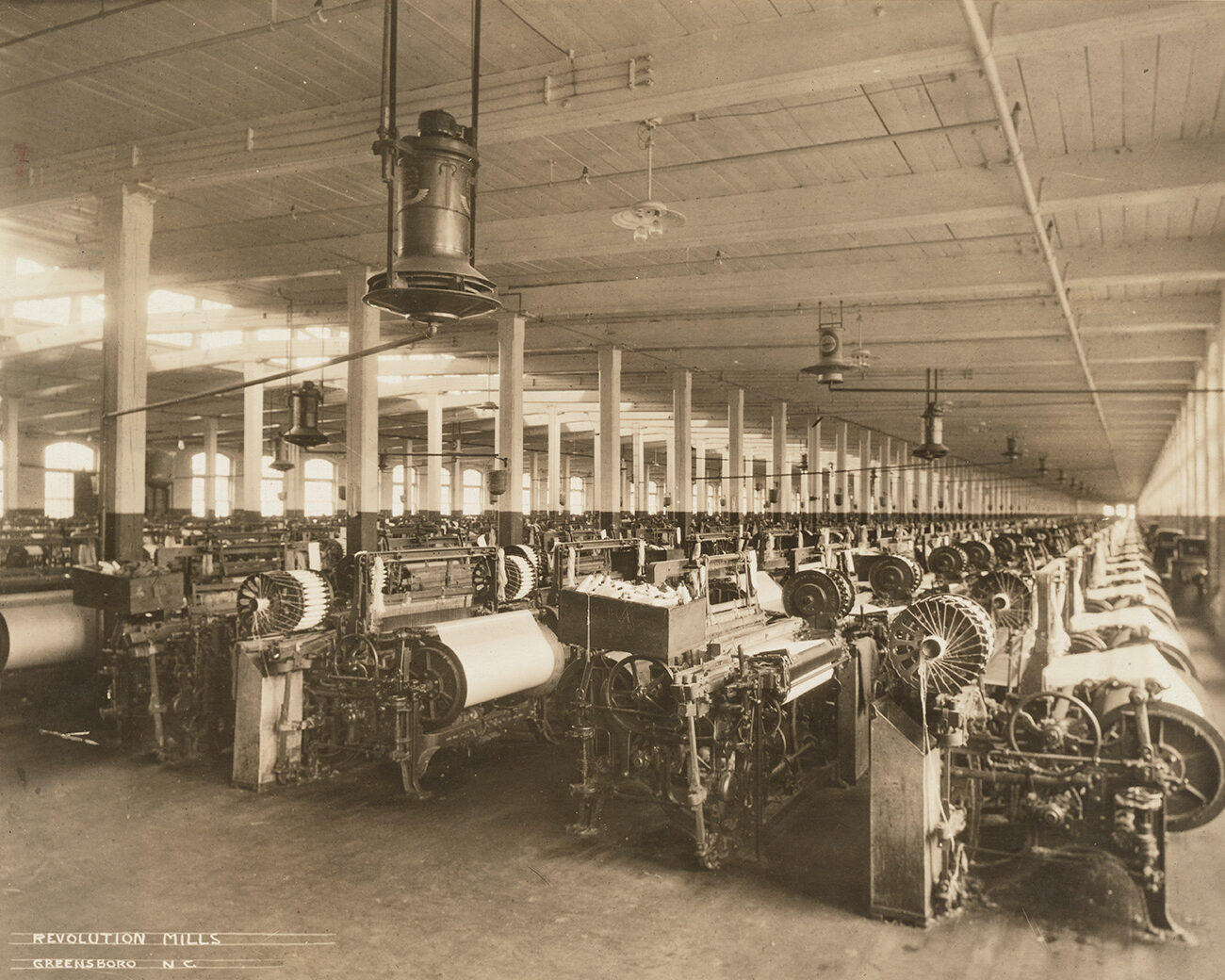
Built in 3 phases between 1900 and 1915 in Greensboro, North Carolina, the Revolution Cotton Mills is an example of the diversification in the Southern textile industry during the late nineteenth and early twentieth centuries. It was founded as a joint venture of the Cone and Sternberger families, two prominent Jewish families integral to Greensboro’s development.
The mill was fully operational by September 1900 and included 12,000 spindles, 376 looms, employed 350 people, and had 125 company houses – creating the village of Revolution. A 1910 description of the mill noted that “the company houses its employees in neat, modern houses and has supplied the village of Revolution with schools, free kindergarten, healthcare facilities, playgrounds, summer camps, a YMCA, churches, and every possible convenience.”
Revolution Mills’ particular significance lies in the fact that it was reputed to be the first flannel mill in the South, at a time when flannel was an increasingly popular fabric. By the 1930s, Revolution Cotton Mills had become the largest exclusive flannel mill globally, growing to over 1 million square feet and producing over 50 million yards annually.
In 1947, the Revolution Cotton Mills merged with Proximity Manufacturing Company, a secondary business venture founded by the Cone family, to become the Cone Mills Corporation. For approximately thirty years after the merger, the Revolution plant continued to produce flannel goods.
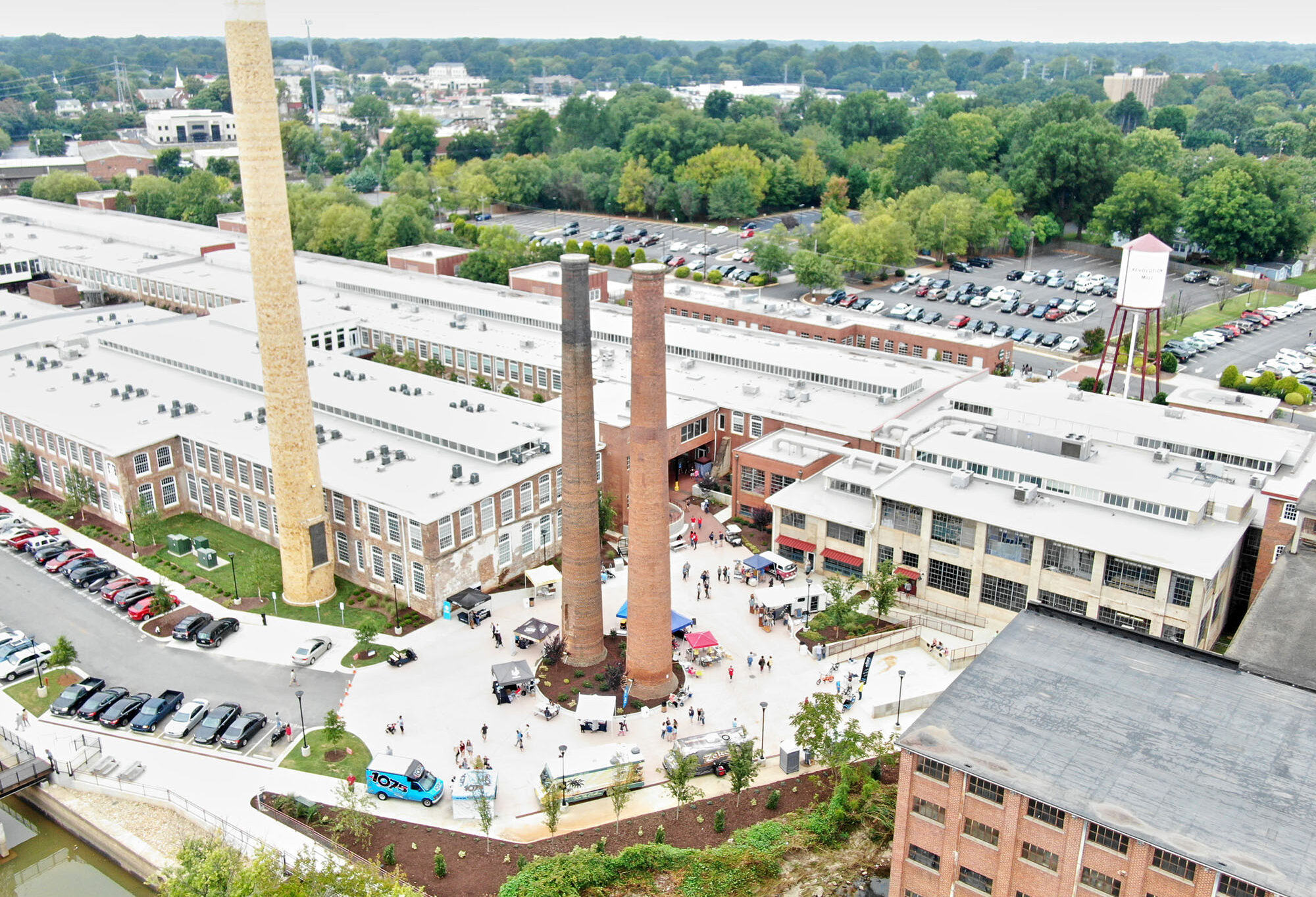
In the late 1970s, however, with new government standards concerning flammability, the company elected to get out of the flannel business. The plant was then converted to corduroy production, with a large export market, but when this market deteriorated, Cone Mills shut down the Revolution plant for good in February 1982. In 2012, Self-Help Ventures bought the mill and embarked on the first phase of redevelopment for the complex. The main campus was complete in 2019, and the Mill House project represents the final piece of the Revolution Mill development.
Revitalization Efforts
Center for Education & Community
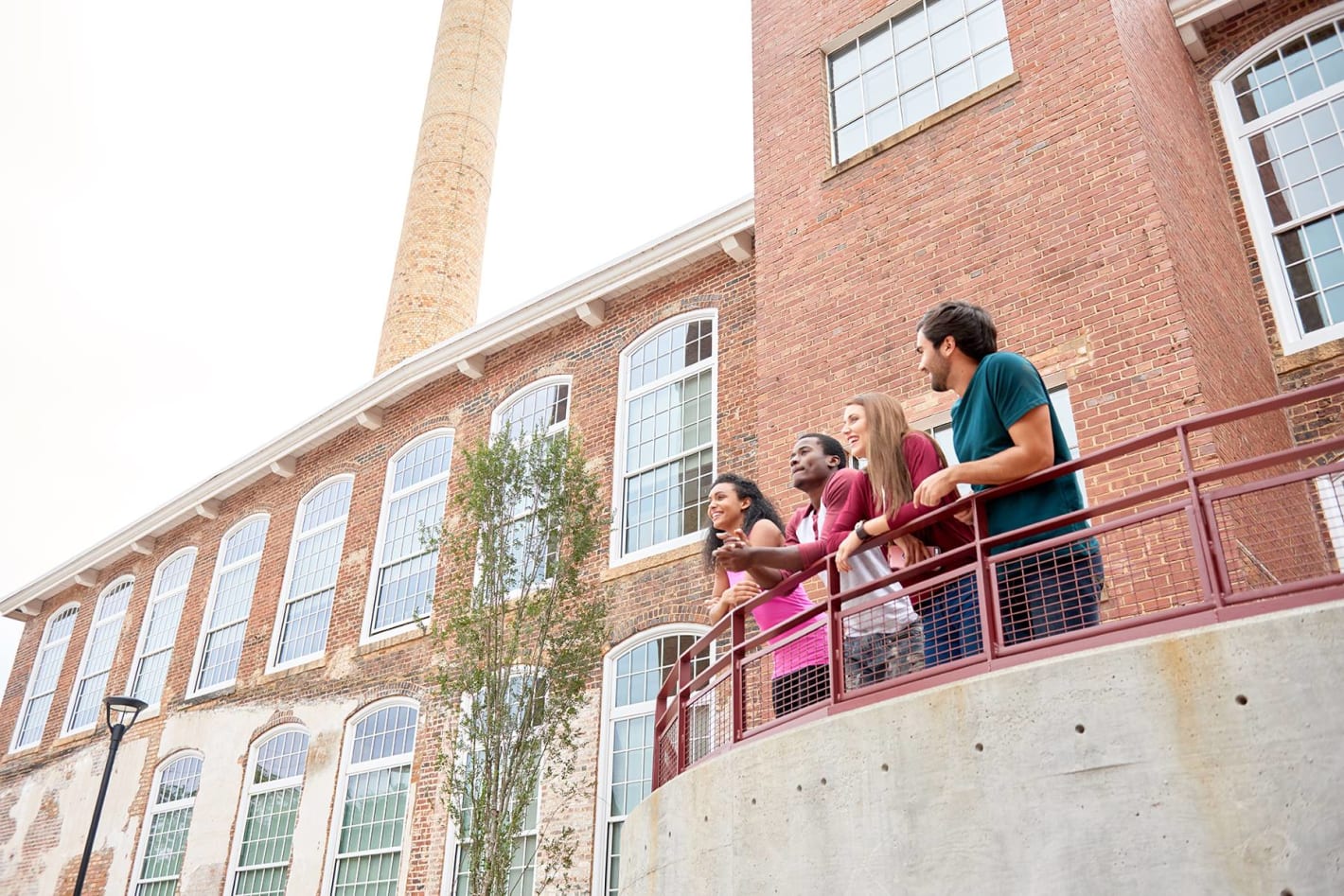
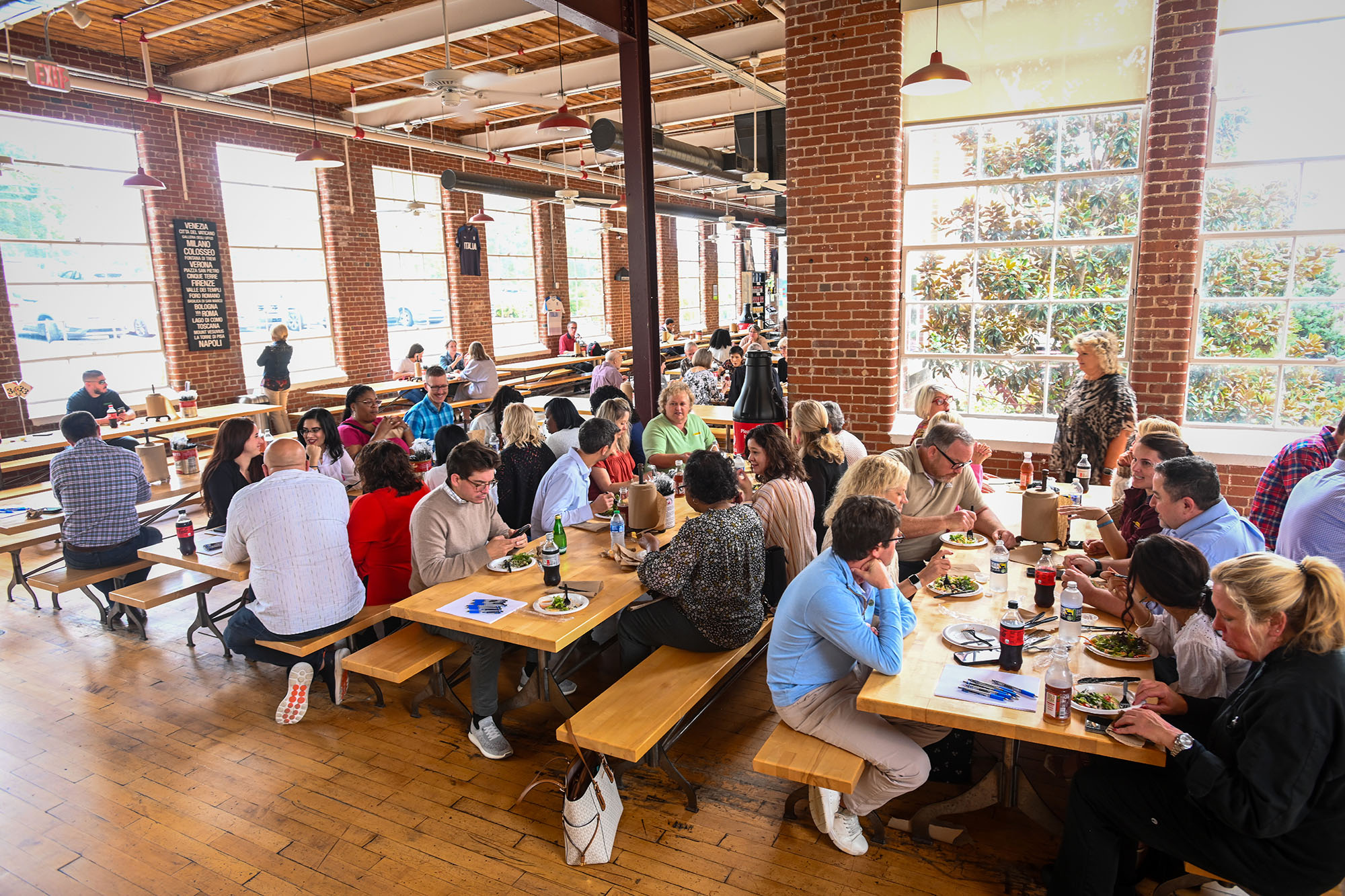
After its renovation, the original cloth warehouse is now the Mill House and includes 33 mixed-income units, as well as more than 57,000 square feet of commercial space and nearly 10,000 square feet of coworking space managed by Self-Help.
Community Impact
Becoming a Community Asset
The Mill House was vacant and underutilized for nearly 40 years, deteriorating considerably during that time. The revitalization efforts created 225 construction jobs that paid above living wage with full-benefit packages including healthcare, paid holidays, paid time off, and retirement benefits. The development team worked with general contractors to prioritize having a diverse group of businesses on the project.
Upon completion, the project supported 250 permanent jobs
through new and existing businesses. The business incubator managed by Self-Help supports 25 small businesses annually, and five additional office spaces in the building are marketed at below-market rents for local, MBE/WBE businesses and nonprofit organizations.
The local restaurant and retail tenants are provided with a flexible rental structure that allows them to succeed as they expand into the area market.

225
Construction Jobs Created
250
Permanent Jobs Created

25 Annually
Small Businesses Supported
5
Affordable Office Rentals
NTCIC & Progress
Economic Impact
The historic restoration of the final phase of the Mill House was made possible, in part, by NTCIC through an equity investment in the $6.1 million in federal Historic Tax Credits (HTC) generated by the project and a $5 million New Markets Tax Credit allocation.
Check Out Similar Projects Here
Browse all projects
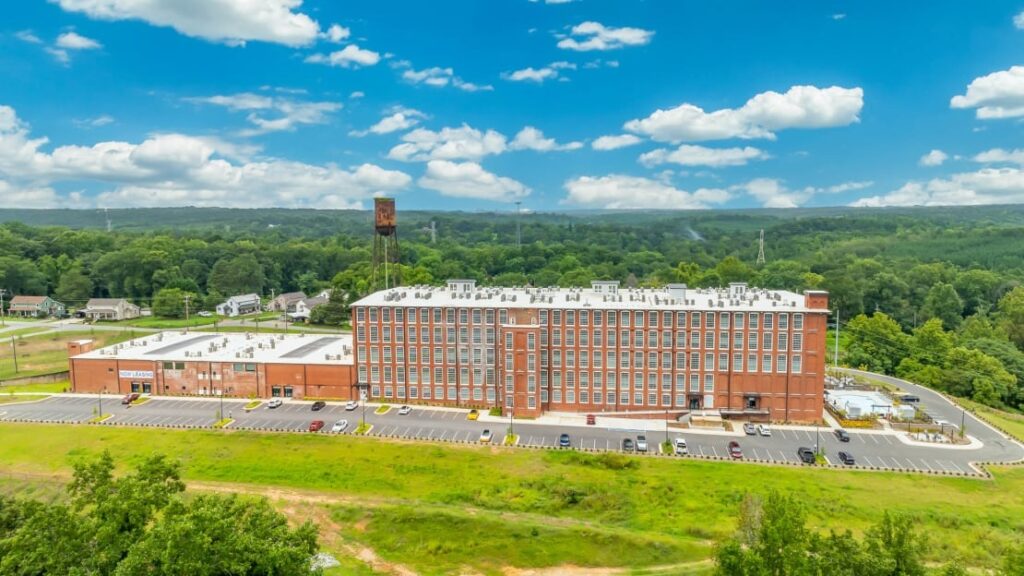
Converse Mill
Former Textile Mill Transformed Into Vibrant Apartment Living
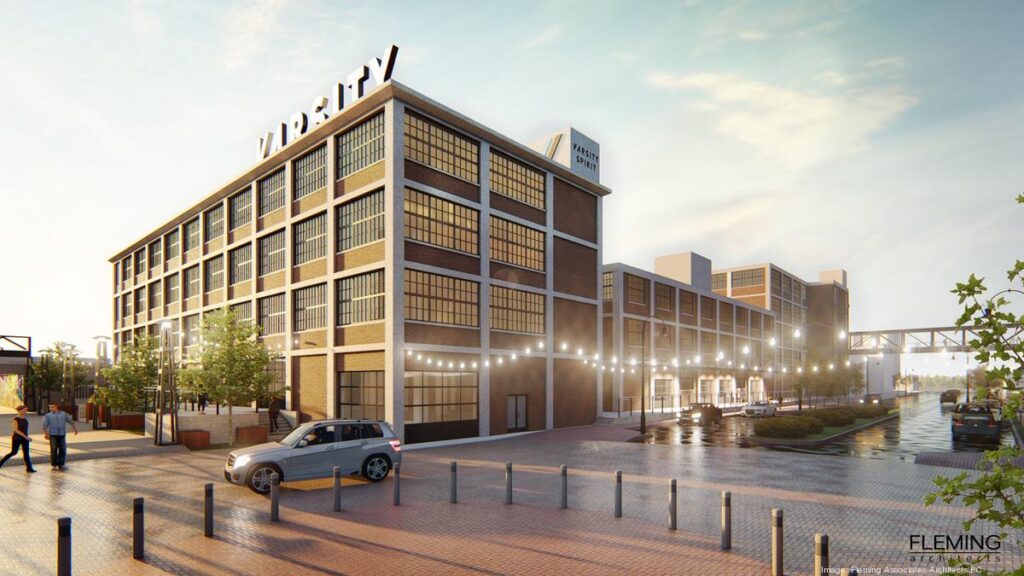
Conwood
Former Tobacco Complex Transforms into Mixed-Use Community Hub
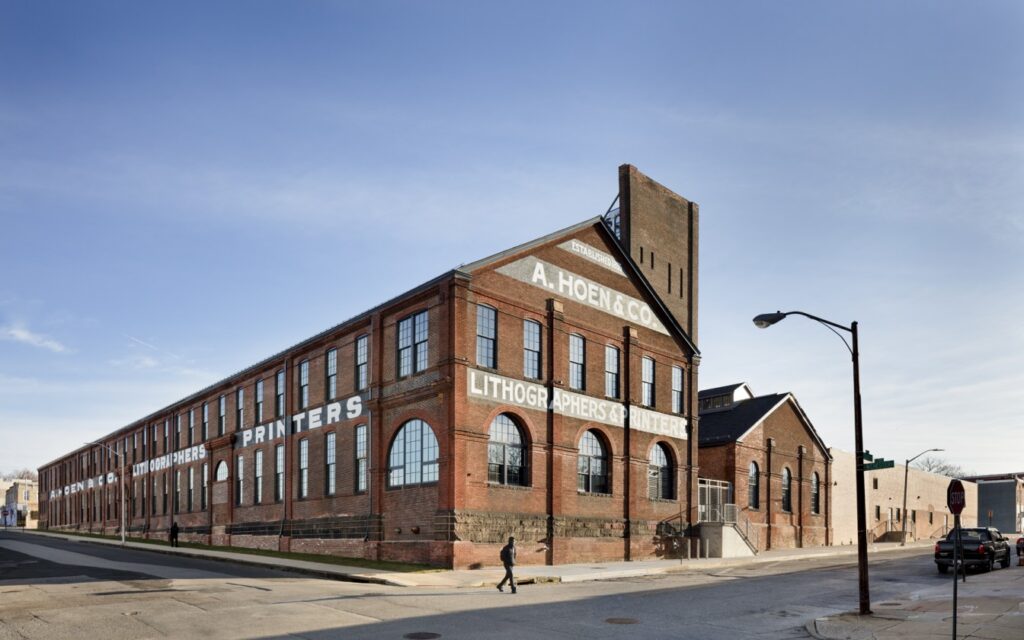
Hoen Lithograph Building
A Historic Printing Factory Hums with Innovation
Converse Mill
Former Textile Mill Transformed Into Vibrant Apartment Living
Conwood
Former Tobacco Complex Transforms into Mixed-Use Community Hub
Hoen Lithograph Building
A Historic Printing Factory Hums with Innovation
Want to Discuss Your Next Project? Talk With Our Team Today.
We bring clear insight, deep experience, and strategic focus to every project, whether you're structuring complex capital or shaping long-term, legacy-driven development.