



Washington D.C. – August 17, 2026: The National Trust Community Investment Corporation (NTCIC) is pleased to announce the successful financial closing of the Mainline project in Dayton, Ohio. Once home to prominent office and institutional uses, the Centre City Building and Air City Garage will be transformed into a vibrant mixed-use destination featuring housing, retail, and structured parking. NTCIC provided an equity investment in the $27.6 Million State and Federal Historic Tax Credits generated by the preservation efforts, the $14 Million Transformational Mixed-Use Development (TMUD) tax credits, and a $4 million New Markets Tax Credit investment supporting the project’s mixed-use components.
A Legacy at the Center of Dayton
The United Brethren Publishing House, now known as the Centre City Building, traces its roots to 1853 and grew into a defining presence in Dayton’s downtown through multiple phases of construction between 1903 and 1924. Envisioned as both a commercial and mission-driven asset, the building supported publishing operations and revenue generation for the denomination while anchoring the city’s skyline.
The adjacent Air City Garage, completed in 1960, served as a key downtown parking facility before falling into disrepair in later years, mirroring broader economic struggles in the surrounding area.

“This project reflects the catalytic impact our investments can have in communities across the country. We are proud to continue our partnership with The Model Group on another high-impact development that supports economic growth and neighborhood revitalization.”
- Tony Maruca
- Senior Project Manager, NTCIC
A New Chapter for Downtown Dayton Living
The Mainline redevelopment will introduce 137 new residential units, including 17 income-restricted and affordable units, across the Centre City Building, creating new mixed-income housing opportunities in the downtown core. Former office floors will be reactivated with modern living spaces that retain historic features, while ground-floor retail will bring new energy to Main Street.
The project will also introduce a curated mix of commercial tenants, including a café and fresh food market, expected to serve more than 20,000 customers annually, expanding access to everyday goods and services in a neighborhood that has historically lacked these options. It will also become the expanded home of an entrepreneurial center capable of supporting start-ups and small business leaders each year.

“This project represents the power of collaboration to drive meaningful change. Working alongside NTCIC, we have been able to advance developments that not only restore historic buildings but also create lasting opportunities for residents and businesses across Ohio.”
- Zach Woolard
- VP of Development at the Model Group
Layered Financing Supporting Transformational Impact
NTCIC provided an equity investment in the $16 million in federal historic tax credits and $11.6 million in state historic tax credits generated by the preservation efforts, along with an additional $4 million New Markets Tax Credit investment supporting the project’s mixed-use components.
NTCIC served in multiple roles across the capital stack, including as a Federal and State New Markets Tax Credit allocatee and asset manager, as well as underwriter and closer for Federal and State Historic Tax Credit and TMUD investments, and Federal HTC fund manager.
The project utilized a layered financing structure that also included Ohio New Markets Tax Credits and Ohio Opportunity Zone incentives, reflecting the scale and complexity of the redevelopment. The use of TMUD credits in conjunction with the nearby Dayton Arcade underscores a coordinated approach to investment and demonstrates clear public commitment to the long-term success and revitalization of this key downtown commercial corridor.
Washington D.C. – June 5, 2026: The National Trust Community Investment Corporation (NTCIC) and National Trust Energy Capital are pleased to announce the successful financial closing for the rehabilitation of Park Synagogue. This landmark investment marks the first time NTCIC and National Trust Energy Capital have provided tax credit financing within the same project.
The $52 million redevelopment of the nationally significant modern landmark, designed by architect Eric Mendelsohn, will transform the historic synagogue into a multitenant arts, education, and community campus while preserving one of the most important examples of modern religious architecture in the United States.
A Modern Landmark Begins a New Chapter
Completed in 1953, Park Synagogue was designed by world-renowned architect Eric Mendelsohn as a new home for the Anshe Emeth Beth Tefilo Congregation following the community’s move to Cleveland Heights after World War II. Conceived as a modern synagogue integrating worship, education, and community life, the building is widely regarded as one of the most important examples of modern religious architecture in the United States. Its iconic copper clad dome and sculptural concrete forms have made it a defining architectural and cultural presence for decades.
After the congregation established a new facility nearby in 2021, the historic building entered a new chapter, led by Sustainable Community Associates and the Friends of Mendelsohn, a development team committed to preserving Mendelsohn’s vision while reimagining the site for arts, education, and community use.
“We feel very fortunate to have NTCIC’s partnership on the restoration of Park Synagogue. It was an incredibly complicated project and required a very broad coalition of public, private and philanthropic supporters all working together. NTCIC was critical to those efforts.”
Reimagining a Center for Arts, Education, and Community
The rehabilitation of the 70,000 square foot Park Synagogue transforms a former single congregation house of worship into a multitenant arts, education, and community campus while preserving its most significant historic spaces. The restored building will host Oberlin College’s satellite practicing arts program, Park Arts performance and educational spaces, and Colorful Minds Studio, expanding access to education, cultural programming, and community services.
The sanctuary and chapel are preserved for religious observance and lifecycle events, maintaining continuity with the building’s original purpose. The vision for the project reimagines and extends Mendelsohn’s original center for education and community, building on the congregation’s legacy of social engagement by opening the site to broader public use while preserving a place for Jewish life.
Park Arts will operate the worship and assembly spaces as performance, event, and community venues, including the historic sanctuary, ballroom, Miller Chapel, library, and select classroom and performance areas. Oberlin College will establish a satellite campus for the Bachelor of Fine Arts portion of its BA/BFA double degree program, continuing the building’s historic educational function.
The project also includes Colorful Minds Studio, which will provide arts programming for adults with developmental disabilities, supporting creative expression, inclusion, and community connection through structured artmaking.
Preservation and Sustainability Working Together
The rehabilitation enhances both the building and its surrounding 28‑acre campus, improving public access and long‑term environmental performance. Site improvements include new walking trails and a footbridge across the ravine, expanding access to the landscape surrounding the synagogue.
The project incorporates a geothermal heating and cooling system and major improvements to the building’s thermal envelope, reducing energy use while supporting the long‑term preservation of this nationally significant historic structure.

“Historic preservation is inherently sustainable, and the revitalization of Park Synagogue demonstrates how reinvesting in existing buildings can reduce environmental impact while extending their life. By pairing preservation with modern energy efficient systems, the project shows how sustainable practices and historic rehabilitation can work together to support long-term community and environmental outcomes.”
- David Clower
- President and CEO of NTCIC and National Trust Energy Capital
Financing Preservation & Sustainability
NTCIC supported the redevelopment of Park Synagogue by providing an equity investment in the $16 million in combined Federal and Ohio State Historic Tax Credits generated through the preservation and rehabilitation of the landmark. In addition, National Trust Energy Capital, a subsidiary of NTCIC, financed the $6.0 million in Investment Tax Credits generated by the project’s geothermal energy system.
About NTCIC
The National Trust Community Investment Corporation (NTCIC), a subsidiary of the National Trust for Historic Preservation, is a mission-driven, impact investment asset management firm focused on the adaptive reuse of historic properties and renewable energy solutions across the country. Founded in 2000, NTCIC makes transformational impact investments in low-income & disinvested communities, promoting a brighter, more equitable future by revitalizing historic properties and expanding our nation’s renewable energy accessibility through innovative community development & tax credit investment strategies.
About National Trust Energy Capital
National Trust Energy Capital is an energy tax credit investment and asset management firm with more than a decade of experience connecting investors and developers. Building on a strong foundation in solar, National Trust Energy Capital works across a broad range of energy technologies and tax credit possibilities, helping investors identify strong opportunities and developers secure reliable capital in a changing policy and market environment. National Trust Energy Capital specializes in community solar, energy storage, and projects serving low-income households or located in historically underserved areas.
Washington D.C. – May 18, 2026: The National Trust Community Investment Corporation (NTCIC) is proud to announce the successful closing of financing for the redevelopment of the historic Ontario & Western Railway Station in Middletown, New York. The $44.8 million project will transform the long vacant landmark into a modern Head Start early childhood education and family services facility operated by the Regional Economic Community Action Program (RECAP), a private not-for-profit established in 1965 and designated as the anti-poverty agency in Orange County.
Revitalizing a Railway Relic
Constructed in 1892, the New York, Ontario & Western Railway Station is one of Middletown’s most prominent historic landmarks. For more than sixty years, the Station served as a major economic and civic anchor for Middletown, operating as both a passenger terminal and the operational hub of the Ontario & Western Railway. Even after rail service ended in 1957, the building continued to serve Middletown through a series of adaptive uses before falling vacant following a fire in 2004. Despite years of disuse, the station has remained a powerful symbol of Middletown’s working history and its longstanding connection to regional economic life.

“The O&W Project perfectly encapsulates the City of Middletown’s values and what we have been working to achieve: providing for our residents while preserving our history. Like the O&W Building, RECAP has been a staple in our community for decades, and we are proud to work with them as a partner on this project. We are celebrating our past while looking towards the future – which, of course, starts with our children.”
- Joseph DeStefano
- Mayor of Middletown, New York
Head Start at the Station
Upon completion, the former railway station will reopen as a permanent home for Head Start and other childcare services operated by RECAP, bringing together programming currently offered across two leased locations within active churches. Today, RECAP serves 137 Head Start children in these community based settings. The project will relocate and expand this programming into a single, purpose built facility, allowing RECAP to enhance its learning environments, better align space with program needs, and increase capacity to serve more children and families.
The redeveloped building will support expanded enrollment, increasing preschool capacity for children ages 3–5 to nearly 150 children annually, while adding new programs serving infants and toddlers ages 6 weeks to 3 years and children ages 5 and older. The new facility will allow 100% full-day Head Start programming, compared to current part-day limitations, and will provide all enrolled children with additional services, including mental health support, vision and health screenings, developmental screenings, and early childhood substance abuse prevention. The project will also expand adult education and asset building services for families and support 54 fulltime equivalent jobs, with nearly all positions offering comprehensive benefits.

“The Ontario & Western Railway Station is an iconic building, and this redevelopment shows how historic preservation can support real community needs. The project pairs a thoughtful rehabilitation with a use that serves families every day, ensuring the building remains both relevant and active for generations to come.”
- Heather Buethe
- Senior Director of Project Management at NTCIC
Financing Preservation
NTCIC provided a $5 million New Markets Tax Credit allocation, along with an equity investment in the $13 million in federal and state Historic Tax Credits generated by the rehabilitation. Additional NMTC allocation was provided by Empire State Development and the project was supported through robust local- and state-grant funds as well as a capital campaign, showcasing strong local support for the development.
By reactivating a long vacant historic landmark and expanding access to high-quality childcare in a designated childcare desert, the redevelopment of the Ontario & Western Railway Station strengthens early childhood outcomes, supports working families, and ensures this iconic building continues to serve Middletown for generations to come.
Learn more about the Ontario & Western Railway Station project here.
Washington D.C. – May 1, 2026: The National Trust Community Investment Corporation (NTCIC) is proud to announce our successful closing of financing for phase two of the Loray Mill revitalization in Gastonia, North Carolina. The $52 million historic preservation effort led by Tribridge Residential will transform the long-vacant section of one of the state’s most significant industrial landmarks into new housing opportunities in the Charlotte suburbs.
A Landmark of Industry and Labor History
Constructed between 1900 and 1922, Loray Mill stands as a nationally significant example of early twentieth‑century industrial construction and, at over 600,000 square feet, one of the largest textile mills ever built in North Carolina. Originally developed for cotton cloth production, the mill later transitioned to tire fabric manufacturing following its acquisition by the Jenckes Spinning Company in 1919, with major expansions completed in 1921 and 1922.
The mill is also historically notable as the site of the 1929 Loray Mill Strike, which involved more than 1,000 workers and brought national attention to labor conditions in the Southern textile industry. After the strike, the mill closed and was later purchased by Firestone Tire and Rubber Company, which operated the facility until 1993. Following decades of vacancy, rehabilitation efforts began in 2013 and continue today.
“Few buildings in the Southeast carry the weight of Loray Mill — it powered Gastonia’s rise as Spindle City and anchored the region’s textile economy for nearly a century before sitting largely vacant for decades,” said Josh McPherson of Tribridge Residential. “Tribridge owns and operates historic properties across the Southeast, and we’re proud to take on the final chapter of one of the most ambitious mill rehabilitations in the region.“

“NTCIC was the right capital partner for a transaction this complex, pairing the federal HTC with the North Carolina Mill Rehabilitation Tax Credit. Construction is now underway, returning a cornerstone of Gastonia’s history to active use for generations to come.”
- Josh McPherson
- Tribridge Residential
Anchoring a Revitalized Mill Village
Loray Mill Lofts Phase 2 completes the adaptive reuse of the historic mill by converting the long‑vacant west block into 143 market‑rate apartments with resident amenity spaces. The project builds on Phase 1 of the redevelopment, which delivered nearly 200 apartments along with commercial space and shared amenities, including an expansive and publicly accessible gym, that now anchor the mill campus.
The new residences feature one‑, two‑, and three‑bedroom units designed to preserve the building’s historic industrial character through open floor plans, high ceilings, exposed brick, and visible structural elements, while introducing modern amenities that support long‑term residential use. Together, the project represents a key component of the broader revitalization of the Loray Mill Village.

“We bring extensive experience executing complex financial structures that incorporate federal, state, and local incentives in support of historic preservation. These tools allow projects like Loray Mill to move forward while maintaining the integrity of places that are deeply important to their communities.”
- Carolyn Tom
- Project Manager at NTCIC
Financing Preservation
NTCIC made an equity investment in the $8.3 million Federal Historic Tax Credits, as well as the $16.5 million North Carolina Mill Rehabilitation Tax Credits, to support the preservation efforts of the final phase of revitalization.
NTCIC served as the Federal Historic Tax Credit and North Carolina Mill Rehabilitation Tax Credit investment sourcer, underwriter, and closer for the transaction, and will serve as asset manager throughout the compliance period. The North Carolina Mill Rehabilitation Tax Credit played an important role in supporting reinvestment in a long‑vacant industrial property and encouraging continued preservation activity in distressed communities.
National Trust Energy Capital (previously NT Solar) is proud to announce its first investment with United States Solar Corporation (US Solar) to support a portfolio of seven community solar projects located in Colorado. Throughout construction of the projects, National Trust Energy Capital will provide an equity investment on the $43 million of Solar Investment Tax Credits (ITC) generated by the solar projects. The projects total 46 MWdc and are expected to generate approximately 90 million kWh annually — enough to power nearly 8,300 homes per year.
“[NT Solar]’s first investment with US Solar reflects our commitment to expanding access to clean energy while delivering meaningful community benefits,” said Paul Holshouser, Director of National Trust Energy Capital (previously NT Solar). “We’re especially proud to support projects that prioritize low-to-moderate income households and environmental revitalization.”
US Solar is committed to community-focused energy solutions. Nearly 5,000 families will receive utility bill discounts, averaging around $600 per year in savings for each household — equivalent to cutting the average utility bill nearly in half. The developer has partnered with nonprofit Energy Outreach Colorado to connect income-qualified households with those savings. Combining environmental innovation with social equity, US Solar’s portfolio supports low-to-moderate income households and transforms landfill-adjacent land into green energy hubs, and with six of the seven projects located adjacent to the Denver Arapahoe Disposal Site landfill, the project will provide a green buffer for nearby communities.
“Partnering with [NT Solar] on this community solar portfolio has enabled us to complete these projects that deliver both community and financial returns,” said Brian Lantz, Chief Financial Officer at US Solar. “We look forward to continuing our partnership and deploying capital across additional community solar markets in the near future.”
The roughly 90 million kilowatt-hours (kWh) generated annually by the installations are projected to sequester the same amount of carbon from the atmosphere as over 44,000 acres of forest and generate the amount of electricity equivalent to burning over 49 million pounds of coal. By investing in a project that will support thousands of low-income households in Colorado, delivering measurable community impact, [NT Solar] demonstrates its continued commitment to advancing equitable and impactful solar development across the country.
Learn more about the project here.

About National Trust Energy Capital
This is National Trust Energy Capital’s first investment with US Solar and was made possible through NTCIC’s Renewable Investing Fund I, LLC.
National Trust Energy Capital is an energy tax credit investment and asset management firm with more than a decade of experience connecting investors and developers. Building on a strong foundation in solar, National Trust Energy Capital works across a broad range of energy technologies and tax credit possibilities, helping investors identify strong opportunities and developers secure reliable capital in a changing policy and market environment. National Trust Energy Capital specializes in community solar, energy storage, and projects serving low-income households or located in historically underserved areas.
About US Solar
Founded in 2014, US Solar is a developer, owner, operator, and financier of solar generation and storage projects with a focus on emerging state markets and community solar programs. The company helps utilities, partners, communities and residents expand access to clean energy across the country and save on electric costs. With more than 300 Megawatts of completed projects and over 2 Gigawatts in development or construction, US Solar is trusted nationwide. Visit www.us-solar.com for more.
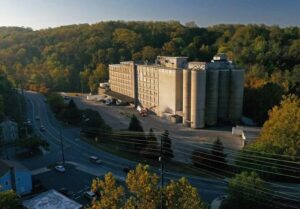 The National Trust Community Investment Corporation (NTCIC) is honored to have played a crucial part in the financing of the $85 million adaptive reuse of the historic Wilkins Rogers Mill complex in Ellicott City, Maryland. Spearheaded by Terra Nova Ventures with Alexander Design Studio as the architect and Southway Builders as the general contractor, the Ellicott Mill project will transform the long-dormant industrial site into a dynamic mixed-use community featuring 190 residential apartments, a restaurant space overlooking the Patapsco River, and ground floor retail space, while preserving one of Maryland’s most significant industrial heritage landmarks.
Originally established in 1774 by the Ellicott brothers, the mill was the first commercial flour producer in Maryland and a regional pioneer in industrial automation. It helped catalyze Baltimore’s rise as a leading flour export hub. Through multiple owners, including the Gambrill family, the Doughnut Corporation of America, and finally the Wilkins Rogers Company, the site has remained a cornerstone of the area’s industrial identity for over two centuries. The mill officially ceased operations in 2020, opening the door to a visionary redevelopment that honors its rich past.

“NTCIC is honored to have played a pivotal role in the financial closing of the Ellicott Mill redevelopment. This unique investment reflects our commitment to preserving historic assets through multiple forms of strategic financing that foster economic development and community revitalization.”
- Amanda Bloomberg
- Senior Acquisitions Manager
NT Impact Capital provided a $7 million bridge loan to assist in financing the project, marking NTCIC’s newest subsidiary’s first official investment. NTCIC supported the revitalization through an equity investment in the $10 million in Federal Historic Tax Credits generated by the project, along with $3 million in State Historic Tax Credits. NTCIC served as the Federal and State HTC sourcer, underwriter, and closer, as well as the Federal HTC fund manager and Federal and State HTC asset manager.
The redevelopment will preserve the architectural integrity of the complex, which includes the main mill building, nine historic silos, a boiler house, and an attached machine shop. The three-story warehouse will receive a two-story new construction addition approved by the National Park Service, further blending history with modern design.

“This is one of the most exciting and impactful projects I have been associated with over my nearly 50-year development career, with its deep historic roots, its association with the American Industrial Revolution and the first railroad in the nation, and the contribution that the transformation of this historic high-rise former flour mill makes to the community.”
- David Tufaro
- Founder & Principal of Terra Nova Ventures
Located on the main thoroughfare and within walking distance of downtown Ellicott City, Ellicott Mill offers convenient access to both Baltimore and Washington, DC. The project promises to become a landmark example of how historic preservation and smart growth can work together to serve a community for generations to come.
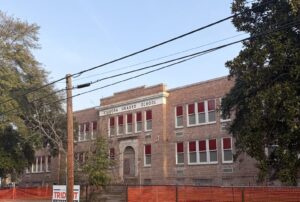 The National Trust Community Investment Corporation (NTCIC) is proud to announce our successful closing of financing for the redevelopment of the historic Chicora Graded School in North Charleston, South Carolina. The $37.7 million project will transform the historic and long‑vacant public school building into Cristo Rey, a new college‑preparatory high school serving exclusively low‑income students from across the Charleston region. NTCIC provided $4 million in New Markets Tax Credit allocation as well as an equity investment in the $5.5 million federal and $2.75 million South Carolina Historic Tax Credits generated by the rehabilitation. The redevelopment also will utilize $2.8MM of South Carolina’s State Abandoned Building Tax Credits.
Originally constructed in 1935, the Chicora Graded School served the Chicora– Cherokee neighborhood, a community historically tied to employment at the Charleston Navy Yard. For decades, the building functioned as a public elementary school, first as a segregated school for white students and later as a more integrated neighborhood school. The campus expanded multiple times between 1938 and 1955, adding classrooms, an auditorium, a cafeteria, and administrative space. Following the closure of the Navy Yard in 1996, the surrounding area experienced significant economic decline and by 2011, the school faced substantial deferred maintenance ultimately leading to its closure.
“NTCIC was thrilled to have the chance to be a part of financing Cristo Rey High School in North Charleston. This school will give students access to a college prep education while giving them valuable work experience and will play a key role in Metanoia’s mission to serve existing residents of North Charleston, which is experiencing rapid growth and gentrification.”
- Tony Maruca
- Senior Project Manager
Upon completion, the former Chicora Graded School will reopen as Cristo Rey High School, a college-preparatory high school designed to serve up to 400 students, all from low‑income households. The school will combine rigorous academics with Cristo Rey’s signature corporate work‑study model, which provides students with paid professional experience, mentorship, and exposure to career pathways while offsetting the cost of tuition. The rehabilitated facility will include modern classrooms, administrative offices, science and technology labs, a cafeteria and commercial kitchen, assembly and gathering spaces, and outdoor areas designed to support both academic instruction and workforce development programming.

“This historic school campus has been the heartbeat of the community for years and we are very excited to be renovating it as a place of opportunity for families in Chicora and beyond to build on their own strengths and release their brilliance.”
- Rev. Bill Stanfield
- CEO of Metanoia
This project has the potential to create meaningful change in one of North Charleston’s most economically distressed neighborhoods. Within the Chicora neighborhood, nearly 40% of residents live in poverty, local schools have historically been underfunded, and graduation and college‑completion rates for students of color in the area lag significantly behind state and regional averages. By reactivating a long‑vacant neighborhood building and expanding access to high‑quality education, the redevelopment strengthens workforce readiness and supports long‑term economic mobility for students and families across the region.
“A school is a promise,” Rev. Stanfield said. “It’s a promise to a community and a promise to its young people.”
The National Trust Community Investment Corporation (NTCIC) is proud to announce the successful financial closing of the historic Tower Life Building, formerly known as the Smith-Young Tower, in downtown San Antonio. The $125 million project will transform the iconic building into 242 apartment residences, along with retail spaces on the street and river levels, providing housing and neighborhood vibrancy to the heart of the city.
 Designed by renowned architects Atlee Ayres and Robert Ayres, the Tower Life Building was one of the many key structures in San Antonio’s urban development. The father-son duo was instrumental in designing several prominent buildings, including the Municipal Auditorium, Plaza Hotel, and the Federal Reserve Bank.
The building first housed businesses, professionals, and San Antonio’s first Sears, Roebuck and Company department store. Its unique history also includes being a mooring mast for a blimp, a performance venue for aerialists, and even the headquarters for the Third U.S. Army.
The revitalization project, brought to life by McCombs Enterprises, J Jeffers and Co., and many others, will transform the Tower Life Building into a lively mixed-use space that blends the historic charm of the building with modern amenities in the 242 apartments, a portion of which will be offered with affordable rents for qualifying residents.
“We are committed to creating a place that inspires hometown pride and invites new energy into our downtown,” says Jon Wiegand, Managing Director of Real Estate at McCombs Enterprises. “We welcome a community that reflects the cultural diversity of San Antonio. A portion of the building’s apartments will be offered with affordable rents to provide homes for artists, teachers, restaurateurs, nurses, first responders, and others whose life stories make up the fabric of our city.”
The renovation plans include state-of-the-art amenities, such as an outdoor patio deck, community space, and a fitness center, designed specifically for residents. Additionally, an adjacent parking garage will serve both residents and commercial tenants. The building, which was once the tallest structure in San Antonio until 1968, remains the tallest 8-sided building in the U.S., continuing its legacy as a focal point in the city’s skyline.
This revitalization was supported, in part, by NTCIC through an equity investment in the $16.8 million Federal Historic Tax Credits and $21 million State Historic Tax Credits generated by the project. NTCIC played a crucial role in the capital stack and will continue to collaborate with the development team to ensure the project’s success.
“Our team was pleased to partner with J. Jeffers on yet another exciting and impactful redevelopment”, says Amanda Bloomberg of NTCIC. “The Tower Life Building is an iconic feature of the San Antonio skyline, and we’re thrilled to be a part of bringing new life to one of the Alamo City’s most historic buildings.”
The newly revitalized Tower Life Building will not only provide much-needed housing in the heart of the city but also offer retail space, further contributing to the growth, vibrancy, and development of San Antonio’s downtown and river district.
Learn more about NTCIC’s involvement in the project here.
WASHINGTON, DC, September 10, 2025: National Trust Energy Capital (previously NT Solar) is proud to announce the closing of a 1.36 MW community solar project in Eastport, Maine, in partnership with Prometheus Power Group. The project is expected to generate approximately 1.78 million kWh annually, providing clean and affordable energy to local residents and businesses. National Trust Energy Capital arranged a tax equity investment in the $3.3 million in Solar Investment Tax Credits (ITC) generated by the development of the solar site. This marks National Trust Energy Capital’s ninth collaboration with PeoplesBank, a long-time National Trust Energy Capital partner, bringing their total investment to over $21 million.
“This investment with Prometheus Power Group reflects [NT Solar]’s commitment to expanding access to clean energy for people across the country,” said Karin Berry, Managing Director of NT Solar (now National Trust Energy Capital). “We’re especially proud to support a project bringing renewable energy at a discount to Maine’s rural residents.”
The Eastport project will serve a mix of residential and commercial subscribers through Maine’s Community Solar program, offering a 15% fixed discount on all allocated bill credits. The project also qualifies for the 10% Domestic Content adder under the Inflation Reduction Act, supporting U.S.-based manufacturing by utilizing domestically manufactured panels. The energy generated by this project will make a meaningful impact for Maine’s rural residents and small businesses.
The 1.36 MW installations will generate an estimated 1.77 million kilowatt-hours (kWh) annually, which:
- Creates enough electricity to fully power 135 homes each year
- Offsets CO2 emissions generated from burning nearly 860,000 pounds of coal annually
- Sequesters the same amount of carbon from the atmosphere as over 784 acres of forest
- Offsets the CO2 emissions generated from consuming 87,000 gallons of gasoline annually
“[NT Solar]’s financing expertise was instrumental in structuring this project,” said Rohit Garg, Managing Member of Prometheus Power Group. “Their support ensured we could deliver long-term value to the Eastport community while making clean energy more accessible to Maine residents.”
This partnership with Prometheus Power Group underscores National Trust Energy Capital’s continued mission to expand access to clean and affordable renewable energy in rural Maine. National Trust Energy Capital remains committed to supporting underserved areas by advancing equitable and impactful energy investments across the country.
About National Trust Energy Capital
National Trust Energy Capital is an energy tax credit investment and asset management firm with more than a decade of experience connecting investors and developers. Building on a strong foundation in solar, National Trust Energy Capital works across a broad range of energy technologies and tax credit possibilities, helping investors identify strong opportunities and developers secure reliable capital in a changing policy and market environment. National Trust Energy Capital specializes in community solar, energy storage, and projects serving low-income households or located in historically underserved areas.
About Prometheus Power Group
Prometheus Power Group develops and operates community solar projects across the U.S., with a focus on the Northeast, Mid-Atlantic, Midwest, and Mountain West. The team has developed or is actively developing over 350 MW of solar capacity and operates through its venture, Nugenics Solar LLC Visit www.prometheuspowergroup.com to learn more.
The National Trust Community Investment Corporation (NTCIC) is proud to announce the successful financial closing of the $40.2 million revitalization of Benn High’s NMTC Condo in Bennington, Vermont. This transformative redevelopment will breathe new life into a historic 1913 former school building by creating a dynamic, community-centered hub with workforce housing, community recreation space, a senior center, and more. NTCIC provided a $5 million New Markets Tax Credit (NMTC) allocation and facilitated an equity 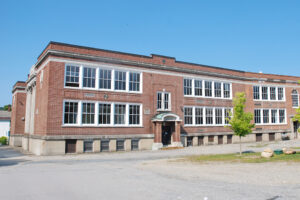 investment in the $5.6 million in federal Historic Tax Credits (HTCs) generated by the project.
The historic Bennington High School, an iconic example of Beaux Arts public architecture, served students for nearly 100 years before closing its doors. Vacant since 2004, the building is now poised for a new future through an adaptive reuse project known as Benn High.
“NTCIC is incredibly proud to have played a role in the Benn High redevelopment,” said Amanda Bloomberg, Senior Acquisitions Manager at NTCIC. “It was truly a pleasure collaborating with Zak Hale and the various players whose dedication and vision brought this transformative project to life. With its diverse and creative financing sources, we believe Benn High will serve as a case study for future redevelopment efforts across the country.”
The NMTC Condo totals 72,000 sq ft, which will include 22 workforce housing units and nearly 48,000 sq ft of commercial and community space. Tenants include the Town of Bennington, leasing over 28,000 sq ft for a new community recreation and senior center, the YMCA, operating a 102-seat childcare center that will serve mostly low-income families, the University of Vermont Extension, offering agricultural, nutrition, and community development programs to over 1,000 residents annually, and more.
The project also incorporates geothermal and solar technologies, making it 100% electric. Significant Brownfield Remediation Funds (BRF) were secured from both Vermont and the federal government to address contamination from a pre-existing 19th-century machine workshop on site.
The community impact of Benn High is far-reaching. It is projected to create 24 new permanent full-time jobs and 92 high-quality construction jobs, retain 35 existing jobs, create access to new recreation programs for more than 4,300 individuals, provide childcare for 102 children, with 55% from low-income households, host senior programming for 150+ local seniors, expanded nutrition education through the UVM extension program, and more.
“The Benn High Redevelopment has been the most challenging and rewarding endeavor of my career,” said Zak Hale, CEO of Hale Resources LLC. “Bringing together more than 30 financing sources and aligning them with the realities of a century-old school building required persistence and creativity at every turn. We’re grateful to NTCIC and our many partners for their support in making this project possible. Most importantly, Benn High will once again be a place that brings people together, providing housing, childcare, recreation, and services that will strengthen Bennington for generations to come.”
Located in an area with high levels of community need, the Benn High redevelopment will not only generate additional housing options but will serve as a community hub providing critical resources to residents of all ages. NTCIC’s investment in Benn High continues its mission to revitalize historic spaces in underserved communities, delivering inclusive, resilient, and economically sustainable development.