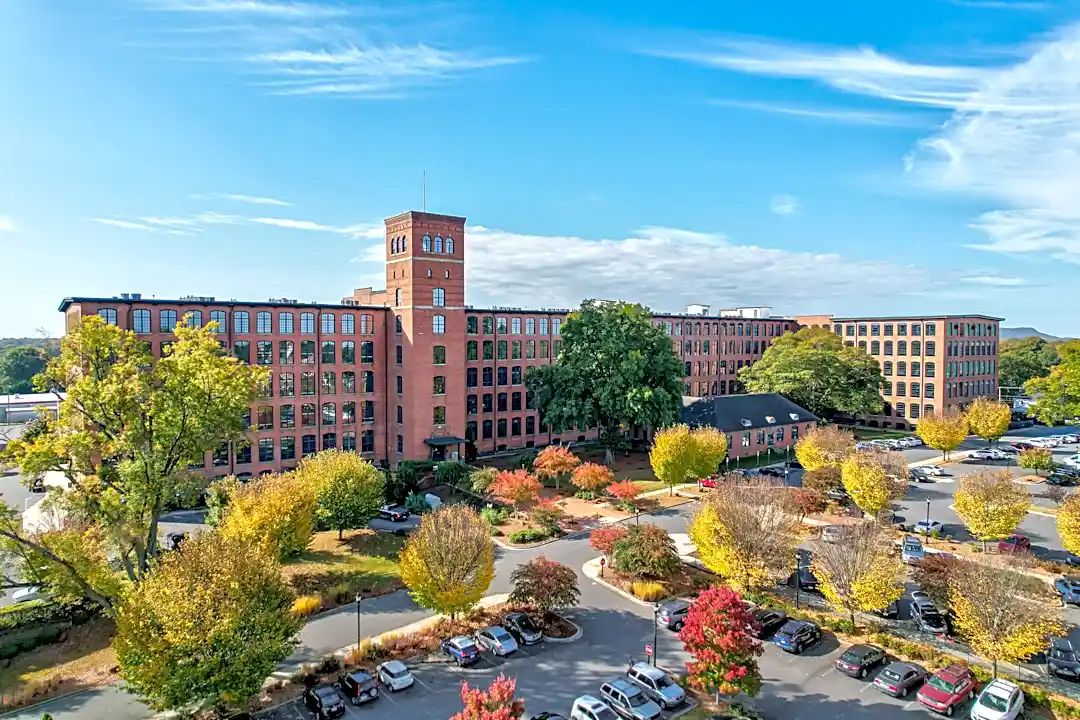



Federal Historic Tax Credits
$8.3 Million
NC Mill Rehab Tax Credits
$16.5 Million

Total Project Cost
$52 Million

Project Partner
Tribridge Residential

Impact
Housing, Economic Development
History
One of North Carolina's Largest Textile Mills
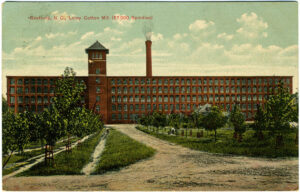 Constructed between 1900 and 1922, Loray Mill is a nationally significant example of early twentieth-century industrial construction and one of the largest textile mills ever built in North Carolina. Originally developed for cotton cloth production, the mill was converted to tire fabric manufacturing following its acquisition by the Jenckes Spinning Company in 1919. Subsequent expansions in 1921 and 1922 reflected the mill’s growing role in regional industrial production and its contribution to Gastonia’s emergence as a textile hub known as “Spindle City.”
Loray Mill is also historically notable as the site of the 1929 Loray Mill Strike, which involved more than 1,000 workers and brought national attention to labor conditions in the Southern textile industry. The strike was driven in part by the “stretch-out,” a management practice that increased worker workloads while reducing staffing levels. In the wake of the strike, Loray Mill closed and was later purchased by Firestone Tire and Rubber Company, which operated the facility until 1993. After decades of vacancy, the property began a phased historic rehabilitation in 2013, continuing to this day.
Revitalization Efforts
From Vacant to Vibrant
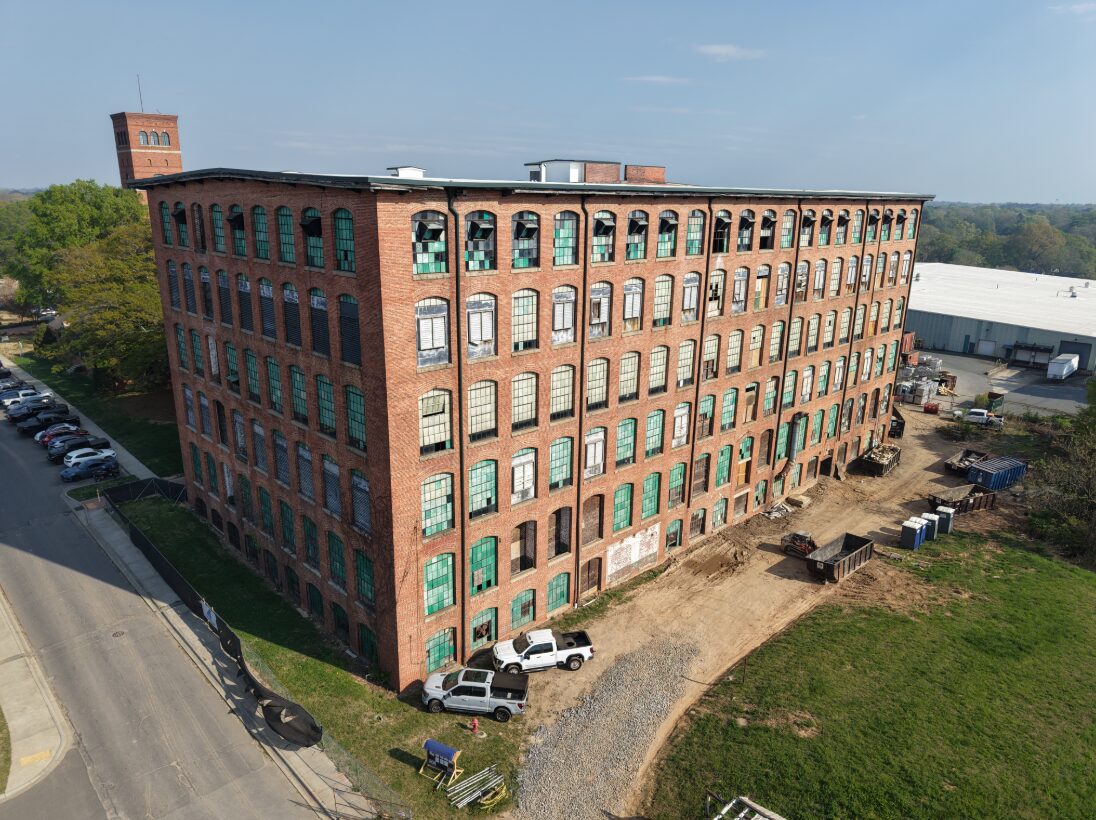
The rehabilitation of Loray Mill Lofts Phase 2 completes the adaptive reuse of the historic Loray Mill by converting the long-vacant west block into 143 market-rate rental apartments and resident amenity spaces. The project builds on Phase 1 of the redevelopment, which delivered nearly 200 market-rate apartments along with commercial space and shared amenities that anchor the mill campus today.
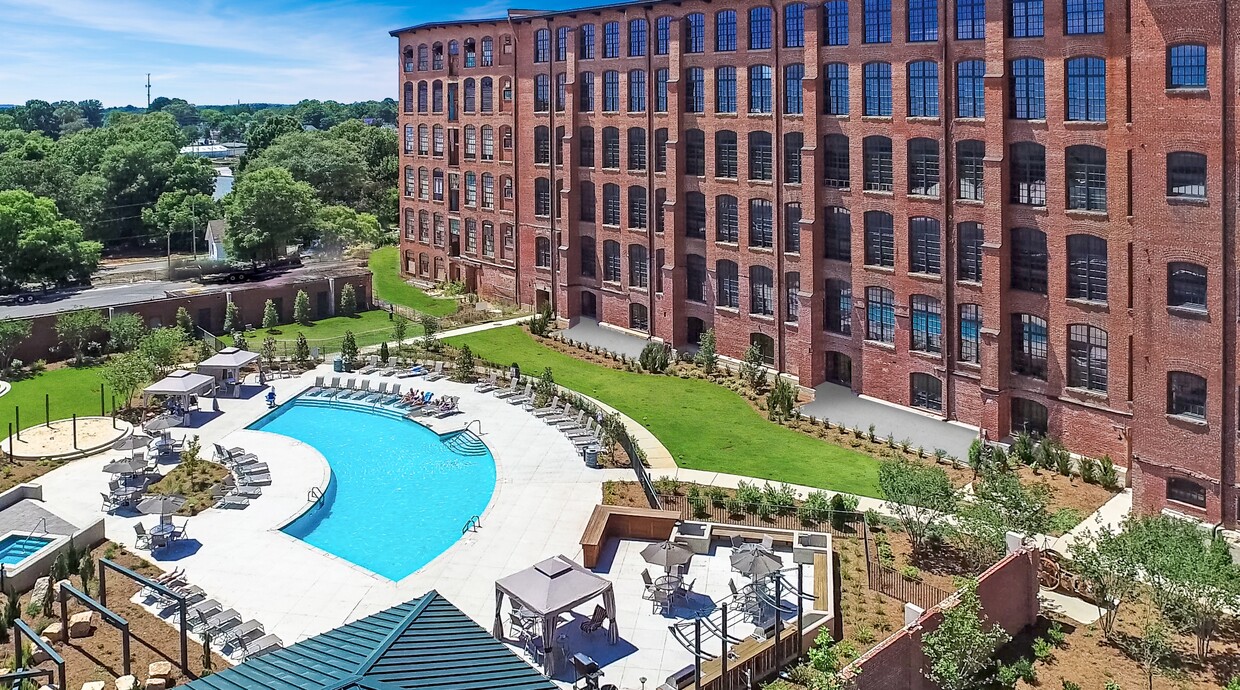
Phase 2 continues this momentum with one-, two-, and three-bedroom units designed to highlight the building’s historic industrial character through open floor plans, high ceilings, exposed brick, and original structural elements. New amenities include a clubroom, fitness room, and indoor garden, with residents also accessing Phase 1 amenities such as the pool, clubhouse, and outdoor gathering spaces. Together, the project represents a key component of the broader revitalization of the Loray Mill Village, restoring historic structures and returning the site to active residential use.
Community & Economic Impact
Loray Mill Lofts Phase 2
The rehabilitation of Loray Mill Lofts Phase 2 advances the revitalization of one of Gastonia’s most historically significant industrial sites while expanding housing opportunities within an established mill village. By completing the adaptive reuse of the Loray Mill campus, the project returns a long-vacant portion of the property to active residential use, creating more affordable options in the Charlotte-area suburbs.

Residential Units Created
143
Historic Space Restored
164,000 SF
NTCIC & Progress
Financing
NTCIC provided an equity investment in the $8.3 million of federal Historic Tax Credits and the $16.5 million in North Carolina Mill Rehabilitation Tax Credits generated by the preservation of Loray Mill Lofts Phase 2.
NTCIC served as the Federal Historic Tax Credit and North Carolina
Mill Rehabilitation Tax Credit investment sourcer, underwriter, and closer for the transaction. In addition, NTCIC will serve as asset manager throughout the compliance period, providing ongoing oversight to support successful credit delivery and long-term stewardship of the historic property.
Check Out Similar Projects Here
Browse all projects
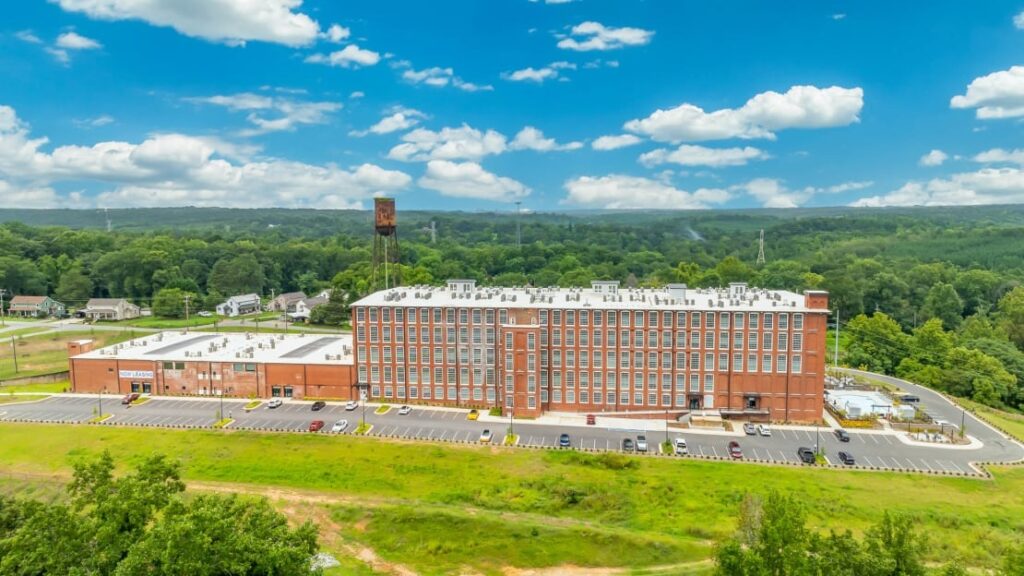
Converse Mill
Former Textile Mill Transformed Into Vibrant Apartment Living
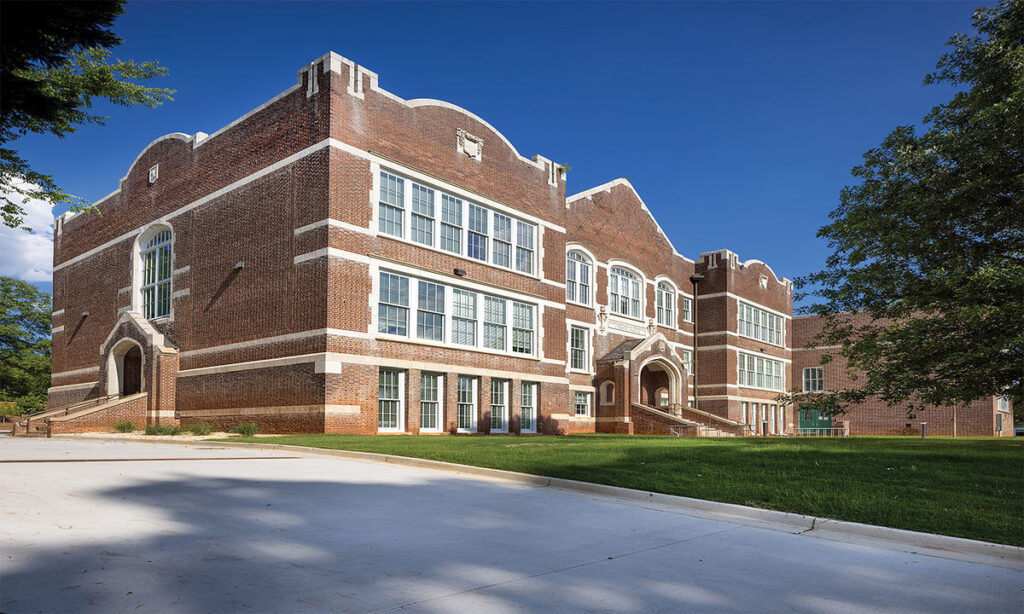
Academy Lofts at Adair Park
Atlanta School Becomes Live-Work Space for Creatives
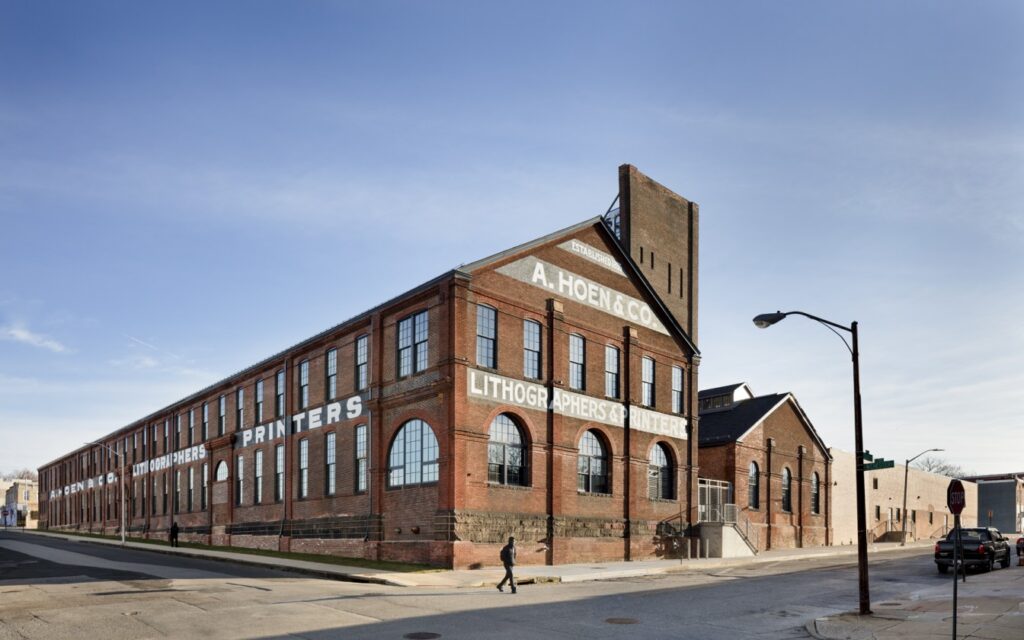
Hoen Lithograph Building
A Historic Printing Factory Hums with Innovation
Converse Mill
Former Textile Mill Transformed Into Vibrant Apartment Living
Academy Lofts at Adair Park
Atlanta School Becomes Live-Work Space for Creatives
Hoen Lithograph Building
A Historic Printing Factory Hums with Innovation
Want to Discuss Your Next Project? Talk With Our Team Today.
We bring clear insight, deep experience, and strategic focus to every project, whether you're structuring complex capital or shaping long-term, legacy-driven development.