



Washington D.C. – August 17, 2026: The National Trust Community Investment Corporation (NTCIC) is pleased to announce the successful financial closing of the Mainline project in Dayton, Ohio. Once home to prominent office and institutional uses, the Centre City Building and Air City Garage will be transformed into a vibrant mixed-use destination featuring housing, retail, and structured parking. NTCIC provided an equity investment in the $27.6 Million State and Federal Historic Tax Credits generated by the preservation efforts, the $14 Million Transformational Mixed-Use Development (TMUD) tax credits, and a $4 million New Markets Tax Credit investment supporting the project’s mixed-use components.
A Legacy at the Center of Dayton
The United Brethren Publishing House, now known as the Centre City Building, traces its roots to 1853 and grew into a defining presence in Dayton’s downtown through multiple phases of construction between 1903 and 1924. Envisioned as both a commercial and mission-driven asset, the building supported publishing operations and revenue generation for the denomination while anchoring the city’s skyline.
The adjacent Air City Garage, completed in 1960, served as a key downtown parking facility before falling into disrepair in later years, mirroring broader economic struggles in the surrounding area.

“This project reflects the catalytic impact our investments can have in communities across the country. We are proud to continue our partnership with The Model Group on another high-impact development that supports economic growth and neighborhood revitalization.”
- Tony Maruca
- Senior Project Manager, NTCIC
A New Chapter for Downtown Dayton Living
The Mainline redevelopment will introduce 137 new residential units, including 17 income-restricted and affordable units, across the Centre City Building, creating new mixed-income housing opportunities in the downtown core. Former office floors will be reactivated with modern living spaces that retain historic features, while ground-floor retail will bring new energy to Main Street.
The project will also introduce a curated mix of commercial tenants, including a café and fresh food market, expected to serve more than 20,000 customers annually, expanding access to everyday goods and services in a neighborhood that has historically lacked these options. It will also become the expanded home of an entrepreneurial center capable of supporting start-ups and small business leaders each year.

“This project represents the power of collaboration to drive meaningful change. Working alongside NTCIC, we have been able to advance developments that not only restore historic buildings but also create lasting opportunities for residents and businesses across Ohio.”
- Zach Woolard
- VP of Development at the Model Group
Layered Financing Supporting Transformational Impact
NTCIC provided an equity investment in the $16 million in federal historic tax credits and $11.6 million in state historic tax credits generated by the preservation efforts, along with an additional $4 million New Markets Tax Credit investment supporting the project’s mixed-use components.
NTCIC served in multiple roles across the capital stack, including as a Federal and State New Markets Tax Credit allocatee and asset manager, as well as underwriter and closer for Federal and State Historic Tax Credit and TMUD investments, and Federal HTC fund manager.
The project utilized a layered financing structure that also included Ohio New Markets Tax Credits and Ohio Opportunity Zone incentives, reflecting the scale and complexity of the redevelopment. The use of TMUD credits in conjunction with the nearby Dayton Arcade underscores a coordinated approach to investment and demonstrates clear public commitment to the long-term success and revitalization of this key downtown commercial corridor.
Washington D.C. – May 18, 2026: The National Trust Community Investment Corporation (NTCIC) is proud to announce the successful closing of financing for the redevelopment of the historic Ontario & Western Railway Station in Middletown, New York. The $44.8 million project will transform the long vacant landmark into a modern Head Start early childhood education and family services facility operated by the Regional Economic Community Action Program (RECAP), a private not-for-profit established in 1965 and designated as the anti-poverty agency in Orange County.
Revitalizing a Railway Relic
Constructed in 1892, the New York, Ontario & Western Railway Station is one of Middletown’s most prominent historic landmarks. For more than sixty years, the Station served as a major economic and civic anchor for Middletown, operating as both a passenger terminal and the operational hub of the Ontario & Western Railway. Even after rail service ended in 1957, the building continued to serve Middletown through a series of adaptive uses before falling vacant following a fire in 2004. Despite years of disuse, the station has remained a powerful symbol of Middletown’s working history and its longstanding connection to regional economic life.

“The O&W Project perfectly encapsulates the City of Middletown’s values and what we have been working to achieve: providing for our residents while preserving our history. Like the O&W Building, RECAP has been a staple in our community for decades, and we are proud to work with them as a partner on this project. We are celebrating our past while looking towards the future – which, of course, starts with our children.”
- Joseph DeStefano
- Mayor of Middletown, New York
Head Start at the Station
Upon completion, the former railway station will reopen as a permanent home for Head Start and other childcare services operated by RECAP, bringing together programming currently offered across two leased locations within active churches. Today, RECAP serves 137 Head Start children in these community based settings. The project will relocate and expand this programming into a single, purpose built facility, allowing RECAP to enhance its learning environments, better align space with program needs, and increase capacity to serve more children and families.
The redeveloped building will support expanded enrollment, increasing preschool capacity for children ages 3–5 to nearly 150 children annually, while adding new programs serving infants and toddlers ages 6 weeks to 3 years and children ages 5 and older. The new facility will allow 100% full-day Head Start programming, compared to current part-day limitations, and will provide all enrolled children with additional services, including mental health support, vision and health screenings, developmental screenings, and early childhood substance abuse prevention. The project will also expand adult education and asset building services for families and support 54 fulltime equivalent jobs, with nearly all positions offering comprehensive benefits.

“The Ontario & Western Railway Station is an iconic building, and this redevelopment shows how historic preservation can support real community needs. The project pairs a thoughtful rehabilitation with a use that serves families every day, ensuring the building remains both relevant and active for generations to come.”
- Heather Buethe
- Senior Director of Project Management at NTCIC
Financing Preservation
NTCIC provided a $5 million New Markets Tax Credit allocation, along with an equity investment in the $13 million in federal and state Historic Tax Credits generated by the rehabilitation. Additional NMTC allocation was provided by Empire State Development and the project was supported through robust local- and state-grant funds as well as a capital campaign, showcasing strong local support for the development.
By reactivating a long vacant historic landmark and expanding access to high-quality childcare in a designated childcare desert, the redevelopment of the Ontario & Western Railway Station strengthens early childhood outcomes, supports working families, and ensures this iconic building continues to serve Middletown for generations to come.
Learn more about the Ontario & Western Railway Station project here.
WASHINGTON, DC, January 5, 2026: The National Trust Community Investment Corporation (NTCIC) is pleased to announce that we have been awarded $70 million in New Markets Tax Credit (NMTC) allocation authority by the U.S. Department of the Treasury’s Community Development Financial Institutions Fund (CDFI Fund).
With this award, NTCIC will deploy our preservation-based community investment strategy to save and repurpose old, underutilized buildings across the country to spur economic growth and support vibrant communities. We will prioritize our NMTC allocation to projects that:
- Rehabilitate historic buildings in Deep Distress communities;
- Create economic stability by creating or retaining quality jobs that are accessible to low-income individuals; and
- Deliver a broad range of critical community services such as daycare, education, workforce training, healthcare, arts programming, and multi-service support to address the needs of underinvested communities and foster economic opportunity, stability, and revitalization.
Click below to submit your NMTC-eligible project for consideration.

We also want to congratulate our fellow awardees and look forward to working with partners across the country to support underinvested communities that need access to capital to bring new life to historic community assets.
NTCIC’s History of Impactful Investments
Since the inception of the NMTC program in 2000, NTCIC has deployed $729 million in NMTC allocation across 112 high-impact rehabilitations. These projects have created over 38,000 permanent and construction-related jobs, provided over 2,270 units of housing, and revitalized over 13.5 million square feet of historic buildings. On an annual basis, our investments in health care, education, business incubation, and community service facilities currently support over 198,000 low-income community residents.
To learn more about our New Markets Tax Credit investment process, click here.
About the New Markets Tax Credit
On December 23, the CDFI Fund awarded $10 billion in allocation authority for the calendar year 2024-2025 round of the New Markets Tax Credit Program (NMTC Program) to 142 Community Development Entities (CDEs). This is the largest allocation in the program’s history and will stimulate economic growth and empower private-sector investment in distressed communities.
This year’s $10 billion award will drive private investment into communities that lack access to capital, especially in rural America, and is expected to accelerate job creation in sectors such as manufacturing and small business. The NMTC Program will leverage billions more in private capital, multiplying the impact of federal investment, and will support critical infrastructure, business financing, and community facilities, including rural hospitals and health care facilities.
The NMTC Program advances economic development in economically distressed communities by making tax credit allocations available to CDEs for targeted investments in eligible areas. The Program was recently made a permanent part of the U.S. tax code through the One Big Beautiful Bill Act (OBBBA).
Over its history, the NMTC Program has facilitated $77 billion in qualified equity investment and $143 billion in total development financing across more than 8,900 urban, suburban, and rural low-income community businesses. These investments have created more than 1.2 million jobs nationwide.
 The National Trust Community Investment Corporation (NTCIC) is proud to announce our successful closing of financing for the redevelopment of the historic Chicora Graded School in North Charleston, South Carolina. The $37.7 million project will transform the historic and long‑vacant public school building into Cristo Rey, a new college‑preparatory high school serving exclusively low‑income students from across the Charleston region. NTCIC provided $4 million in New Markets Tax Credit allocation as well as an equity investment in the $5.5 million federal and $2.75 million South Carolina Historic Tax Credits generated by the rehabilitation. The redevelopment also will utilize $2.8MM of South Carolina’s State Abandoned Building Tax Credits.
Originally constructed in 1935, the Chicora Graded School served the Chicora– Cherokee neighborhood, a community historically tied to employment at the Charleston Navy Yard. For decades, the building functioned as a public elementary school, first as a segregated school for white students and later as a more integrated neighborhood school. The campus expanded multiple times between 1938 and 1955, adding classrooms, an auditorium, a cafeteria, and administrative space. Following the closure of the Navy Yard in 1996, the surrounding area experienced significant economic decline and by 2011, the school faced substantial deferred maintenance ultimately leading to its closure.
“NTCIC was thrilled to have the chance to be a part of financing Cristo Rey High School in North Charleston. This school will give students access to a college prep education while giving them valuable work experience and will play a key role in Metanoia’s mission to serve existing residents of North Charleston, which is experiencing rapid growth and gentrification.”
- Tony Maruca
- Senior Project Manager
Upon completion, the former Chicora Graded School will reopen as Cristo Rey High School, a college-preparatory high school designed to serve up to 400 students, all from low‑income households. The school will combine rigorous academics with Cristo Rey’s signature corporate work‑study model, which provides students with paid professional experience, mentorship, and exposure to career pathways while offsetting the cost of tuition. The rehabilitated facility will include modern classrooms, administrative offices, science and technology labs, a cafeteria and commercial kitchen, assembly and gathering spaces, and outdoor areas designed to support both academic instruction and workforce development programming.

“This historic school campus has been the heartbeat of the community for years and we are very excited to be renovating it as a place of opportunity for families in Chicora and beyond to build on their own strengths and release their brilliance.”
- Rev. Bill Stanfield
- CEO of Metanoia
This project has the potential to create meaningful change in one of North Charleston’s most economically distressed neighborhoods. Within the Chicora neighborhood, nearly 40% of residents live in poverty, local schools have historically been underfunded, and graduation and college‑completion rates for students of color in the area lag significantly behind state and regional averages. By reactivating a long‑vacant neighborhood building and expanding access to high‑quality education, the redevelopment strengthens workforce readiness and supports long‑term economic mobility for students and families across the region.
“A school is a promise,” Rev. Stanfield said. “It’s a promise to a community and a promise to its young people.”
The National Trust Community Investment Corporation (NTCIC) is proud to announce the successful financial closing of the $40.2 million revitalization of Benn High’s NMTC Condo in Bennington, Vermont. This transformative redevelopment will breathe new life into a historic 1913 former school building by creating a dynamic, community-centered hub with workforce housing, community recreation space, a senior center, and more. NTCIC provided a $5 million New Markets Tax Credit (NMTC) allocation and facilitated an equity 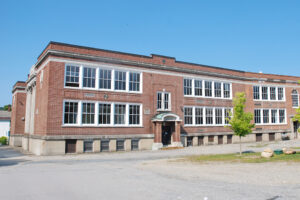 investment in the $5.6 million in federal Historic Tax Credits (HTCs) generated by the project.
The historic Bennington High School, an iconic example of Beaux Arts public architecture, served students for nearly 100 years before closing its doors. Vacant since 2004, the building is now poised for a new future through an adaptive reuse project known as Benn High.
“NTCIC is incredibly proud to have played a role in the Benn High redevelopment,” said Amanda Bloomberg, Senior Acquisitions Manager at NTCIC. “It was truly a pleasure collaborating with Zak Hale and the various players whose dedication and vision brought this transformative project to life. With its diverse and creative financing sources, we believe Benn High will serve as a case study for future redevelopment efforts across the country.”
The NMTC Condo totals 72,000 sq ft, which will include 22 workforce housing units and nearly 48,000 sq ft of commercial and community space. Tenants include the Town of Bennington, leasing over 28,000 sq ft for a new community recreation and senior center, the YMCA, operating a 102-seat childcare center that will serve mostly low-income families, the University of Vermont Extension, offering agricultural, nutrition, and community development programs to over 1,000 residents annually, and more.
The project also incorporates geothermal and solar technologies, making it 100% electric. Significant Brownfield Remediation Funds (BRF) were secured from both Vermont and the federal government to address contamination from a pre-existing 19th-century machine workshop on site.
The community impact of Benn High is far-reaching. It is projected to create 24 new permanent full-time jobs and 92 high-quality construction jobs, retain 35 existing jobs, create access to new recreation programs for more than 4,300 individuals, provide childcare for 102 children, with 55% from low-income households, host senior programming for 150+ local seniors, expanded nutrition education through the UVM extension program, and more.
“The Benn High Redevelopment has been the most challenging and rewarding endeavor of my career,” said Zak Hale, CEO of Hale Resources LLC. “Bringing together more than 30 financing sources and aligning them with the realities of a century-old school building required persistence and creativity at every turn. We’re grateful to NTCIC and our many partners for their support in making this project possible. Most importantly, Benn High will once again be a place that brings people together, providing housing, childcare, recreation, and services that will strengthen Bennington for generations to come.”
Located in an area with high levels of community need, the Benn High redevelopment will not only generate additional housing options but will serve as a community hub providing critical resources to residents of all ages. NTCIC’s investment in Benn High continues its mission to revitalize historic spaces in underserved communities, delivering inclusive, resilient, and economically sustainable development.
July 2025 Policy Update
WASHINGTON, DC, July 16, 2025 – The House Republican Reconciliation Bill, “One Big Beautiful Bill”, was signed into law on July 4th. Community development advocates are celebrating that the New Markets Tax Credit is now permanent and not subject to expiration as has been the case for the last 25 years. This is a huge legislative victory and a celebration for the NMTC advocacy community. The permanency of this credit will allow for continued and uninterrupted investment in economically distressed communities for years to come.
However, the bill also rolls back clean energy credits for wind and solar energy, requiring these projects to begin construction within one year of bill passage, or be placed in service by the end of 2027, to receive the tax credit. Wind and Solar projects that begin construction by July 2026 will have four years to begin operations and receive the credit. NTCIC expects this policy to create a “pull-forward” effect, resulting in an especially active solar marketplace for the next few years. Notably, energy storage and other clean energy projects, including geothermal and hydro, still qualify for the full 48E credit through 2033.
Despite an outpouring of advocacy, no improvements for the Historic Tax Credit were included in the bill, but it is not overlooked that sustained advocacy has positively positioned the HTC to not be targeted for a rollback or elimination as it was in 2017.
There may be opportunities to improve these incentives in a bipartisan tax bill later this year or possibly another reconciliation bill. Our work is not done, and to remain in the tax code and to enact improvements, advocacy must continue and ramp up at the next opportunity for all these important incentives.
The National Trust Community Investment Corporation (NTCIC) is pleased to announce the successful financial closing for the $64.5 million renovation of the iconic Apollo Theater in Harlem, New York. A cornerstone of African American cultural history and a world-renowned performing arts venue, the Apollo will undergo an extensive interior and exterior restoration that honors its legacy while upgrading its facilities to better serve artists, audiences, and the surrounding community.
“On behalf of The Apollo Theater Foundation, Inc. Board of Directors and leadership, I express deep gratitude to Historic Theater lenders and capital campaign contributors for their generosity in support of The Apollo and the community of Harlem,” said Michelle Ebanks, President and Chief Executive Officer of The Apollo Theater Foundation, Inc. “The groundbreaking marks the beginning of a new chapter in The Apollo’s journey—a curtain drop in every sense of the word – taking us from a place of reverence to a place of relevance. As we prepare to renovate and reimagine this legacy space, we do so not to erase its history, but to elevate it. To honor the shoulders we stand on, while building a more modernized foundation for those who will come after us.”
Originally opened in 1914 as Hurtig & Seamon’s New Burlesque Theater and renamed the Apollo in 1934, the venue became a vital cultural hub amid Harlem’s evolution and a defining force in American music. The Apollo launched the careers of legendary artists such as Sarah Vaughan, James Brown, and the Jackson 5 through its famous Amateur Night, and played a central role in the rise of genres including R&B, bebop, and soul.
Even as the theater faced economic decline and closure in the 1970s, it was repeatedly revived through community and state partnerships. In recognition of its extraordinary cultural significance, the Kennedy Center honored the Apollo in 2024 for its lifetime contribution to American arts.
“The Apollo Theater is more than a stage—it’s a cultural icon that has shaped American history. Through the Historic Tax Credit program, we are honored to help preserve this legacy for future generations,” said David Clower, President of the National Trust Community Investment Corporation. “Supporting the Apollo Theater restoration reflects NTCIC’s commitment to revitalizing spaces that hold deep cultural and community significance. This project is a powerful example of how public-private partnerships can protect our nation’s historic fabric.”
The restoration will preserve and enhance the historic theater’s architectural and performance integrity, including the conversion of the iconic Apollo neon blade sign to energy-efficient LED, and interior improvements that will modernize the theatrical, environmental, and acoustical systems, install new seating and accessibility upgrades, renovate dressing rooms, and expand the lobby.
With the renovation, the Apollo will be able to support over 150 performances annually, expanding access to world-class cultural programming. Over 1,300 students will visit annually for educational tours, and the theater’s Job Readiness Pathway to the Arts program will grow from 50 to 75 high school participants each year. The Apollo will also continue its Ticket Access Program, distributing 10,000 free tickets annually through more than 300 NYC organizations serving underrepresented communities, and maintain its Half Off Harlem initiative for local residents. In alignment with environmental stewardship goals, the project will also pursue LEED Silver certification.
NTCIC supported this transformative project through equity investments in the $14.8 million state and federal Historic Tax Credits generated by the renovation, as well as an $8 million New Markets Tax Credit allocation (NMTC).
Additional project financing was provided by J.P. Morgan through a combination of $25 million in bridge debt financing, a $4.9 million NMTC allocation, and acted as the NMTC investor for the project. Octagon Finance supported project financing through a $9 million Historic Tax Credit bridge loan, and the New York City Economic Development Corporation (NYCEDC) provided $23 in NMTC allocation.
Additional funding includes $20.7 million in grant commitments from organizations such as the NYC Department of Cultural Affairs, a $10 million grant from Empire State Development, and a $5 million grant from SiriusXM.
“The Apollo Theater is a beacon of cultural innovation and community enrichment,” said Olivia Pipitone, Executive Director at J.P. Morgan Community Development Banking. “At J.P. Morgan, we are immensely proud to support its historic renovation, ensuring it continues to inspire and launch legendary talent for generations to come.”
This project reaffirms the Apollo’s role as a cultural anchor in Harlem and a national symbol of artistic excellence and resilience, preserving its historic legacy while equipping it to thrive for generations to come.
WASHINGTON, DC, February 24, 2025: The National Trust Community Investment Corporation (NTCIC) is pleased to announce the successful financial closing for the revitalization of the historic Emery Theater to become the new year-round home of The Children’s Theatre of Cincinnati (TCT). The $52.1 million renovation will transform the Emery Theater into a state-of-the-art, 1,500-seat facility that will function as a hub for children’s theater performances and arts education while helping to preserve and revitalize a cultural landmark in the heart of Cincinnati.
The Children’s Theatre of Cincinnati Returns Home to Emery Theater
“We are beyond thrilled to begin this new chapter of The Children’s Theatre of Cincinnati as we return home to the iconic Emery Theater,” said Kim Kern, TCT President & CEO. “This transformative renovation will not only breathe new life into a piece of Cincinnati history, but will also significantly expand our ability to serve our community. The new space will

allow us to deepen our commitment to arts education, making the theater even more accessible to children of all ages and backgrounds.”
NTCIC provided an $8 million in New Markets Tax credit allocation and facilitated an equity investment in the $7.5 million in federal Historic Tax Credits anticipated to be generated by the project to support the revitalization of the iconic space and expansion of TCT’s arts programming for children and families in Cincinnati.
“We are incredibly grateful to all of our many supporters and to NTCIC for their role in making this renovation possible,” said Roderick Justice, TCT Artistic Director. “With the completed renovation of the Emery Theater, we will be able to impact more children through expanded programming, original and new works, and theatre for specific age groups such as children under the age of four and middle schoolers. This new space will help us nurture the next generation of young artists and future arts patrons in ways we never could before.”
Community-Driven Impact
For more than 50 years, TCT has been operating out of a rented location, limiting their productions to just 40 days throughout the year. The renovation of the Emery Theater will allow for year-round productions, expanding their schedule to nearly 150 shows annually. With a capacity to serve more than 200,000 patrons each year, the renovated theater will provide even more opportunities for arts education experiences for young people, presenting children’s theatre programming never before seen in Cincinnati. Over 97,000 Cincinnati public school students will have the opportunity to benefit from access to performing arts programs annually, with a special focus on Title 1 schools and low-income families.
“The Children’s Theatre of Cincinnati is an extraordinary organization that is doing vital work in their community, providing transformative arts education and access to the children and families who need it most,” says David Clower, CEO of NTCIC. “We are grateful to have played a part in helping the Children’s Theatre realize their dream of becoming a world-class performance venue that will serve generations to come.”
As the once-shuttered Emery Theater reopens its doors and welcomes TCT back home, it promises to become a hub of creativity and community, providing a space for families and students of all backgrounds to learn and grow while experiencing the magic of live theatre together.
Learn more about the project here.
About NTCIC
The National Trust Community Investment Corporation (NTCIC), a subsidiary of the National Trust for Historic Preservation, is a mission-driven, impact investment asset management firm focused on the adaptive reuse of historic properties and renewable energy solutions across the country. Founded in 2000, NTCIC makes transformational impact investments in low-income & disinvested communities, promoting a brighter more equitable future by revitalizing historic properties and expanding our nation’s renewable energy accessibility through innovative community development & tax credit investment strategies.
About The Children’s Theatre of Cincinnati
The Children’s Theatre of Cincinnati (TCT) has been creating lifelong memories for families with children and school audiences since 1919. TCT’s mission is to educate, entertain, and engage audiences of all ages through professional theatrical productions and arts education programming.
Image Credits: The Children’s Theatre of Cincinnati
WASHINGTON, DC, January 28, 2025: NTCIC is proud to announce the successful financing of the Tivoli Theatre in Chattanooga, Tennessee. The $73 million restoration will transform the historic theater and adjoining Trigg-Smartt buildings into a state-of-the-art performing arts center, revitalizing a key cultural asset in the heart of the downtown district. NTCIC provided a $9 million New Markets Tax Credit (NMTC) allocation and an equity investment in the $12.5 million in federal Historic Tax Credits (HTCs) generated by the project.
Chattanooga’s Iconic Tivoli Theatre Set for Grand Revival
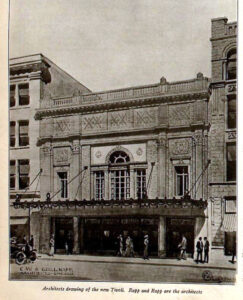 Chattanooga’s Tivoli Theatre, “the Jewel of the South,” opened its doors to the public in 1921 as a 1,750-seat state-of-the-art performance space and is notably regarded as the first public building in the south, and one of the first in the country, to have air conditioning. After decades of changing ownership and experiencing varying levels of usage, the Tivoli Theatre Foundation closed the space in 2022 to begin a full restoration.
“In order to truly improve the Tivoli and the impact it will have on the hundreds of thousands of people we serve annually, a complete renovation and expansion was necessary. The creation of the new Tivoli Performing Arts Center will allow us to feature enhanced and diverse programming, including our new education department and other outreach efforts,” Wilkinson continued. “As the cultural anchor for the performing arts in Chattanooga for over a century, this project will breathe new life into the Tivoli Theatre and create a new, more accessible community venue that will house rehearsal and education spaces, ultimately creating increased access for all Chattanoogans to witness and be a part the magic of the performing arts.”
Upon completion, the performing arts center will include a new 190-seat cinema and studio, an expanded lobby, a restaurant, six bar spaces, additional event areas, and upgrades to all service and mechanical systems, including bathrooms, HVAC, and more. Outside, the iconic Tivoli Theatre marquee will be restored and modernized to light up the city streets once again.
The Tivoli Theatre Foundation will use its new space to expand upon partnerships with organizations like the Chattanooga Symphony & Opera, Chattanooga Ballet, and the Chattanooga Boys Choir. This expansion of programming and partnerships is expected to increase the theatre’s annual patronage by more than 32,000 people, boosting revenue by nearly 60% within five years.
Community-Driven Impact
“The Tivoli Theatre Foundation is incredibly grateful to NTCIC for their long-term commitment to this important project for the Chattanooga community,” said Nick Wilkinson, CEO of the Tivoli Theatre Foundation. “From the start, NTCIC has been unwavering in its help to facilitate tax credit investment necessary to restore and improve these historic landmark buildings. It is a testament to their belief in our organization and mission and we quite literally could not commence such a transformative project without them.”
NTCIC’s involvement helped to ease the Tivoli Theatre Foundation capital campaign burden and ensure low-cost access to performances and programming for low-income families. The Tivoli Theatre Foundation has raised over $20 million so far through a successful capital campaign, and nearly $12 million in PACE financing is supporting energy-efficient upgrades to the building.
“The Tivoli Foundation has done amazing work creating a space for the people of Chattanooga to enjoy the theatre arts, while simultaneously serving their community and investing in the future of their local students,” says David Clower, CEO of NTCIC. “NTCIC is proud to have played a part in the restoration of this iconic theatre, ensuring that it remains a center of arts and culture for generations to come.”
When the Tivoli Theatre reopens its doors, visitors are sure to be impressed not only by the state-of-the-art upgrades and expansion of the facility, but by the mission-driven goals of the Tivoli Theatre Foundation and its commitment to making performing arts education accessible to all of Chattanooga’s youth.
Click here to learn more about the historic of the building and its next chapter
About NTCIC
The National Trust Community Investment Corporation (NTCIC), a subsidiary of the National Trust for Historic Preservation, is a mission-driven, impact investment asset management firm focused on the adaptive reuse of historic properties and renewable energy solutions across the country. Founded in 2000, NTCIC makes transformational impact investments in low-income & disinvested communities, promoting a brighter more equitable future by revitalizing historic properties and expanding our nation’s renewable energy accessibility through innovative community development & tax credit investment strategies.
About The Tivoli Theatre Foundation
The Tivoli Theatre Foundation was formed by Chattanooga Mayor Andy Berke in 2015 to ensure the sustainability of two city-owned historic sites, The Tivoli Theatre and Soldiers & Sailors Memorial Auditorium, while promoting them as vibrant attractions that add to the quality of life in Chattanooga.
Image Credits: Tivoli Theatre Foundation
“Pontiac is a comeback city, writing the story of its recovery. We are doing our part by growing healthy food, making sure neighbors are known, kids are resourced, and services are accessible.”
Originally built in 1921 during Pontiac, Michigan’s automotive boom, the historic Webster School is set to embark on a new chapter as the Webster Community Center. Led by local community development corporation Micah 6 Community, the Center will combine over a dozen service- and development-oriented providers and nonprofits under one roof, creating a transit-oriented integrated hub of health, education, and opportunity.
The National Trust Community Investment Corporation (NTCIC), a tax credit syndicator and subsidiary of the National Trust for Historic Preservation, is proud to support the project development through a $7 million New Markets Tax Credit allocation and an equity investment in the $5.5 million of Historic Tax Credits generated from the preservation efforts.
Continuing a Legacy of Education and Opportunity
The historic 54,000-square-foot Webster School opened during Pontiac’s population boom, as tens of thousands flocked from the south to work in the rapidly growing automotive manufacturing industry that originally put the city on the map. After the school eventually closed in 2008 and stood vacant for over a decade, this historic building is set for a new life.
Once complete, the Webster Community Center will be a vibrant ecosystem of over a dozen nonprofit and service-oriented organizations, all dedicated to providing critical resources to children and families.
The Center will feature a Federally Qualified Healthcare Center aimed at addressing the community’s lack of access to primary healthcare, a HeadStart program operated by Oakland Livingston Human Service Agency (OLHSA), and diverse youth enrichment programs including music, theater, art, sports, and STEM, all offered at minimal or no cost.
Webster will also include education and workforce training programs for adults, including a distance learning lab operated by Rochester Christian University and a commercial kitchen led by Micah 6 Community to support local food entrepreneurs while scaling up their existing food distribution services into a full food co-op.
“The Webster Community Center is going to provide essential services that our community has long needed,” stated Coleman Yoakum, developer of the project and leader at Micah 6 Community. “Moreover, our enrichment programs in arts, sports, and technology are tailored to foster creativity and learning in a nurturing environment and to give the children of the community a variety of developmental options. This project is about building a sustainable future where every resident has the resources they need to succeed.”
To improve access, the project will consolidate three bus stops at the center’s entrance and establish an indoor transportation hub with amenities like Plain and Fancy Food shop for food and coffee, another incoming tenant.
Community-Led Revitalization
Founded in 2012, Micah 6 Community is a neighborhood-based community development corporation dedicated to addressing key challenges in their community, such as limited access to healthy food, insufficient youth activities, and a lack of resources for unhoused individuals. The nearest grocery store to Webster Elementary is more than a mile away, a significant barrier given that nearly 30% of local residents do not own a car.
Recognizing these needs, Micah 6 Community initiated its first project by purchasing a vacant lot in 2013 to establish a community garden. This effort has since expanded to encompass over an acre of gardens and greenhouses, collaborating with local farms to provide thousands of pounds of fresh produce to the community at no cost. Micah 6 Community continues to make a meaningful impact through these initiatives and ongoing dialogue with residents. Over the years, they have established afterschool programs, a summer camp, and a holiday gift donation and distribution program.
“Micah 6 Community has demonstrated an extraordinary commitment to revitalizing Pontiac. Their passion for the community and unwavering dedication to delivering essential resources were crucial in making the Webster Community Center project a reality,” said Marcus Jones, Project Manager at NTCIC. “Working alongside such a motivated and community-focused group has been an inspiring experience.”
NTCIC is proud to have supported this project, recognizing the profound impact that the Webster Community Center will have on Pontiac’s local community. The project exemplifies the high-impact, community-led initiatives that the New Markets Tax Credit was designed to support, highlighting its role in facilitating transformative developments that truly benefit the community.
To learn more about the history of the building and its new use, click here.