



Washington D.C. – May 1, 2026: The National Trust Community Investment Corporation (NTCIC) is proud to announce our successful closing of financing for phase two of the Loray Mill revitalization in Gastonia, North Carolina. The $52 million historic preservation effort led by Tribridge Residential will transform the long-vacant section of one of the state’s most significant industrial landmarks into new housing opportunities in the Charlotte suburbs.
A Landmark of Industry and Labor History
Constructed between 1900 and 1922, Loray Mill stands as a nationally significant example of early twentieth‑century industrial construction and, at over 600,000 square feet, one of the largest textile mills ever built in North Carolina. Originally developed for cotton cloth production, the mill later transitioned to tire fabric manufacturing following its acquisition by the Jenckes Spinning Company in 1919, with major expansions completed in 1921 and 1922.
The mill is also historically notable as the site of the 1929 Loray Mill Strike, which involved more than 1,000 workers and brought national attention to labor conditions in the Southern textile industry. After the strike, the mill closed and was later purchased by Firestone Tire and Rubber Company, which operated the facility until 1993. Following decades of vacancy, rehabilitation efforts began in 2013 and continue today.
“Few buildings in the Southeast carry the weight of Loray Mill — it powered Gastonia’s rise as Spindle City and anchored the region’s textile economy for nearly a century before sitting largely vacant for decades,” said Josh McPherson of Tribridge Residential. “Tribridge owns and operates historic properties across the Southeast, and we’re proud to take on the final chapter of one of the most ambitious mill rehabilitations in the region.“

“NTCIC was the right capital partner for a transaction this complex, pairing the federal HTC with the North Carolina Mill Rehabilitation Tax Credit. Construction is now underway, returning a cornerstone of Gastonia’s history to active use for generations to come.”
- Josh McPherson
- Tribridge Residential
Anchoring a Revitalized Mill Village
Loray Mill Lofts Phase 2 completes the adaptive reuse of the historic mill by converting the long‑vacant west block into 143 market‑rate apartments with resident amenity spaces. The project builds on Phase 1 of the redevelopment, which delivered nearly 200 apartments along with commercial space and shared amenities, including an expansive and publicly accessible gym, that now anchor the mill campus.
The new residences feature one‑, two‑, and three‑bedroom units designed to preserve the building’s historic industrial character through open floor plans, high ceilings, exposed brick, and visible structural elements, while introducing modern amenities that support long‑term residential use. Together, the project represents a key component of the broader revitalization of the Loray Mill Village.

“We bring extensive experience executing complex financial structures that incorporate federal, state, and local incentives in support of historic preservation. These tools allow projects like Loray Mill to move forward while maintaining the integrity of places that are deeply important to their communities.”
- Carolyn Tom
- Project Manager at NTCIC
Financing Preservation
NTCIC made an equity investment in the $8.3 million Federal Historic Tax Credits, as well as the $16.5 million North Carolina Mill Rehabilitation Tax Credits, to support the preservation efforts of the final phase of revitalization.
NTCIC served as the Federal Historic Tax Credit and North Carolina Mill Rehabilitation Tax Credit investment sourcer, underwriter, and closer for the transaction, and will serve as asset manager throughout the compliance period. The North Carolina Mill Rehabilitation Tax Credit played an important role in supporting reinvestment in a long‑vacant industrial property and encouraging continued preservation activity in distressed communities.
NT Solar is proud to announce its first investment with United States Solar Corporation (US Solar) to support a portfolio of seven community solar projects located in Colorado. Throughout construction of the projects, NT Solar will provide an equity investment on the $43 million of Solar Investment Tax Credits (ITC) generated by the solar projects. The projects total 46 MWdc and are expected to generate approximately 90 million kWh annually — enough to power nearly 8,300 homes per year.
“NT Solar’s first investment with US Solar reflects our commitment to expanding access to clean energy while delivering meaningful community benefits,” said Paul Holshouser, Director of NT Solar. “We’re especially proud to support projects that prioritize low-to-moderate income households and environmental revitalization.”
US Solar is committed to community-focused energy solutions. Nearly 5,000 families will receive utility bill discounts, averaging around $600 per year in savings for each household — equivalent to cutting the average utility bill nearly in half. The developer has partnered with nonprofit Energy Outreach Colorado to connect income-qualified households with those savings. Combining environmental innovation with social equity, US Solar’s portfolio supports low-to-moderate income households and transforms landfill-adjacent land into green energy hubs, and with six of the seven projects located adjacent to the Denver Arapahoe Disposal Site landfill, the project will provide a green buffer for nearby communities.
“Partnering with NT Solar on this community solar portfolio has enabled us to complete these projects that deliver both community and financial returns,” said Brian Lantz, Chief Financial Officer at US Solar. “We look forward to continuing our partnership and deploying capital across additional community solar markets in the near future.”
The roughly 90 million kilowatt-hours (kWh) generated annually by the installations are projected to sequester the same amount of carbon from the atmosphere as over 44,000 acres of forest and generate the amount of electricity equivalent to burning over 49 million pounds of coal. By investing in a project that will support thousands of low-income households in Colorado, delivering measurable community impact, NT Solar demonstrates its continued commitment to advancing equitable and impactful solar development across the country.
Learn more about the project here.

About NT Solar
This is NT Solar’s first investment with US Solar and was made possible through NTCIC’s Renewable Investing Fund I, LLC. NT Solar, a division of the National Trust Community Investment Corporation (NTCIC), provides tax credit equity for renewable energy projects that deliver measurable community benefits. NT Solar specializes in community solar, energy storage, and projects that serve low-income households or are located in historically underserved areas. Visit www.nt.solar to learn more.
About US Solar
Founded in 2014, US Solar is a developer, owner, operator, and financier of solar generation and storage projects with a focus on emerging state markets and community solar programs. The company helps utilities, partners, communities and residents expand access to clean energy across the country and save on electric costs. With more than 300 Megawatts of completed projects and over 2 Gigawatts in development or construction, US Solar is trusted nationwide. Visit www.us-solar.com for more.

How Can We Help?
Thank you for taking part in this year’s Main Street Community Survey! Though our survey is now closed, we are always interested in hearing from you about your community. Feel free to use the form below to learn more about NTCIC and how we help communities across the country.
Need Assistance? Let's Chat!
NTCIC brings clear insight, deep experience, and strategic focus to every project, whether you're structuring complex capital or shaping long-term, legacy-driven development.


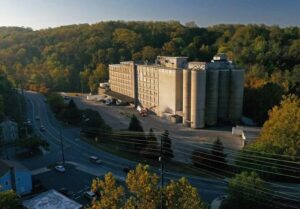 The National Trust Community Investment Corporation (NTCIC) is honored to have played a crucial part in the financing of the $85 million adaptive reuse of the historic Wilkins Rogers Mill complex in Ellicott City, Maryland. Spearheaded by Terra Nova Ventures with Alexander Design Studio as the architect and Southway Builders as the general contractor, the Ellicott Mill project will transform the long-dormant industrial site into a dynamic mixed-use community featuring 190 residential apartments, a restaurant space overlooking the Patapsco River, and ground floor retail space, while preserving one of Maryland’s most significant industrial heritage landmarks.
Originally established in 1774 by the Ellicott brothers, the mill was the first commercial flour producer in Maryland and a regional pioneer in industrial automation. It helped catalyze Baltimore’s rise as a leading flour export hub. Through multiple owners, including the Gambrill family, the Doughnut Corporation of America, and finally the Wilkins Rogers Company, the site has remained a cornerstone of the area’s industrial identity for over two centuries. The mill officially ceased operations in 2020, opening the door to a visionary redevelopment that honors its rich past.

“NTCIC is honored to have played a pivotal role in the financial closing of the Ellicott Mill redevelopment. This unique investment reflects our commitment to preserving historic assets through multiple forms of strategic financing that foster economic development and community revitalization.”
- Amanda Bloomberg
- Senior Acquisitions Manager
NT Impact Capital provided a $7 million bridge loan to assist in financing the project, marking NTCIC’s newest subsidiary’s first official investment. NTCIC supported the revitalization through an equity investment in the $10 million in Federal Historic Tax Credits generated by the project, along with $3 million in State Historic Tax Credits. NTCIC served as the Federal and State HTC sourcer, underwriter, and closer, as well as the Federal HTC fund manager and Federal and State HTC asset manager.
The redevelopment will preserve the architectural integrity of the complex, which includes the main mill building, nine historic silos, a boiler house, and an attached machine shop. The three-story warehouse will receive a two-story new construction addition approved by the National Park Service, further blending history with modern design.

“This is one of the most exciting and impactful projects I have been associated with over my nearly 50-year development career, with its deep historic roots, its association with the American Industrial Revolution and the first railroad in the nation, and the contribution that the transformation of this historic high-rise former flour mill makes to the community.”
- David Tufaro
- Founder & Principal of Terra Nova Ventures
Located on the main thoroughfare and within walking distance of downtown Ellicott City, Ellicott Mill offers convenient access to both Baltimore and Washington, DC. The project promises to become a landmark example of how historic preservation and smart growth can work together to serve a community for generations to come.
In 2025, we celebrated 25 years of investment and impact. To document that important milestone, we worked together with our staff, board, project partners, and many others to create a 25th Anniversary Retrospective, looking back at the journey that shaped who we are today. The report reflects on our founding vision and highlights a quarter-century of investment, leadership, and dedication to strengthening communities. It’s a story not just about how far we’ve come, but about where our mission will take us over the next 25 years.

“At its heart, this book is about the everyday ways our team lives out the principles that shape and differentiate us: Sustainability, Purpose, Innovation, Resilience, Inclusion, and Togetherness— our SPIRIT.”
- David G. Clower
- NTCIC President & CEO
Inside the retrospective, you’ll find a selection of standout projects, quotes from valued team members, reflections from our past and present leadership, and so much more. These highlights offer a clear reminder that our efforts have made a real difference in the communities we serve. Ultimately the report is not just a showcase of our accomplishments, but a tangible demonstration that, like our CEO David Clower said, “Our legacy will not be defined solely by financial results or the projects we finance, but by the enduring hope, opportunity, and resilience that we help communities realize.”
We invite you to explore the full report to see the impact for yourself and join us in celebrating everything we’ve helped build together and everything still to come.
Washington, D.C., January 6, 2026—The National Trust Community Investment Corporation (NTCIC) is pleased to announce that Kimberly Laird has joined our leadership team as Director of Asset Management. Kimberly will lead the Asset Management department, overseeing the direct management of NTCIC’s Historic Tax Credit (HTC) and New Markets Tax Credit (NMTC) investments, as well as our growing private credit portfolio. Her responsibilities include financial oversight, risk management, and compliance to ensure the long-term success of our investments and the communities they serve.
A Proven Leader in Community Development Finance
With more than 25 years of experience in community development banking, Kimberly has managed over $1 billion in equity and debt transactions across HTC, NMTC, and Low-Income Housing Tax Credit (LIHTC) programs. Her career began at Wachovia Capital Markets Group, where she managed the Southeastern asset management team focused on LIHTC investments. She later advanced to Bank of America as a Senior Vice President, overseeing asset management for Historic, New Markets, and Renewable Energy tax credit investments. Most recently, Kimberly served as Credit Risk Manager in Community Investment Capital at Synovus Bank, a regional institution headquartered in Georgia.

“Kimberly’s experience and values align with NTCIC’s commitment to preservation, equity, and performance,” said David Clower, President & CEO of NTCIC. “She will help us scale our impact while safeguarding the integrity of every investment we steward.”
Commitment to Community and Impact
Kimberly earned her B.S. in Accounting from The University of Kentucky and remains deeply engaged in community advocacy through her work with The Redress Movement in Charlotte, NC, and the NC Housing Coalition. Outside of work, she enjoys yoga, cooking, and spending time with her two sons.
“Asset management is the backbone of NTCIC’s mission to deliver transformational capital investments in underserved communities,” said Bret Mosher, Managing Director of Credit & Portfolio Management. “Kimberly’s expertise strengthens our ability to safeguard investor confidence while driving measurable social and economic outcomes nationwide.”
Please join us in welcoming Kimberly to NTCIC!
Connect with Kimberly Laird on Linkedin
About NTCIC
The National Trust Community Investment Corporation (NTCIC), a subsidiary of the National Trust for Historic Preservation, is a mission-driven, impact investment asset management firm focused on the adaptive reuse of historic properties and renewable energy solutions across the country. Founded in 2000, NTCIC makes transformational impact investments in low-income & disinvested communities, promoting a brighter, more equitable future by revitalizing historic properties and expanding our nation’s renewable energy accessibility through innovative community development & tax credit investment strategies.
WASHINGTON, DC, January 5, 2026: The National Trust Community Investment Corporation (NTCIC) is pleased to announce that we have been awarded $70 million in New Markets Tax Credit (NMTC) allocation authority by the U.S. Department of the Treasury’s Community Development Financial Institutions Fund (CDFI Fund).
With this award, NTCIC will deploy our preservation-based community investment strategy to save and repurpose old, underutilized buildings across the country to spur economic growth and support vibrant communities. We will prioritize our NMTC allocation to projects that:
- Rehabilitate historic buildings in Deep Distress communities;
- Create economic stability by creating or retaining quality jobs that are accessible to low-income individuals; and
- Deliver a broad range of critical community services such as daycare, education, workforce training, healthcare, arts programming, and multi-service support to address the needs of underinvested communities and foster economic opportunity, stability, and revitalization.
Click below to submit your NMTC-eligible project for consideration.

We also want to congratulate our fellow awardees and look forward to working with partners across the country to support underinvested communities that need access to capital to bring new life to historic community assets.
NTCIC’s History of Impactful Investments
Since the inception of the NMTC program in 2000, NTCIC has deployed $729 million in NMTC allocation across 112 high-impact rehabilitations. These projects have created over 38,000 permanent and construction-related jobs, provided over 2,270 units of housing, and revitalized over 13.5 million square feet of historic buildings. On an annual basis, our investments in health care, education, business incubation, and community service facilities currently support over 198,000 low-income community residents.
To learn more about our New Markets Tax Credit investment process, click here.
About the New Markets Tax Credit
On December 23, the CDFI Fund awarded $10 billion in allocation authority for the calendar year 2024-2025 round of the New Markets Tax Credit Program (NMTC Program) to 142 Community Development Entities (CDEs). This is the largest allocation in the program’s history and will stimulate economic growth and empower private-sector investment in distressed communities.
This year’s $10 billion award will drive private investment into communities that lack access to capital, especially in rural America, and is expected to accelerate job creation in sectors such as manufacturing and small business. The NMTC Program will leverage billions more in private capital, multiplying the impact of federal investment, and will support critical infrastructure, business financing, and community facilities, including rural hospitals and health care facilities.
The NMTC Program advances economic development in economically distressed communities by making tax credit allocations available to CDEs for targeted investments in eligible areas. The Program was recently made a permanent part of the U.S. tax code through the One Big Beautiful Bill Act (OBBBA).
Over its history, the NMTC Program has facilitated $77 billion in qualified equity investment and $143 billion in total development financing across more than 8,900 urban, suburban, and rural low-income community businesses. These investments have created more than 1.2 million jobs nationwide.
Washington, D.C. — December 22, 2025—NT Solar, a subsidiary of the National Trust Community Investment Corporation (NTCIC), announces that Karin Berry, Managing Director, will retire at the end of the year. Paul Holshouser, currently Director of Solar Transactions, will step into the leadership role starting on January 1st, continuing NT Solar’s mission to deliver impactful renewable energy investments.
Celebrating Karin Berry’s Legacy
Karin Berry has been a major player in the renewable energy space for over 30 years, with experience spanning international energy policy, government service, and private sector investment. Before joining NT Solar, Karin advanced clean energy initiatives in the public sector, including her work at the U.S. Trade Representative’s office, where she focused on international energy policy and government service. She later held leadership roles at PNC Energy Capital and Guggenheim Capital Markets, helping drive the adoption of renewable technologies and innovative investment strategies across diverse markets.
During her tenure as the inaugural Managing Director of NT Solar, Karin Berry led origination, structuring, and closing of renewable energy tax credit investments, building deep relationships with investors and developers nationwide. Her leadership helped expand NT Solar’s reach and reputation, and she leaves a legacy of integrity, innovation, and community impact. Since joining NT Solar in 2015, she has overseen solar tax credit investments and managed a rapidly growing portfolio of renewable projects, responsible for over $1 billion in tax credit investments.
Reflecting on her transition, Karin Berry shared, “I will miss the NTCIC team and our all-in commitment to delivering community benefit. Of course, I’ll still be doing what I can to support this community in my retired life!”
Paul Holshouser Named Director of NT Solar
Paul Holshouser brings more than 15 years of experience in wind and solar energy, with a background in project finance, business development, and energy policy. Since joining NT Solar in 2024 as Director of Solar Transactions, he has managed closings and fundings for renewable energy tax credit investments, working closely with investor and developer partners. Prior to joining NT Solar, Paul led finance at Distributed Sun and served as a tax policy specialist at the American Wind Energy Association.
“I am honored and excited to carry forward NT Solar’s legacy—serving investors by delivering strong returns and lasting community benefits,” said Paul. “Karin built a platform at NT Solar that is poised for continued success and industry leadership. It is our dedication to superior customer service that will continue to satisfy investors and developers alike.
“Karin’s vision and dedication have shaped NT Solar into a trusted partner for investors and developers. We are grateful for her leadership and excited to welcome Paul as NT Solar’s new Director. His expertise and energy will guide NT Solar into its next chapter,” said David Clower, President & CEO of NTCIC.
About NT Solar
NT Solar, an affiliate and wholly owned subsidiary of NTCIC, is a leading national investment service provider, directing capital to solar and storage projects that power local communities. The team provides end-to-end support, from sourcing and diligence through closing and ongoing reporting, leveraging Renewable Energy credits to advance environmental progress and economic opportunity.
 The National Trust Community Investment Corporation (NTCIC) is proud to announce our successful closing of financing for the redevelopment of the historic Chicora Graded School in North Charleston, South Carolina. The $37.7 million project will transform the historic and long‑vacant public school building into Cristo Rey, a new college‑preparatory high school serving exclusively low‑income students from across the Charleston region. NTCIC provided $4 million in New Markets Tax Credit allocation as well as an equity investment in the $5.5 million federal and $2.75 million South Carolina Historic Tax Credits generated by the rehabilitation. The redevelopment also will utilize $2.8MM of South Carolina’s State Abandoned Building Tax Credits.
Originally constructed in 1935, the Chicora Graded School served the Chicora– Cherokee neighborhood, a community historically tied to employment at the Charleston Navy Yard. For decades, the building functioned as a public elementary school, first as a segregated school for white students and later as a more integrated neighborhood school. The campus expanded multiple times between 1938 and 1955, adding classrooms, an auditorium, a cafeteria, and administrative space. Following the closure of the Navy Yard in 1996, the surrounding area experienced significant economic decline and by 2011, the school faced substantial deferred maintenance ultimately leading to its closure.

“NTCIC was thrilled to have the chance to be a part of financing Cristo Rey High School in North Charleston. This school will give students access to a college prep education while giving them valuable work experience and will play a key role in Metanoia’s mission to serve existing residents of North Charleston, which is experiencing rapid growth and gentrification.”
- Tony Maruca
- Senior Project Manager
Upon completion, the former Chicora Graded School will reopen as Cristo Rey High School, a college-preparatory high school designed to serve up to 400 students, all from low‑income households. The school will combine rigorous academics with Cristo Rey’s signature corporate work‑study model, which provides students with paid professional experience, mentorship, and exposure to career pathways while offsetting the cost of tuition. The rehabilitated facility will include modern classrooms, administrative offices, science and technology labs, a cafeteria and commercial kitchen, assembly and gathering spaces, and outdoor areas designed to support both academic instruction and workforce development programming.

“This historic school campus has been the heartbeat of the community for years and we are very excited to be renovating it as a place of opportunity for families in Chicora and beyond to build on their own strengths and release their brilliance.”
- Rev. Bill Stanfield
- CEO of Metanoia
This project has the potential to create meaningful change in one of North Charleston’s most economically distressed neighborhoods. Within the Chicora neighborhood, nearly 40% of residents live in poverty, local schools have historically been underfunded, and graduation and college‑completion rates for students of color in the area lag significantly behind state and regional averages. By reactivating a long‑vacant neighborhood building and expanding access to high‑quality education, the redevelopment strengthens workforce readiness and supports long‑term economic mobility for students and families across the region.
“A school is a promise,” Rev. Stanfield said. “It’s a promise to a community and a promise to its young people.”
The National Trust Community Investment Corporation (NTCIC) is proud to announce the successful financial closing of the historic Tower Life Building, formerly known as the Smith-Young Tower, in downtown San Antonio. The $125 million project will transform the iconic building into 242 apartment residences, along with retail spaces on the street and river levels, providing housing and neighborhood vibrancy to the heart of the city.
 Designed by renowned architects Atlee Ayres and Robert Ayres, the Tower Life Building was one of the many key structures in San Antonio’s urban development. The father-son duo was instrumental in designing several prominent buildings, including the Municipal Auditorium, Plaza Hotel, and the Federal Reserve Bank.
The building first housed businesses, professionals, and San Antonio’s first Sears, Roebuck and Company department store. Its unique history also includes being a mooring mast for a blimp, a performance venue for aerialists, and even the headquarters for the Third U.S. Army.
The revitalization project, brought to life by McCombs Enterprises, J Jeffers and Co., and many others, will transform the Tower Life Building into a lively mixed-use space that blends the historic charm of the building with modern amenities in the 242 apartments, a portion of which will be offered with affordable rents for qualifying residents.
“We are committed to creating a place that inspires hometown pride and invites new energy into our downtown,” says Jon Wiegand, Managing Director of Real Estate at McCombs Enterprises. “We welcome a community that reflects the cultural diversity of San Antonio. A portion of the building’s apartments will be offered with affordable rents to provide homes for artists, teachers, restaurateurs, nurses, first responders, and others whose life stories make up the fabric of our city.”
The renovation plans include state-of-the-art amenities, such as an outdoor patio deck, community space, and a fitness center, designed specifically for residents. Additionally, an adjacent parking garage will serve both residents and commercial tenants. The building, which was once the tallest structure in San Antonio until 1968, remains the tallest 8-sided building in the U.S., continuing its legacy as a focal point in the city’s skyline.
This revitalization was supported, in part, by NTCIC through an equity investment in the $16.8 million Federal Historic Tax Credits and $21 million State Historic Tax Credits generated by the project. NTCIC played a crucial role in the capital stack and will continue to collaborate with the development team to ensure the project’s success.
“Our team was pleased to partner with J. Jeffers on yet another exciting and impactful redevelopment”, says Amanda Bloomberg of NTCIC. “The Tower Life Building is an iconic feature of the San Antonio skyline, and we’re thrilled to be a part of bringing new life to one of the Alamo City’s most historic buildings.”
The newly revitalized Tower Life Building will not only provide much-needed housing in the heart of the city but also offer retail space, further contributing to the growth, vibrancy, and development of San Antonio’s downtown and river district.
Learn more about NTCIC’s involvement in the project here.