

Federal Historic Tax Credits

$4.1 Million

New Markets Tax Credits

$6 Million

Total Project Cost

$26 Million

Project Partner

MIS Capital

Impact

Education Access

Historic Foundations in Allegheny West
History

Historic Foundations in Allegheny West

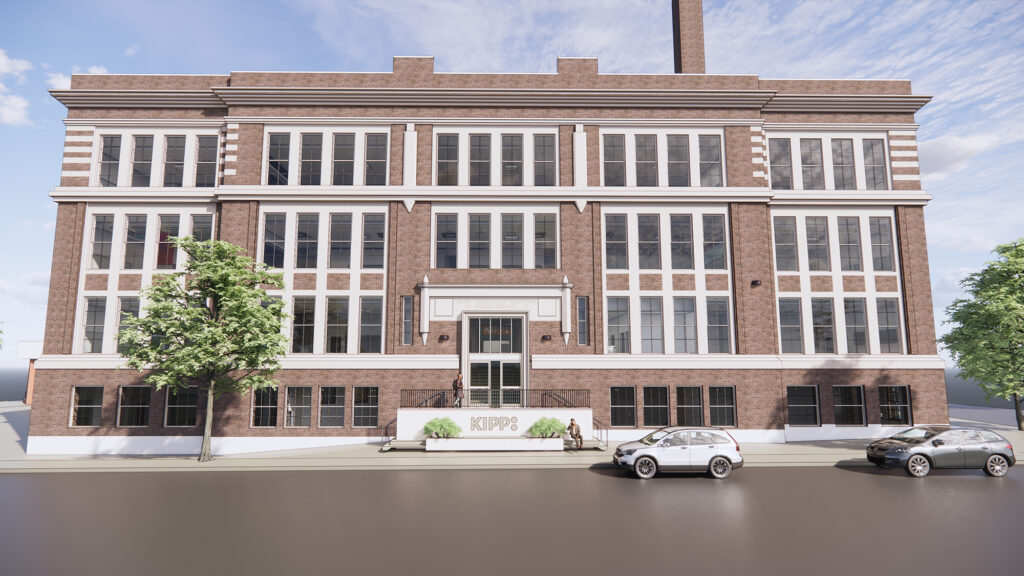
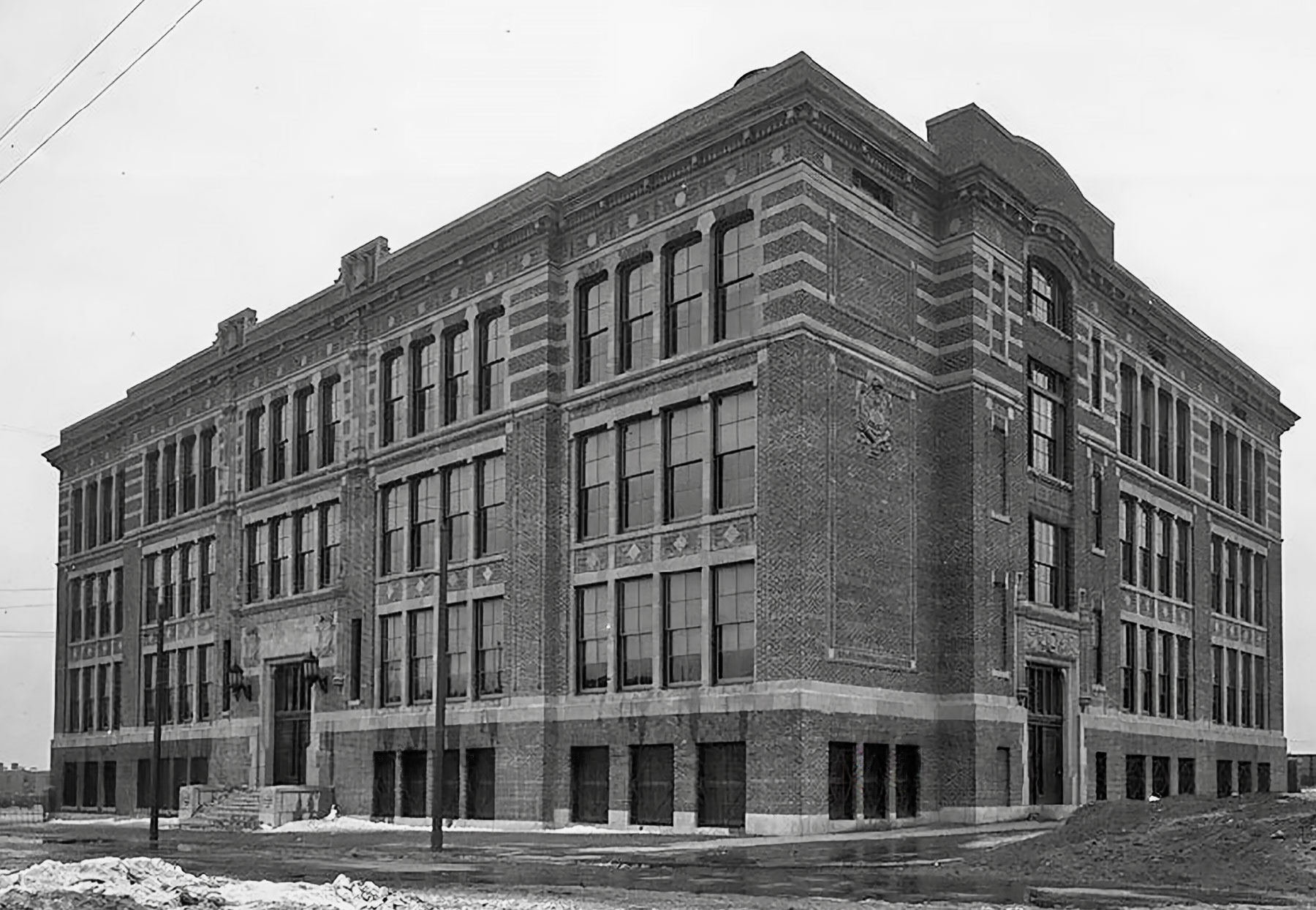
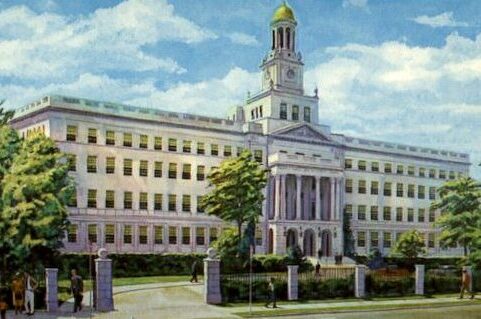
Built in 1913 and designed by architect Henry deCoursy Richards, the John Greenleaf Whittier School has anchored Philadelphia’s Allegheny West neighborhood for generations. Named for the abolitionist poet, the three-story brick building with terra cotta details and a U-shaped courtyard welcomed thousands of local students over its long history. Whittier Elementary was a vital resource for the community, reflecting the evolving needs and diversity of North Philadelphia.

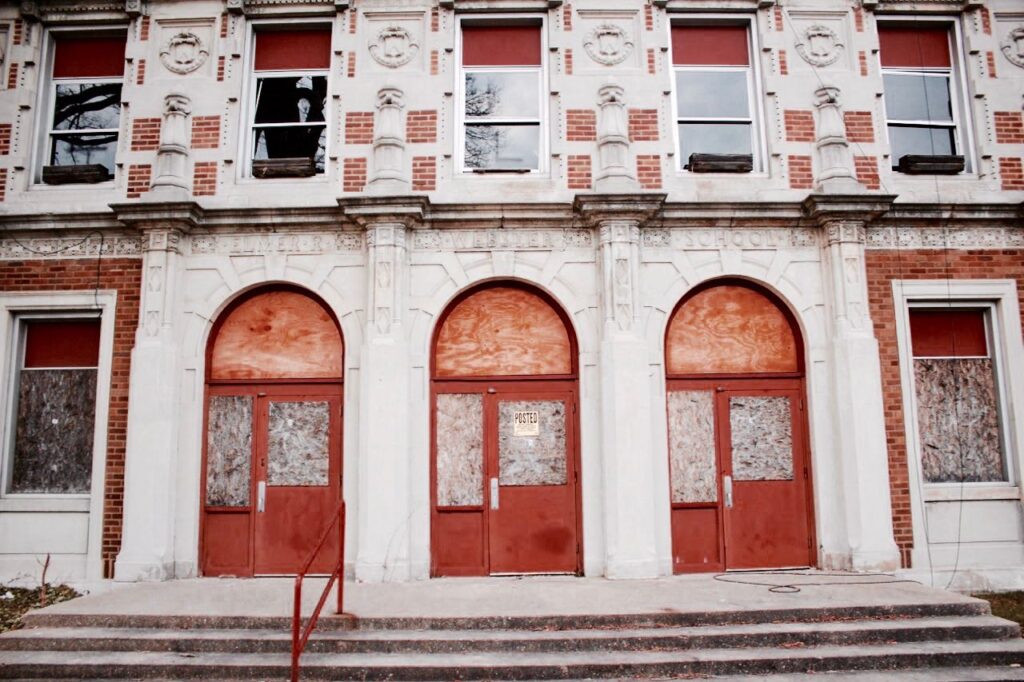
After nearly a century of service, the school closed in June 2013, leaving the building vacant and the neighborhood without a key educational institution. Recognizing both the architectural significance and the urgent need for accessible learning opportunities, KIPP Philadelphia Public Schools committed to revitalizing Whittier as the new home for its middle school program.

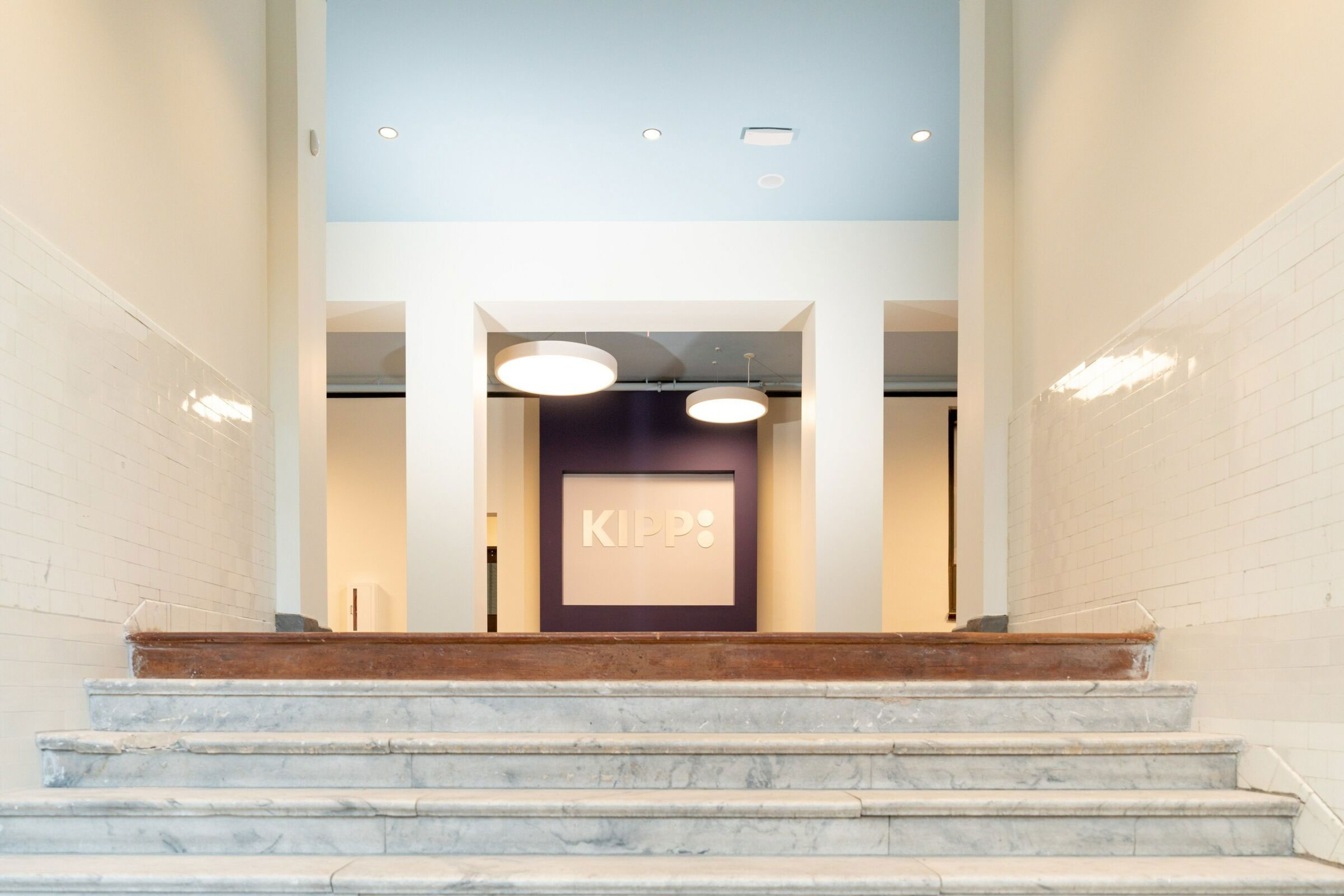
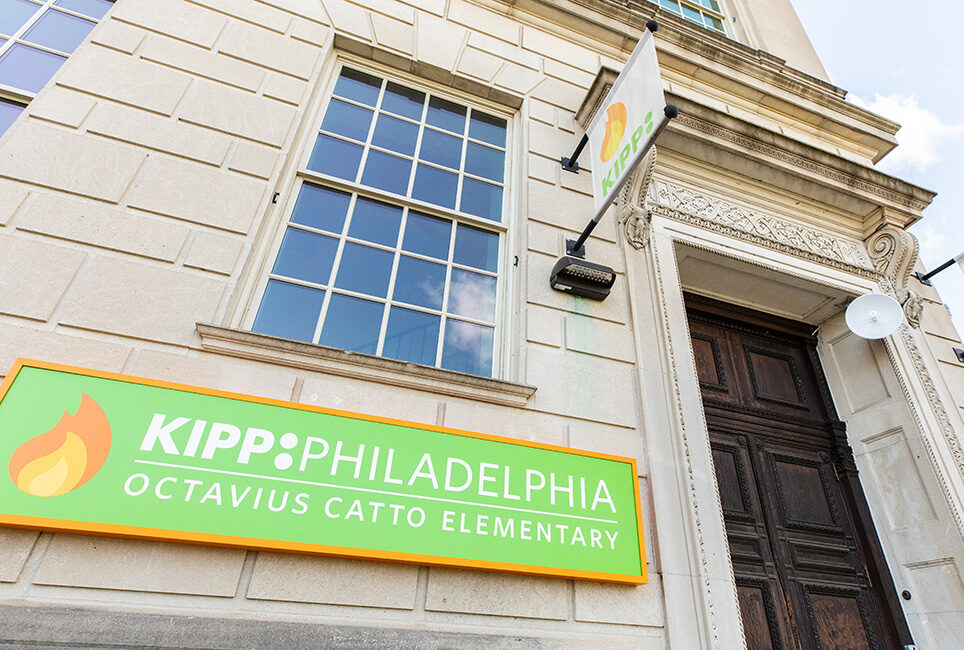
KIPP at Whittier Entrance
Revitalization Efforts

Transforming Space for Student Success

The former Whittier School has been transformed into a modern, high-performance facility for KIPP Philadelphia’s middle school program.

The 78,000-square-foot building, vacant since 2013, underwent a full rehabilitation to create state-of-the-art classrooms, a new cafeteria, a multi-purpose gym and auditorium, and an outdoor education area.

Designed to accommodate up to 700 students, the revitalized school now provides expanded educational opportunities for families in Allegheny West.

Community Impact

Transforming Lives Through Learning

The revitalized Whittier School now provides a modern, high-quality learning environment for up to 700 middle school students in Allegheny West. By expanding capacity from 360 students, KIPP Philadelphia addresses significant demand for accessible, college-preparatory education in an underserved neighborhood. The school’s open enrollment lottery ensures equitable access for families citywide.

KIPP Philadelphia primarily serves economically and educationally disadvantaged students, with 86% qualifying for the Federal Meals Program and 24% receiving special education assistance. The student body reflects the surrounding community, with 98% identifying as African American or Hispanic. The project also created new green spaces and public access areas, strengthening connections between the school and its neighbors.

Expanded Enrollment

The revitalized school now serves up to 700 students, up from 360.

Supporting a Community in Need

86% of students qualify for the Federal Meals Program.
24% of students receive Special Education Assistance.

Job Creation

The project delivered 80 union construction jobs and supports 70 permanent full-time equivalent jobs.

Green Space & Learning

New outdoor education areas and public-access green space strengthen neighborhood connections.

NTCIC & Progress

Financing the Project

NTCIC provided $6 million in New Markets Tax Credit allocation and an equity investment in the $4.1 million in Federal Historic Tax Credits generated by the project, making the $26 million rehabilitation of Whittier School possible. These investments enabled the transformation of a vacant historic building into a modern, high-performance educational facility for KIPP Philadelphia’s middle school program.

The project leveraged NMTC and HTC equity alongside loans, grants, and sponsor equity, reducing the school’s fundraising burden and ensuring financial feasibility. Construction created 80 union jobs, while the completed school supports 70 permanent positions and offers below-market rents, maximizing resources for student success and long-term neighborhood revitalization.

Want to Discuss Your Next Project? Talk With Our Team Today.

We bring clear insight, deep experience, and strategic focus to every project, whether you're structuring complex capital or shaping long-term, legacy-driven development.

Name(Required)
KIPP at Whittier Entrance

Federal Historic Tax Credits

$21 Million

Total Project Cost

$153.6 Million

Project Partner

Lubert-Adler Real Estate Funds

History

Philadelphia Electric

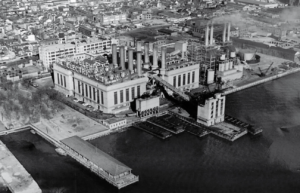
The Delaware Power Station of the Philadelphia Electric Company was, at its peak, Philadelphia’s largest power station in the post-World War I period and a critical component to the company’s incredible growth. Founded in 1899 and incorporated in 1902, Philadelphia Electric first formed as a corporation by consolidating many small electric utilities under a single large holding company with the goal of being the sole supplier of electricity to the city. A critical success toward the goal of standardization began in 1902 with the construction of the largest coal-powered central power plant in the world known as Schuylkill A-1. When run at full capacity, this station could generate all of the city’s electricity needs at a lower cost than what was possible through multiple smaller plants.
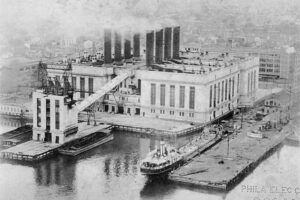
Within just 16 years, a site expansion, and the construction of a second station, by 1918, the company’s customer base and power needs had grown more than fivefold and continued to increase. This demand was further compounded by the industrial expansion resulting from the United States entering World War I. To meet the ever-growing needs, Philadelphia Electric began the two-phase construction of the Delaware Power Station in 1917. By 1923, the Delaware Station was in full operation and capable of generating over 46% of the city’s electricity when running at its full capacity, making it the largest power station in the Philadelphia Electric system.
Over the next several decades the company would continue to dominate the industry, constructing additional stations around the city and expanding the Delaware station once more in 1953. Although no expansions occurred after 1953, the Delaware Station continued to power a large portion of Philadelphia over the next several decades.

With the development of newer generating technologies such as nuclear power, however, the Delaware Station’s dependence on fossil fuels, both coal and oil, meant that it was becoming increasingly inefficient. By 1969, the original sections of the station were retired, leaving only the 1953 expansion in operation. Philadelphia Electric was acquired by the Exelon company in 2000 and, by 2008, the station ceased to function as a power plant. Exelon sold the station in 2015 when early development plans for the station’s future use began. Current ownership acquired the property in late 2019.

Revitalization

A Dynamic Campus Experience

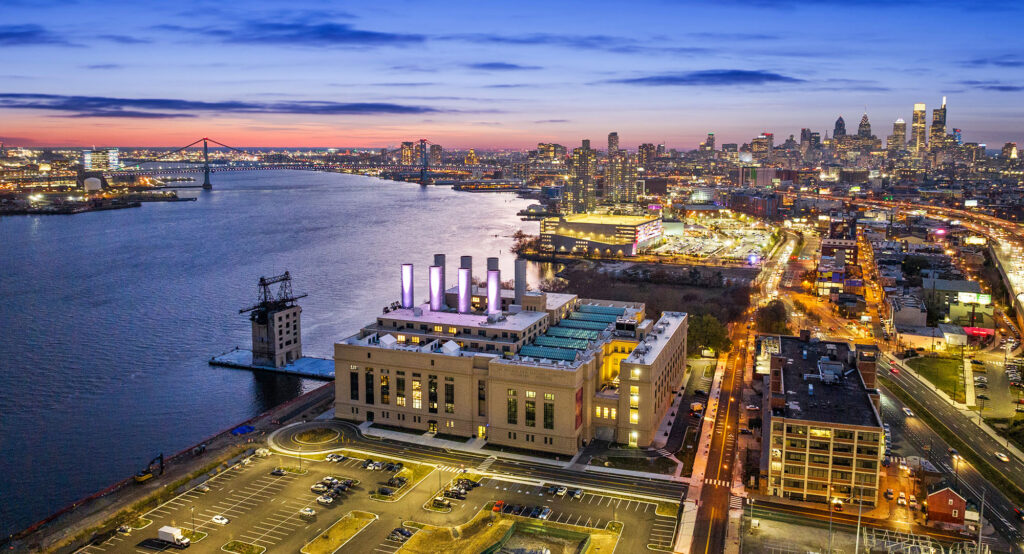
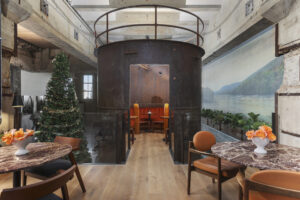
The former power station is now ‘The Battery,’ a 500,000 square foot dynamic multifamily and workplace campus experience on the Delaware River, adjacent to the heart of the bustling Fishtown neighborhood in Philadelphia, with a specific focus towards open-air, greenspace, and health and wellness.
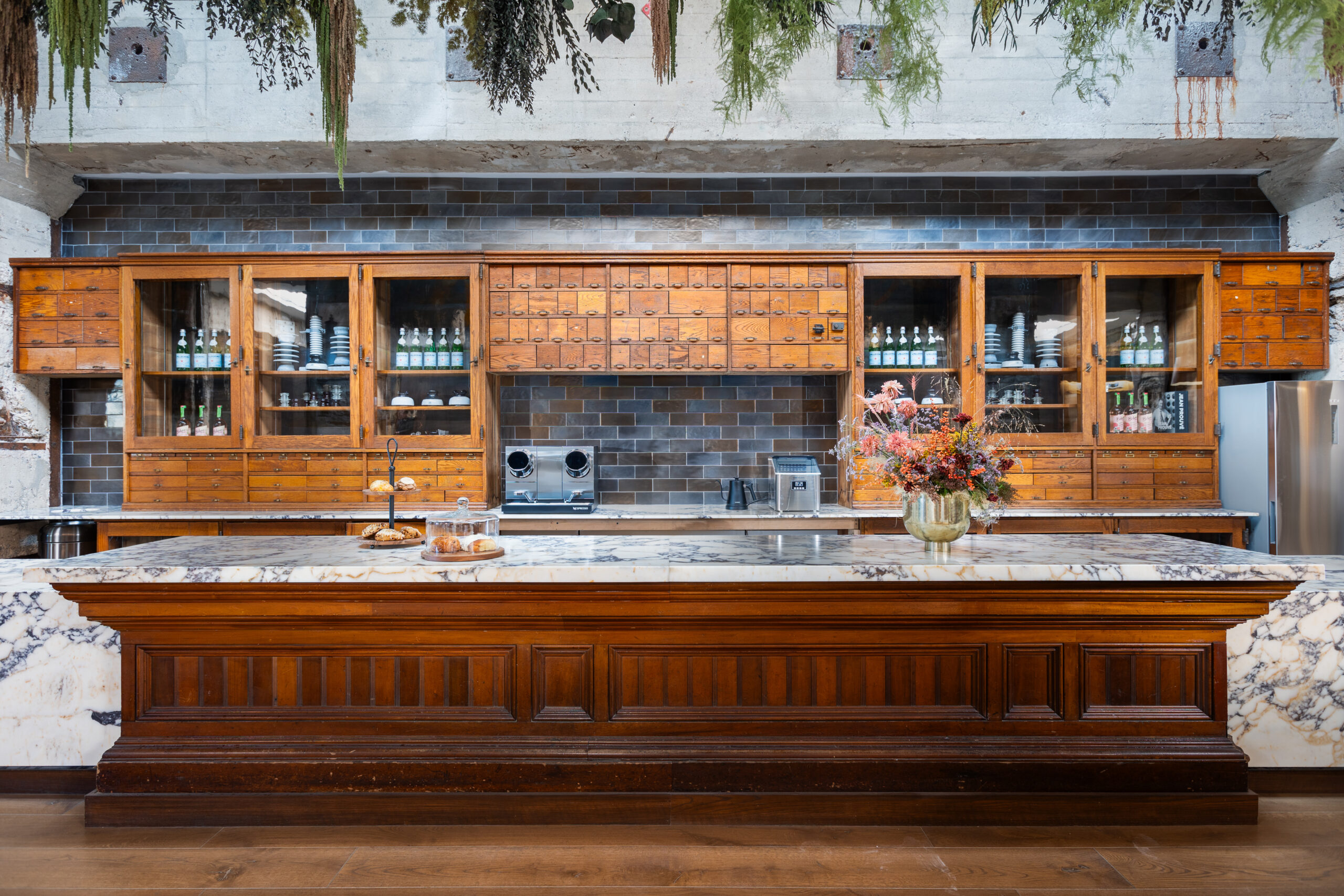
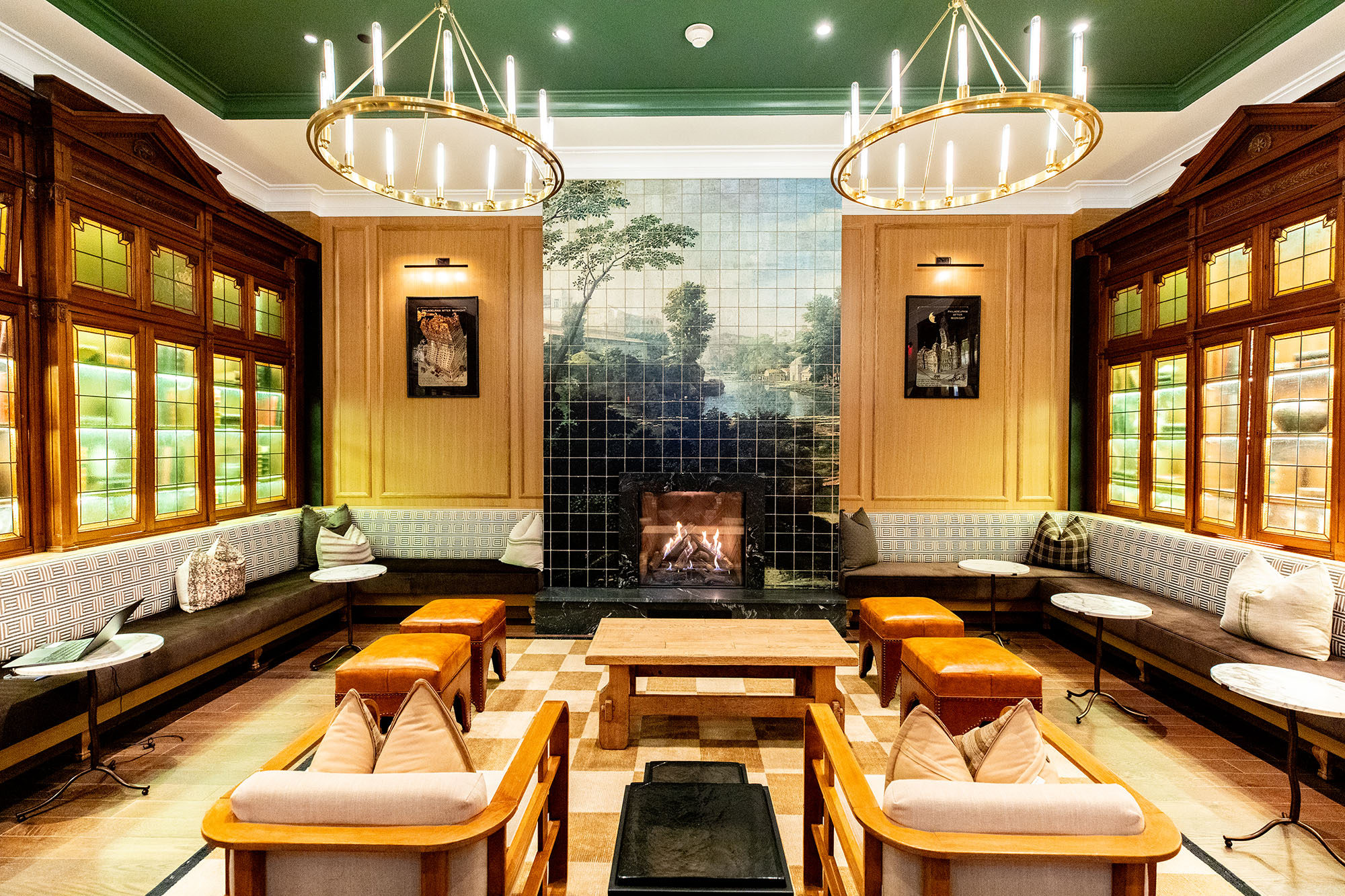
The campus was developed in three phases, the first of which focused on two of the original historic structures, the “Boiler House” and the “Switchgear Building,” as well as an expansive public outdoor space. The Boiler House contains 239 loft and rooftop apartments, 49,000 square feet of office space on the ground floor, and a dramatic 2-story central amenity hub. Amenities include lounge, meeting, co-working, and café space with a rooftop outdoor terrace and garden. The Switchgear Building renovation created 45 studio and one-bedroom units and 25,000 square feet of event space operated by Cescaphe, a well-established event brand in Philadelphia.

The Battery lies directly adjacent to Penn Treaty Park and features a large outdoor space along the Delaware River waterfront with direct access to trails for walking/biking.

NTCIC & Progress

Financing & Impact

The Battery is located within a Keystone Opportunity Zone (KOZ), a unique Pennsylvania program designed to develop a community’s underutilized land and buildings. Projects located within KOZs are able to apply for several economic development tools that promote business growth including state and local tax credits, exemptions, and tax abatements.

The $153.6 million project was financed in part by NTCIC’s investment in the $21 million in federal Historic Tax Credits generate by the project.

Want to Discuss Your Next Project? Talk With Our Team Today.

We bring clear insight, deep experience, and strategic focus to every project, whether you're structuring complex capital or shaping long-term, legacy-driven development.

Name(Required)
Want to Discuss Your Next Project? Talk With Our Team Today.

Federal Historic Tax Credits

$12 Million

New Markets Tax Credits

$10 Million

Total Project Cost

$71 Million

Project Partner

Iron Stone Real Estate Partners

Impact

Education Access, Healthcare Access, and more

Founded by Quakers
History

Founded by Quakers

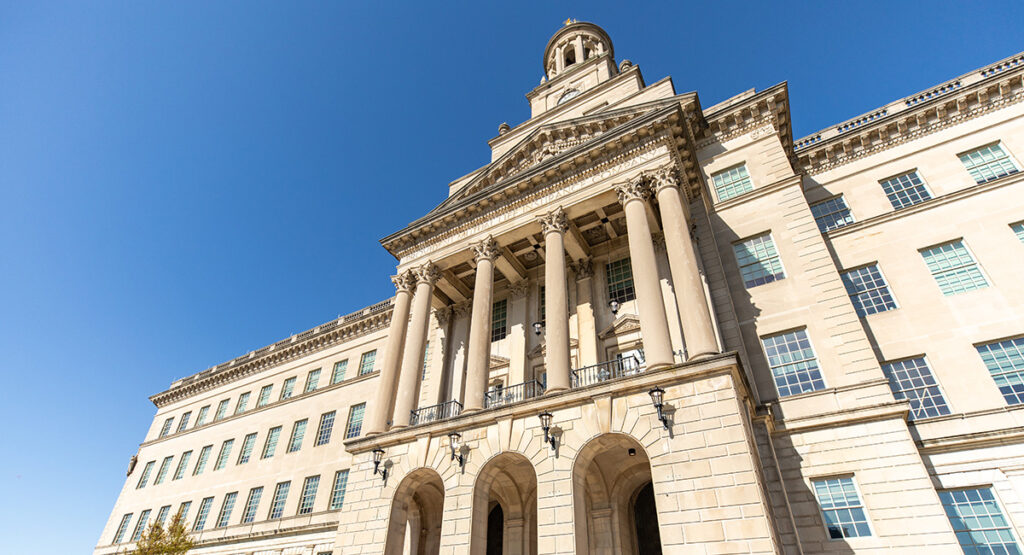
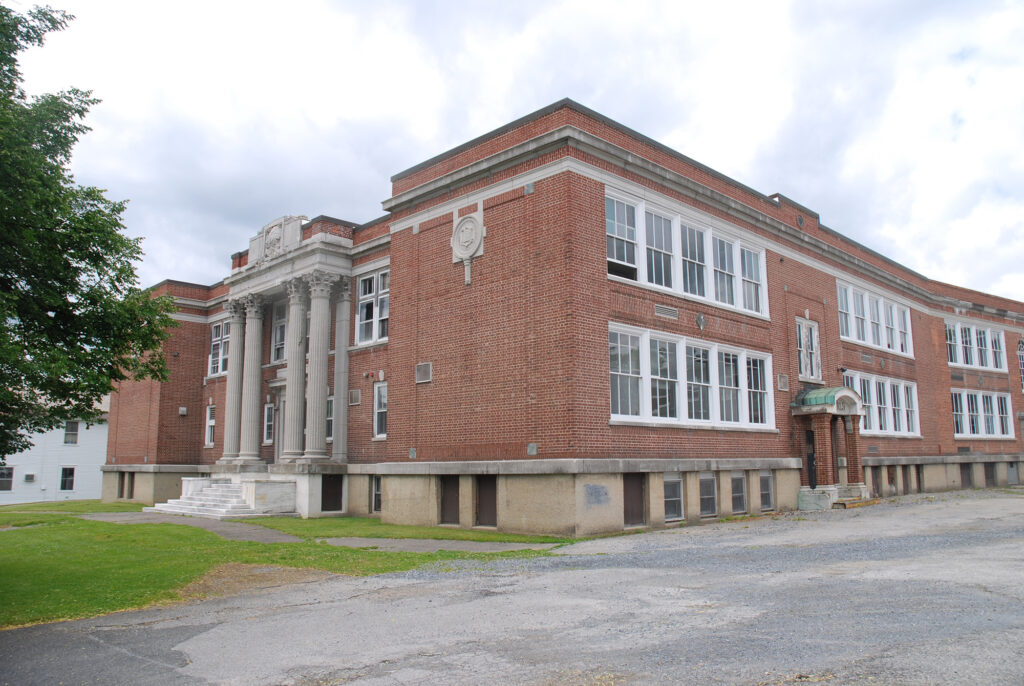
The Provident Life and Trust Company of Philadelphia was founded in 1865 by a group of Quakers, becoming one of the larger banking and insurance companies in the region. In the early 1920s, changes in state law required the separation of banking and insurance arms, creating a new company, Provident Mutual Life Insurance Company of Philadelphia. This new company picked a 12.5-acre parcel at 46th and Market, previously part of the sprawling campus of the Pennsylvania Hospital for the Insane, for a campus. After weathering a rocky decade in the 1930s, Provident Mutual grew steadily in the 40s and 50s, and by 1962, it had over 1,000 employees at its headquarters. Provident had finally outgrown its campus and decided to move back into downtown Philadelphia in 1983. The organization left Philadelphia in 1993.

A Campus of Community Resources
Revitalization Efforts

A Campus of Community Resources

The historic Provident Mutual Life Insurance Company building was renovated into an integrated health campus that will provide outpatient pediatric and adult behavioral health services, a federally qualified health center, early childhood education, a workforce development program, and public community space. The buildings will be anchored by Public Health Management Corporation (PHMC), a nonprofit public health institute that builds healthier communities through partnerships with government, foundations, businesses, and community-based organizations. The restored campus will also become the new home of the Children’s Hospital of Philadelphia (CHOP), the nation’s first hospital devoted exclusively to the care of children.

Community Impact

A Hub for Healthcare

As the new homes for PHMC and CHOP, the Provident Health campus created over 150,000 square feet of direct healthcare space with specialized facilities dedicated to pediatric care. PHMC provides direct case management services to over 850 each year in their new facilities. The revitalized space also houses their Turning Points for Children program, which provides child welfare, family strengthening

and behavioral health services to more than 10,000 individuals each year. By moving to a larger space, CHOP was able to expand its pediatric outpatient behavioral health services, with over 35% of patients qualifying as low-income. The project supports over 1,100 jobs, 450 of which were newly created as a result of the revitalization effort.

NTCIC & Progress

Project Financing

NTCIC facilitated the investment in the $12 million of federal Historic Tax Credits generated by the $71 million historic revitalization efforts and provided $10 million in New Markets Tax Credit allocation to ensure the project’s success.
Want to Discuss Your Next Project? Talk With Our Team Today.

We bring clear insight, deep experience, and strategic focus to every project—whether you're structuring complex capital or shaping long-term, legacy-driven development.

Name(Required)
Want to Discuss Your Next Project? Talk With Our Team Today.

Federal Historic Tax Credits

$28.7 Million

Total Project Cost

$187 Million

Project Partner

Lubert-Adler

Impact

Job Creation, Economic Development

History

The Grand Dame of Broad Street


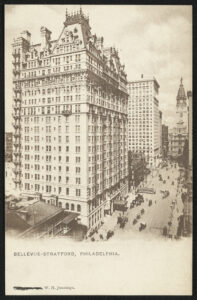
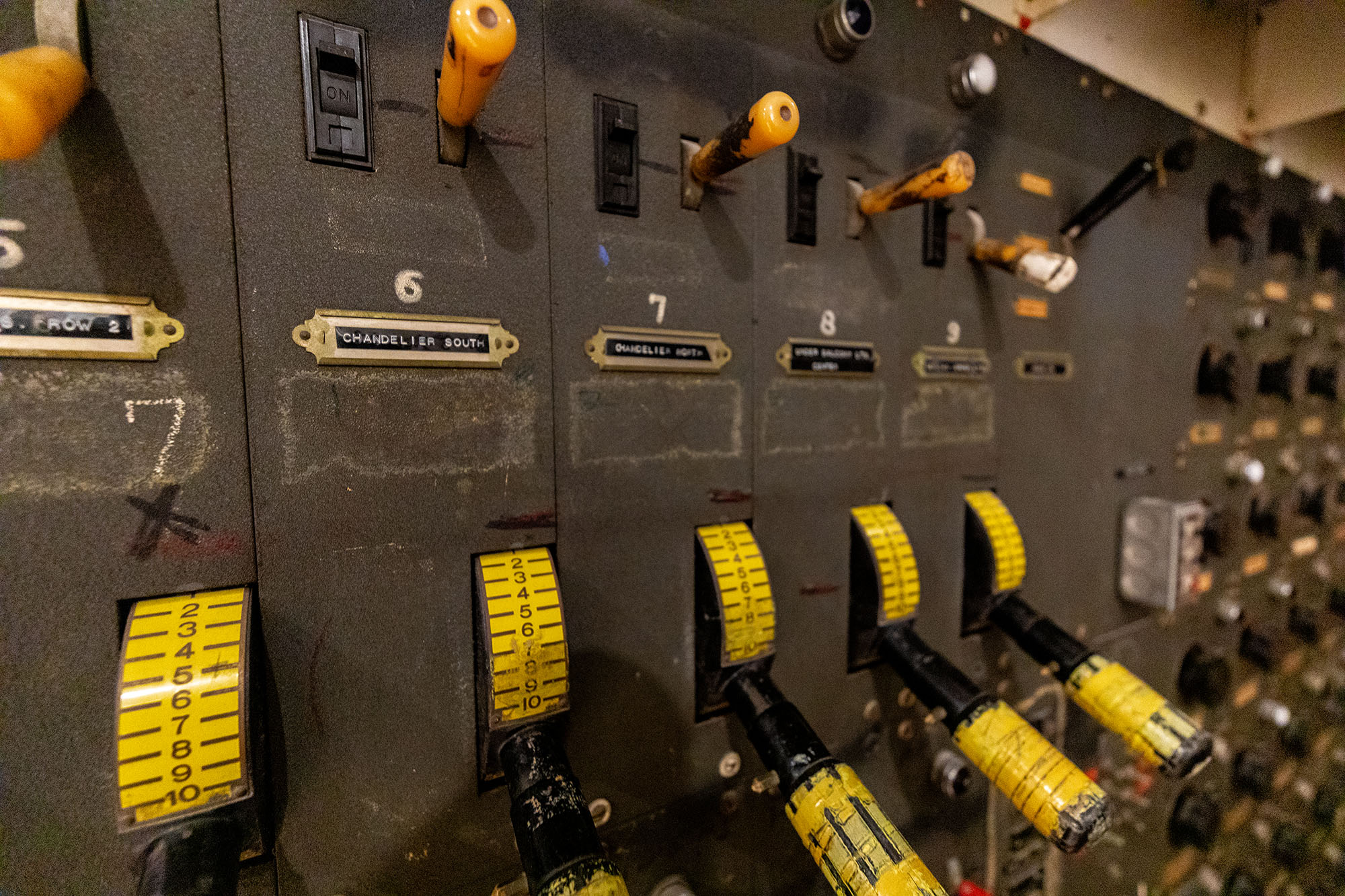
The Bellevue-Stratford Hotel, at the southwest corner of South Broad and Walnut Streets in Center City Philadelphia, was completed in 1904 in the French Renaissance style and was described at the time as the most luxurious hotel in the nation and perhaps the most spectacular hotel building in the world, with the most magnificent ballroom in the US on the first floor. Modeled after the Waldorf-Astoria in Manhattan, it boasted 19 floors, 725 rooms, and the grandest event space in the city: a 500-person ballroom that could host events for nearly 3,000 people when including adjoining spaces. For many decades the Bellevue-Stratford, the “Grand Dame of Broad Street,” was Philadelphia’s largest hotel. Thomas Edison was involved in the lighting design for the hotel, creating fixtures as well as a switchboard for the hotel’s ballroom. Throughout its time in operation, 15 presidents were guests at the hotel, including Theodore Roosevelt and Woodrow Wilson. 
Apart from a large addition in 1912, which brought the square footage to 657,000 and the room total above 1,000 and added the iconic cameo rooms and other function spaces to the 19th floor, the hotel remained largely unchanged until its closing. In 1976, an outbreak of an unidentified respiratory disease led to the hotel’s sudden closure. In 1978 the building was sold to the Richard I. Rubin Company, saving it from demolition. Rubin undertook a $25 million renovation, reducing the key count to 565 and restoring the public areas, before reopening it as the Fairmont. Westin later acquired an interest in the building, and the Hotel was renamed the Westin Bellevue Stratford in 1983 before closing in 1986 due to low occupancy. In 1988, a new owner reopened the building as The Bellevue, converting much of the hotel to office and cutting an atrium into the remaining hotel portion.

A New Era Begins
Revitalization Efforts

A New Era Begins

Lubert-Adler acquired The Bellevue in 2021, beginning a large-scale renovation of the hotel and event spaces. The renovations included upgrades to the existing hotel, conversion of offices into residential space, the opening of new retail opportunities, and more.

NTCIC & Progress

Financing & Impact

To facilitate the restoration of the iconic Bellevue, NTCIC made an equity investment in the $28.7 million of federal Historic Tax Credits generated by the project. Additionally, NTCIC provided underwriting and transaction management services and will provide asset management services through the HTC compliance period.   

The renovation of the historic downtown Philadelphia landmark marks a pivot away from single-use structures into multi-use, diversified

properties. The historic building’s evolution from a hotel, to a hotel and office building, to a hotel, office building, luxury apartments, restaurants, retail space, and more, shows a shift in the way developers and investors can think about large-scale historic buildings. By expanding the ways in which a historic building can function and serve the public, you not only diversify your revenue stream, but also the breadth of people who can experience and utilize the building in the future. 

How NTCIC Helped

Preservation is a Team Sport

To facilitate the restoration of the iconic Bellevue, NTCIC made an equity investment in the $28.7 million of federal Historic Tax Credits generated by the project. Additionally, NTCIC provided underwriting and transaction management services and will provide asset management services through the HTC compliance period.   

The renovation of the historic downtown Philadelphia landmark marks a pivot away from single-use structures into multi-use, diversified

properties. The historic building’s evolution from a hotel, to a hotel and office building, to a hotel, office building, luxury apartments, restaurants, retail space, and more, shows a shift in the way developers and investors can think about large-scale historic buildings. By expanding the ways in which a historic building can function and serve the public, you not only diversify your revenue stream, but also the breadth of people who can experience and utilize the building in the future. 

Amanda Bloomberg, Senior Acquisitions Manager

Sourced project, performed preliminary underwriting, negotiated terms, and paired with investor.

Tony Maruca, Senior Project Manager

Underwrote and closed the project.

Andrae Baly, Senior Asset Manager

Provides ongoing construction monitoring, as well as quarterly and annual reporting through the project’s compliance period.
Connect with Us

Curious About How Historic Tax Credit Investments Drive Real Impact?

Kandi Jackson leads tax credit investment activities with deep expertise in project finance, equity structuring, and compliance. When you speak with Kandi, expect clarity, honesty, and a clear roadmap for how your next investment can work in your portfolio.

Connect with Kandi

Check Out Similar Projects Here

Browse all projects

Want to Discuss Your Next Project? Talk With Our Team Today.

We bring clear insight, deep experience, and strategic focus to every project, whether you're structuring complex capital or shaping long-term, legacy-driven development.

Name(Required)
Want to Discuss Your Next Project? Talk With Our Team Today.

Historic Tax Credits

$5.14 Million
Federal HTCs

New Markets Tax Credits

$7 Million

Total Project Cost

$28.5 Million

Project Partner

Hill Community Development Corporation

Impact

Workforce Development, Healthcare Access, and more.

History

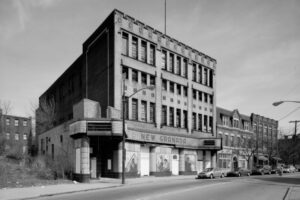
The Pythian Temple

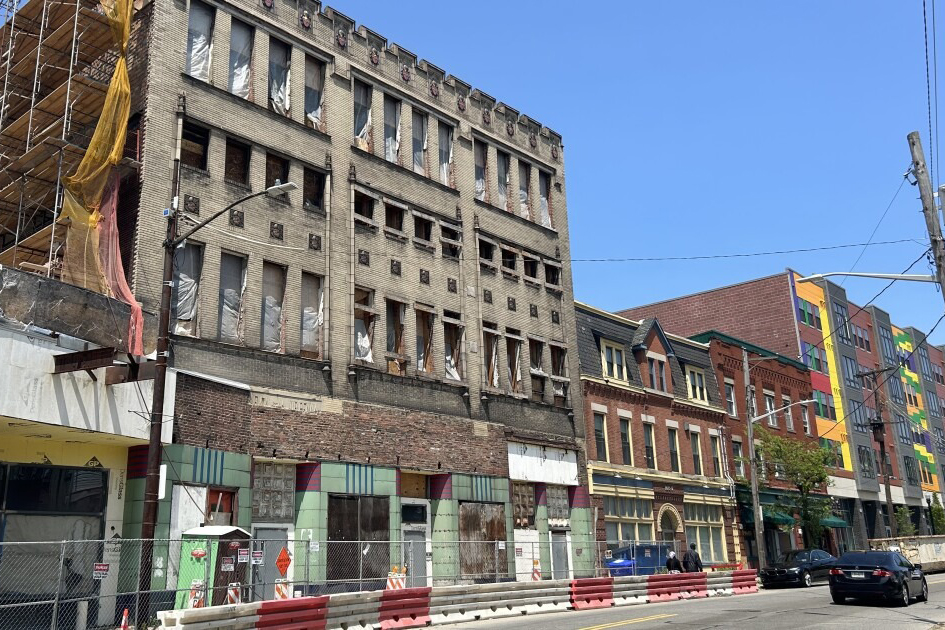
In 1925 B. G. Collier, head of the African American Grand Lodge of the Knights of Pythias, purchased lots in the Hill District neighborhood of Pittsburgh. The Hill District is often referred to as Pittsburgh’s Harlem, due to its historically rich cultural and artistic environment that remains prevalent to the present day. In 1927, Collier commissioned prominent African American Architect Louis A. S. Bellinger of Pittsburgh, to build the Pythian Temple, a fraternal lodge and commercial building for Black construction workers to enjoy community events, music, and more. Bellinger was working as one of only sixty black architects in the United States in the 1930s. Located at 2007-2013 Centre Avenue, the three-story building designed in a Tudor Revival style was completed in 1928 and became one of the largest and most prominent secular buildings in the Hill District. 
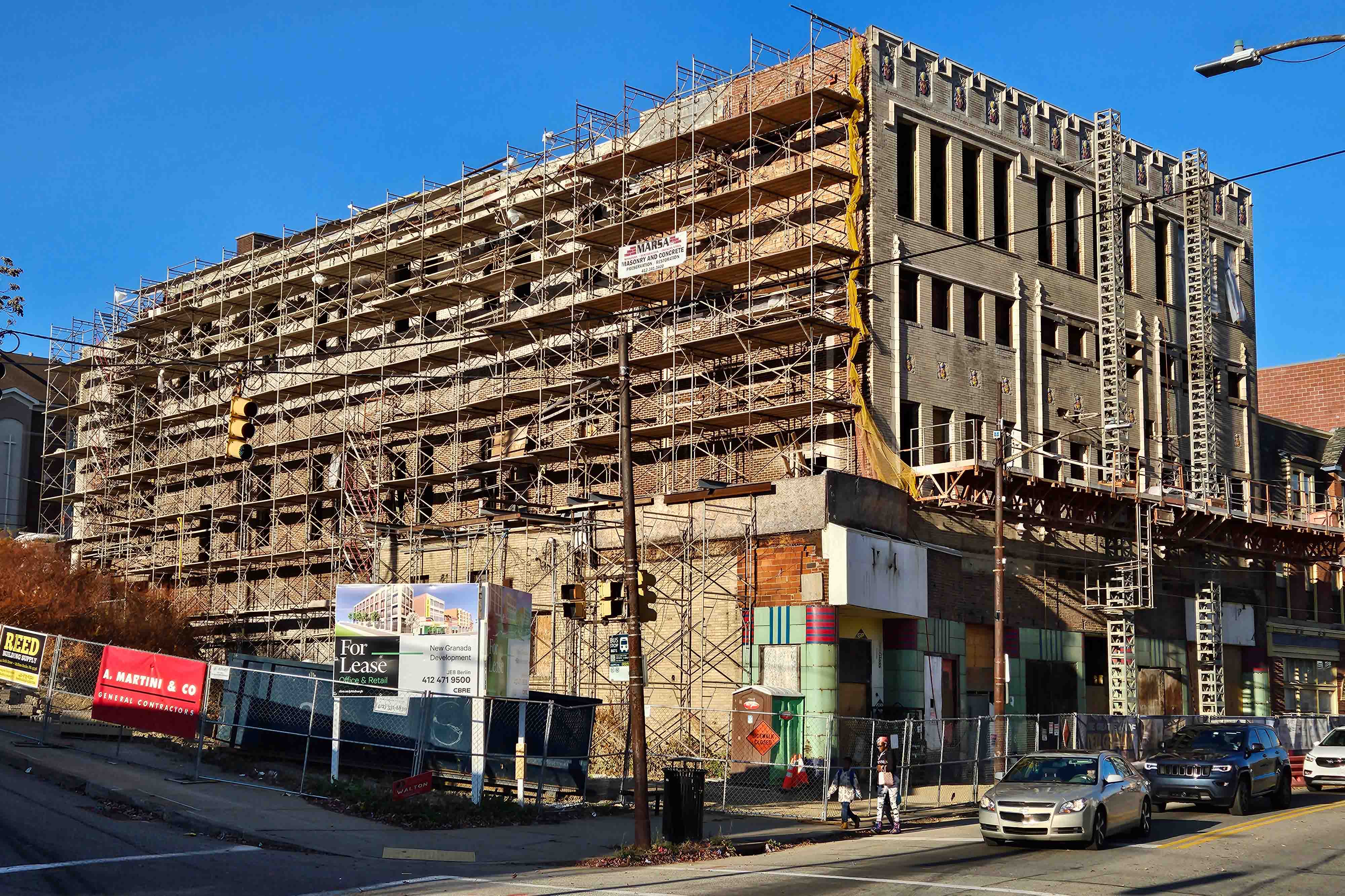
Bellinger’s architectural vision for the Temple formed the blueprint for the Temple’s transformation in 1937 when Harry Hendel, a promoter and theater owner, bought the Temple and remodeled it as a commercial theater. After the transformation, the building was known as the New Granada Theater. The first floor became a commercial movie theater while the second floor housed a ballroom with a stage where jazz greats played. Harlem musicians touring from New York City to Chicago would stop at the New Granada theater to play on the second-floor stage. Jazz legends such as Count Basie, Cab Calloway, Ella Fitzgerald, Charlie Parker, Louis Armstrong and Duke Ellington all played at the Theater during its prime.  

Through the decades, the Theater’s popularity slowly declined, and it was finally closed in the mid-1970s. During a period of vacancy between its closure and 1990, the interior suffered extensive damage after the roof collapsed. In 1990, Hill CDC purchased the Theater to save it from demolition. Since then, Hill CDC has committed itself to restoring the New Granada Theater to a place of prominence and cultural enrichment in the Hill District.

A New Era Begins
Revitalization Efforts

A New Era Begins

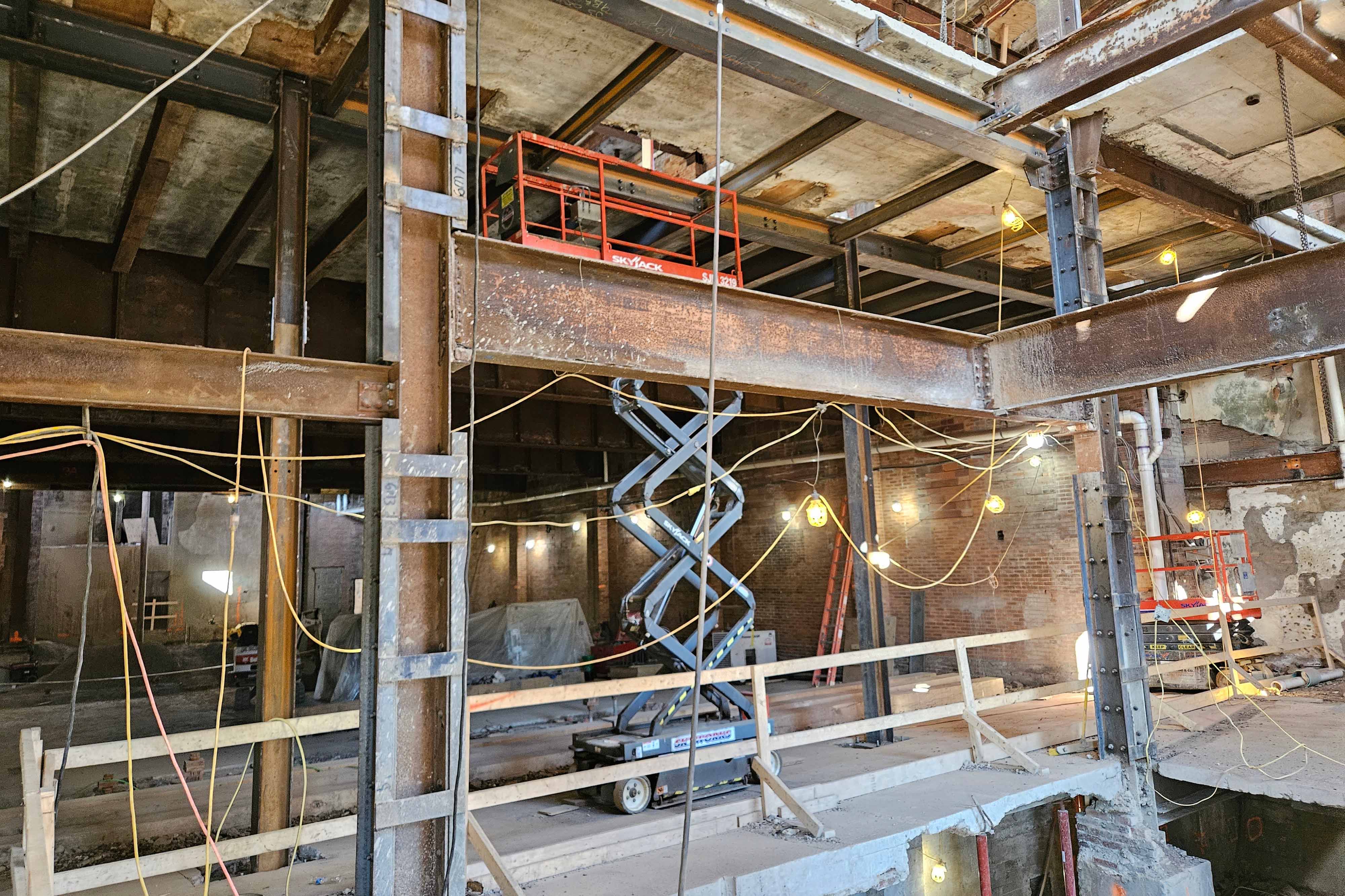
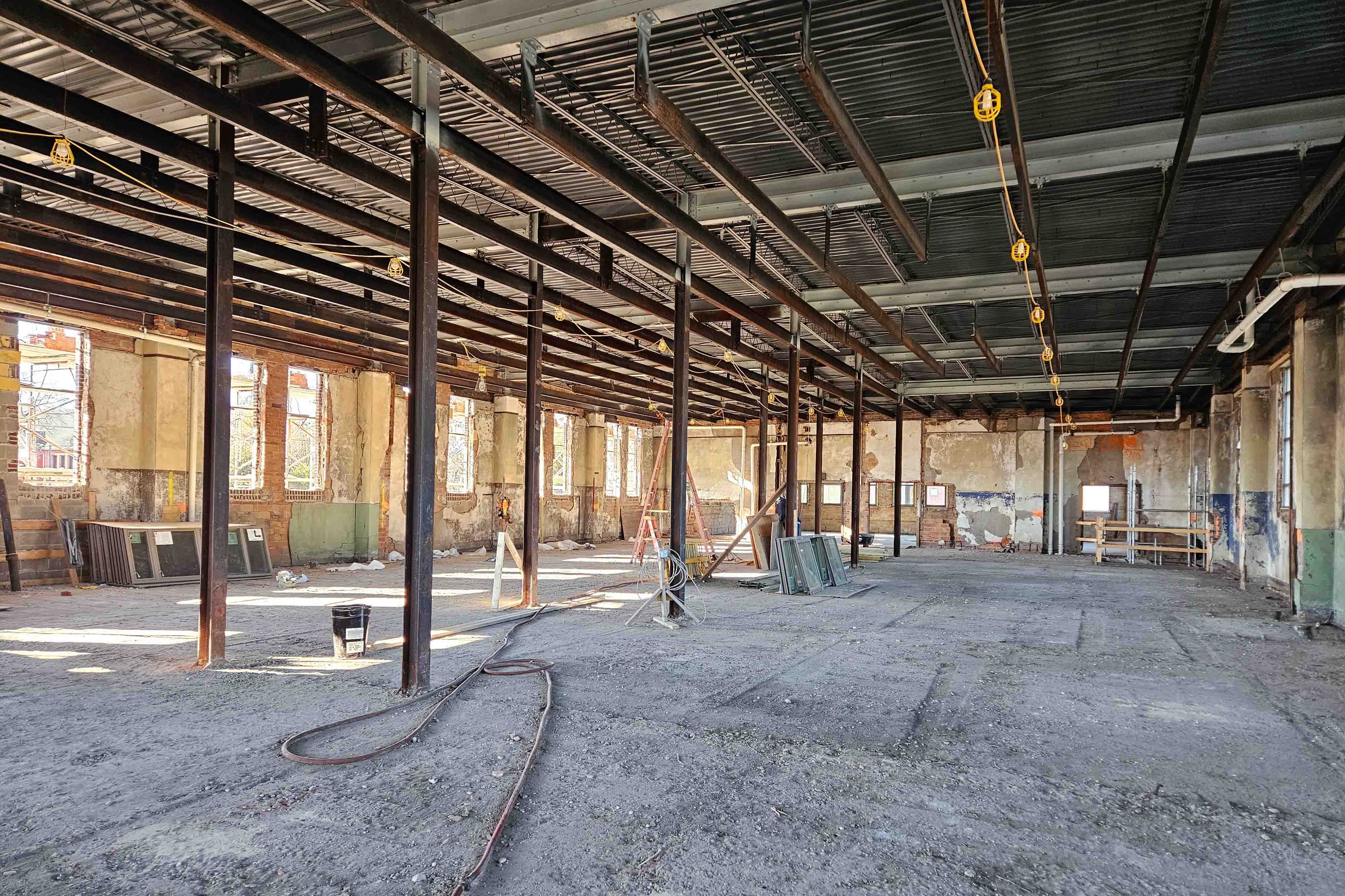
The renovation includes the buildout of a theater, black box studio, and café on the first two floors. Additionally, the renovation will provide a new home for the Hill District Community Engagement Center on the third floor and space for the group to lease the first two floors in preparation for the project’s second phase. The buildout of the third floor includes a Jazz Studies seminar room, “digital inclusion center” rooms, a community engagement center classroom, studios for the Center for African American Poetry and Poetics, a conference room, and supporting offices, restrooms, and storage rooms.

Community Impact

Creation of a Community Center

The relocation of Pitt’s operations to the New Granada site will anchor the project in community service and expand employment opportunities for local residents. The Hill Community Engagement Center already provides a wide range of educational, professional, and health‑related programs, and its move will strengthen its role as a hub for learning and support. Its offerings span mentoring for younger students, college‑readiness initiatives, engineering exposure programs, and hands‑on STEAM activities, all designed to broaden access to academic pathways and future careers.

The center also delivers extensive professional development resources, from administrative training and career sessions to small‑business support and data‑skills instruction. It will continue to host volunteer initiatives that connect students and faculty with neighborhood organizations, fostering deeper community partnerships. The project will additionally house spaces for arts, social work, jazz studies, and digital literacy, ensuring that the new site becomes a multidisciplinary resource for residents of all ages.

Educational Resources

MathUp Connections, Justice Scholars Institute, STEAM Camps, and more

Hill Community Engagement Center

1,143 visitors annually 

Professional Development Resources

Administrative Fellowship Program, small business consulting, and more

Volunteer Programs

Pitt School of Medicine home visits, nonprofit consulting, and more

Community Facilities

Classrooms, offices, programming facilities, and more.

NTCIC & Progress

The Expertise That Drove Results

This $28.1 million project was funded through a variety of sources including direct contributions from the University of Pittsburgh, grants and other sources of public funding, $5.3 million from the Hill Community Engagement Center Capital Campaign and Foundation Donors, and New Markets Tax Credit allocations of $5 million from Pittsburgh Urban Initiative, $4 million from PNC, and a $7 million allocation from NTCIC. The renovation was also 

supported by NTCIC through an equity investment in the $5.14 million federal Historic Tax Credits generated by the project. NTCIC’s role in the project includes acting as the Federal NMTC Allocatee, Federal NMTC Asset Manager, Federal HTC Investment sourcer, underwriter, and closer, Federal HTC Asset Manager, and Federal HTC Fund Manager. 

Connect with Us

Curious About How Historic Tax Credit Investments Drive Real Impact?

Kandi Jackson leads tax credit investment activities with deep expertise in project finance, equity structuring, and compliance. When you speak with Kandi, expect clarity, honesty, and a clear roadmap for how your next investment can work in your portfolio.

Connect with Kandi

Check Out Similar Projects Here

Browse all projects

Want to Discuss Your Next Project? Talk With Our Team Today.

We bring clear insight, deep experience, and strategic focus to every project—whether you're structuring complex capital or shaping long-term, legacy-driven development.

Name(Required)
Want to Discuss Your Next Project? Talk With Our Team Today.