Federal Historic Tax Credits

$3.77 Million

State Historic Tax Credits

$4.3 Million

New Markets Tax Credits

$2 Million

Total Project Cost

$20.7 Million

Project Partner

Main Street Projects, LLC

History

A Rich Textile History

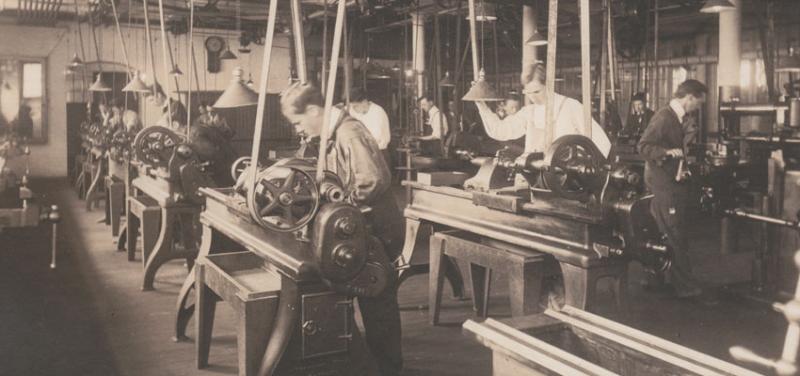
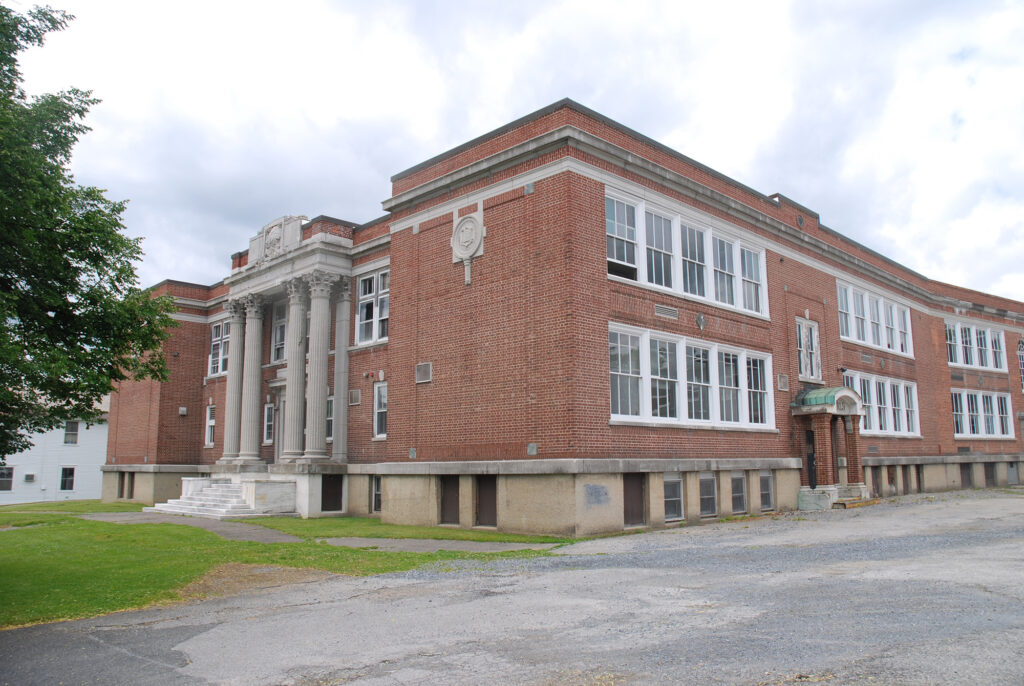
In the late 1800s, Fall River, Massachusetts, had become one of the country’s leading textile regions in America and, by the turn of the century, housed more than 1 million spindles in operation, second in the world to only Manchester, England. Originally known as the Bradford Durfee Textile School, the facility opened its doors in 1904 to provide advanced courses in textile manufacturing and chemistry to educate the rapidly growing population of local mill workers.

The school was named by the school’s original landowner, Miss Sarah S. Brayton, a descendant of local textile industry pioneer and Civil War veteran Maj. Bradford Dufree. Classes initially offered included advanced designing, electrical laboratory, motor testing, hand warping, loom, mechanical drawing, and machine shop.

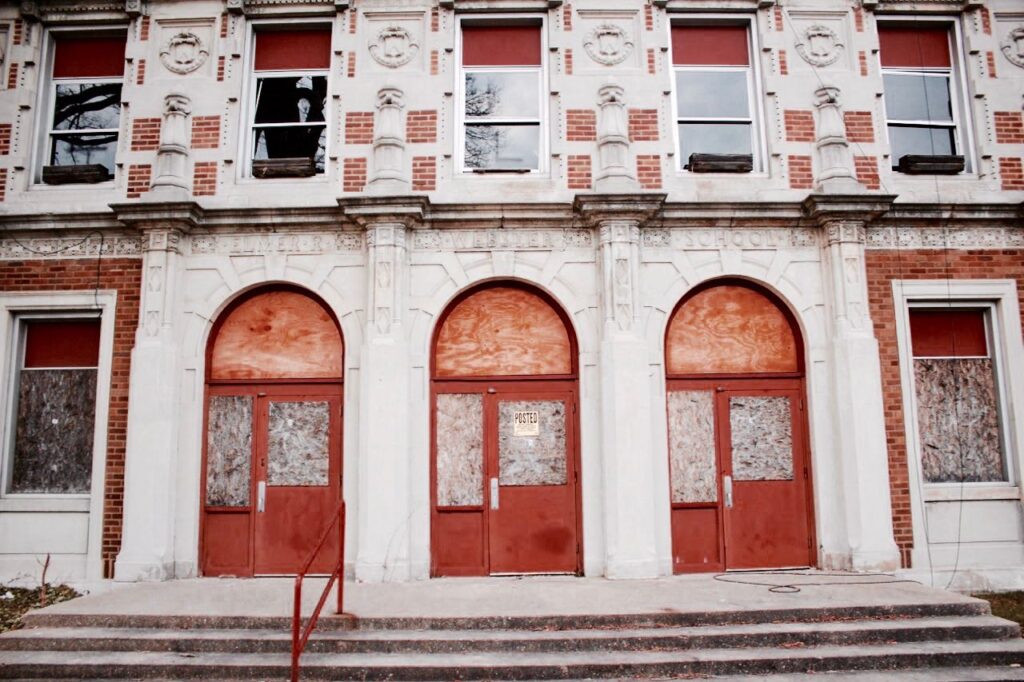
The school expanded over the years and started to offer additional courses of study, eventually gaining the ability to award Bachelor’s degrees. At that point, the school’s name was changed to the Bradford Durfee College of Technology. In 1960, it merged with a neighboring technical institute to form the Southeastern Massachusetts Technological Institute and, in 1991, was acquired and merged with several branches of the University of Massachusetts to become UMass Dartmouth, vacating the building in the transition. A local community college briefly took over some of the space for classes but left nearly 20 years ago. The building has since sat vacant, awaiting a new use.

Revitalization

Creative Campus

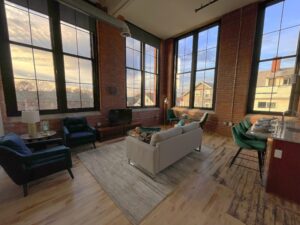
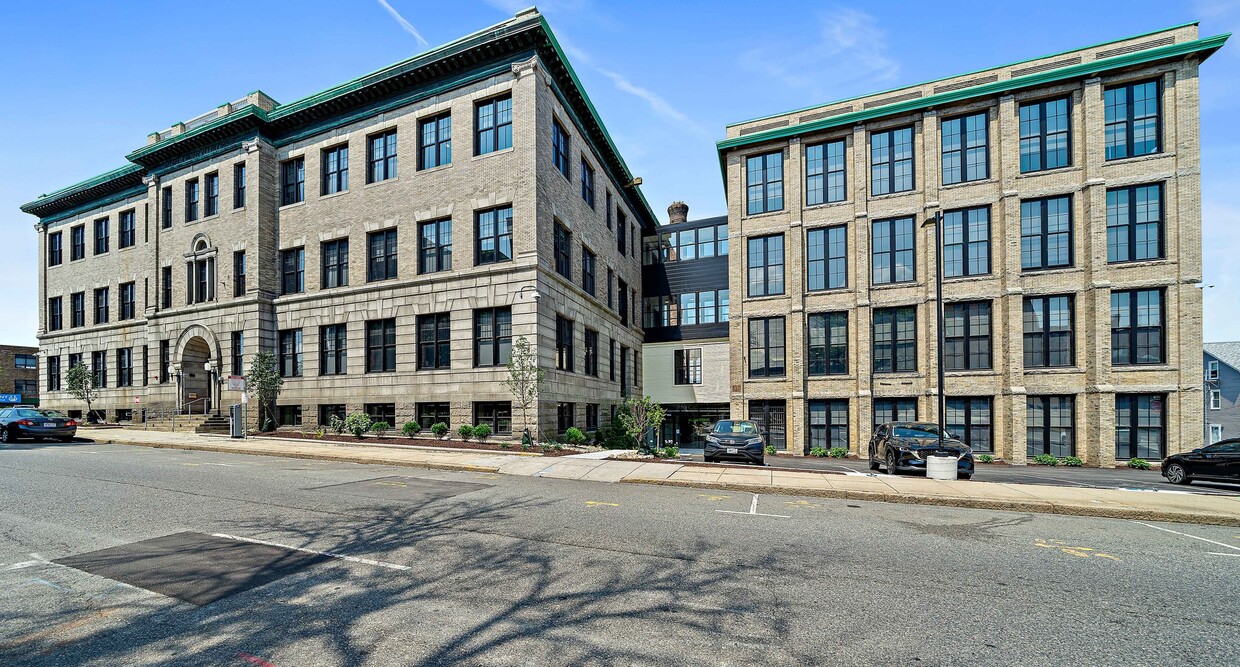
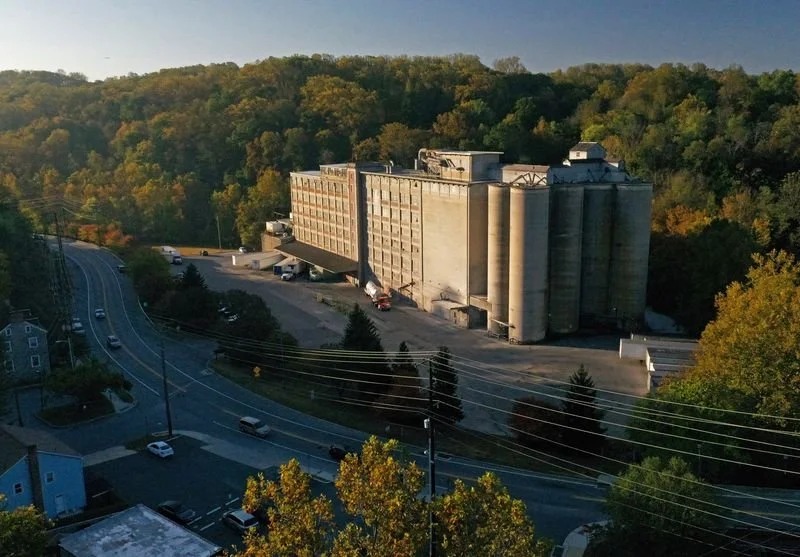
The 74,000 square foot, five-building campus will soon become the Creative Class Lofts and provide 44 market-rate apartments, 11 affordable apartments for practicing artists, and 23,345 square feet of commercial, community, and retail space.

Anchoring the commercial portion of the building will be the Spectrum Empowerment Project and the Youth Musical Theater Corporation (YMTC). Spectrum provides autistic adults with an alternate path to college and employment through economic independence, social growth, and creative expression. YMTC is a nonprofit, all-volunteer organization that provides young people with the opportunity to participate in theatrical experiences and produces two Broadway-style musicals each year. The building will also include a 170-seat event space/black box theater to support these groups, as well as an art gallery open to the public.

Groundwork, a Massachusetts-based coworking space provider, will be opening a new site within Creative Class Lofts after celebrating five years of successful growth in their New Bedford location. The Groundwork space will provide coworking memberships and support several local businesses, including Entrepreneurship for All (“E for All”), a year-long small business incubation program.

Community & Economic Impact

Building a Community

The project received an impressive level of community support through the development process and a variety of public funding designed for economic and residential expansion. The development team received letters of support from both Mayor Jasiel Correia II and the Massachusetts Department of Housing and Community Development.

In addition to below-market-rate leases, the larger, revitalized space will allow the commercial tenants to expand their programming to support more community members. Groundwork will provide affordable membership rates to an estimated 400 annual users and host job training programs as part of its partnership with the MassHire Bristol Workforce Investment Board.

Additionally, it will support Entrepreneurship for All (“E for All”), a year-long small business incubation program that will provide 30 entrepreneurs a year—predominantly women, minorities, and immigrants— with the opportunity to move their businesses forward.

The larger space and new theater will enable both the Spectrum Empowerment Project and YMTC to greatly develop and expand their

community programming. With a dedicated theater at their disposal, YMTC plans to add 4 additional performances to their annual calendar, growing their audience to 800 people annually. Additionally, the new location’s proximity to the Fall River District Court will allow Spectrum’s Employ Workforce Integration program, which provides job training for adults on the spectrum, to develop a new Paralegal Assistant program. The project will also create affordable housing for practicing artists (those earning 60% AMI or less), who typically have been pioneers in creating vibrancy in blighted neighborhoods. The project is a significant part of the city’s “Downtown Urban Renewal Plan.” In 2007, the city created an Arts Overlay District to promote the expansion of art and culture, encourage art uses, and enhance the vitality of the central business district by fostering a mix of housing and art-related uses. This project will be the “mix of housing and art-related uses,” which has been so elusive to the community.

The revitalization of the historic building will create an estimated 126 quality construction jobs, 72% of which are accessible to underserved individuals. Once complete, the building’s tenants will create an estimated 46 permanent jobs.

Theater Programming

Will grow audience to 800 annually

Entrepreneurship for All

30 participants annually

Housing for Artists

Part of city’s Downtown Renewal Plan

Groundwork Coworking

400 affordable memberships

Job Creation

46 full time jobs created

NTCIC & Progress

Financing the Project

The $20.7 million project was financed in part with $2 million in New Markets Tax Credit (NMTC) allocation from NTCIC’s Irvin Henderson Main Street Revitalization Fund. Additionally, NTCIC’s invested in the $3.77 million in federal Historic Tax Credits (HTC)

and $4.3 million in state HTCs generated by the project. Additional financing included funds from the Massachusetts Housing Development Incentive Program (HDIP) and additional state and federal programs including the HOME Program.

Want to Discuss Your Next Project? Talk With Our Team Today.

We bring clear insight, deep experience, and strategic focus to every project, whether you're structuring complex capital or shaping long-term, legacy-driven development.

Name(Required)
Want to Discuss Your Next Project? Talk With Our Team Today.

Historic Tax Credits

$9.5 Million
Federal HTCs

New Markets Tax Credits

$7 Million

Total Project Cost

$50 Million

Project Partner

Huntington Theatre Company, Inc.

Impact

Arts Education, Support, & Access

One of the First Nonprofit Playhouses
History

One of the First Nonprofit Playhouses

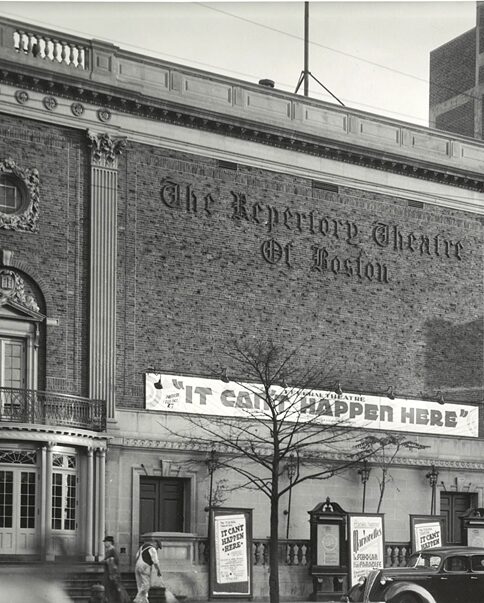
Originally built in 1925 as the “Repertory Theatre of Boston,” the Huntington Theatre was one of the country’s first nonprofit playhouses. It was built to be a permanent home for the Henry Jewett Players‚ a Boston–based repertory theatre company. In choosing to locate the theatre across from Symphony Hall and near the Museum of Fine Arts and the old Boston Opera House‚ the theatre’s creators intended to signify its character as a major cultural institution of Boston and its difference from the commercial playhouses in the Boylston‚ Washington‚ Tremont streets area of the city.

Huntington Theatre Company, Inc., the organization spearheading the rehabilitation of the space, has been operating out of the theatre since its founding in 1982 as part of a partnership with Boston University (“BU”). Over the years the Huntington has received over 150 Elliot Norton and Independent Reviewers of New England Awards, as well as the Tony Award for Outstanding Regional Theatre. In the past 36 years, the Huntington has played to an audience of 3.5 million, presented over 200 plays (18 of which went on to Broadway or Off-Broadway), and served over 500,000 students, community members, and other cultural organizations, becoming Boston’s leading professional theatre and one of the region’s premier cultural assets. Boston Magazine named the Huntington the 2019 “Best Theatre Company, Large” in the city.


Improving the Huntington
Revitalization Efforts

Improving the Huntington

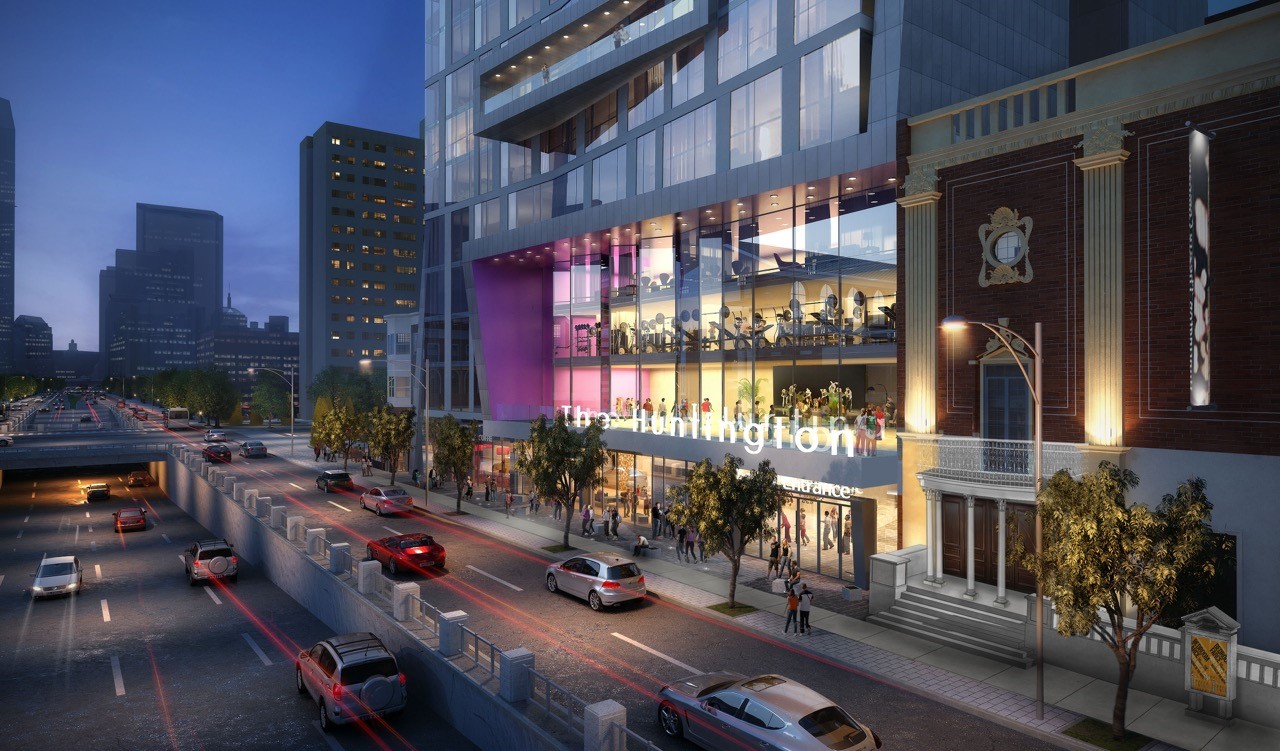
The redevelopment will consist of restoring the 44,000 SF theatre and the attached service building. Once renovated, the theatre intends to increase its annual performances from 150 to 180 and expand its educational programs. The completion of the proposed overhaul to the building will enable the owners to provide more programs in a much more modern theater with larger seats, better equipment, and back-of-the-house facilities. The new theatre space will have additional accessible seating locations, improved sightlines, and new acoustic systems which will ensure high quality and comfortable audience experience.

Community Impact

Culture & Community

The Huntington is a community-centered theatre with strong, proactive goals to expand community participation and inclusion. Once renovated, it intends to increase its annual performances from 150 to 180 at the conclusion of the historic theatre restoration. This increase will also allow for expansion and staff increases in the Huntington’s education, community, and workforce development programs, including an increase to the Huntington Community Membership Initiative (HCMI), a program designed to reduce economic barriers to attending live theatre for those with limited

income. By partnering with 245+ organizations in local neighborhoods, the program provides more than 3,400 low-income patrons with affordable tickets to the best available seats, a multi-departmental theatre apprenticeship program, career pathways partnership program, and award-winning youth arts education initiatives. This project will increase the program’s overall capabilities by 40%. It will also allow for an additional 1,087 youth to be served through one of three annual spoken word programs hosted by Huntington Theatre.

Huntington Community Membership Initiative

Reduce economic barriers to live theater

Partnership with 245+ Organizations

3,400+ tickets for low-income patrons

Expanded Programming

Additional 1,087 youth to be served

Increased Performances

From 150 to 180 annually

Additional Resources

Allow for more workforce development, community engagement, etc.

NTCIC & Progress

Project Financing

In addition to a large capital campaign spearheaded by the Huntington, the project was financed by over $9.5 million in federal Historic Tax Credits, as well as a $7 million New Markets Tax Credit (NMTC) allocation, both of which were supported by NTCIC.

Check Out Similar Projects Here

Browse all projects

Want to Discuss Your Next Project? Talk With Our Team Today.

We bring clear insight, deep experience, and strategic focus to every project—whether you're structuring complex capital or shaping long-term, legacy-driven development.

Name(Required)
Want to Discuss Your Next Project? Talk With Our Team Today.