



“Pontiac is a comeback city, writing the story of its recovery. We are doing our part by growing healthy food, making sure neighbors are known, kids are resourced, and services are accessible.”
Originally built in 1921 during Pontiac, Michigan’s automotive boom, the historic Webster School is set to embark on a new chapter as the Webster Community Center. Led by local community development corporation Micah 6 Community, the Center will combine over a dozen service- and development-oriented providers and nonprofits under one roof, creating a transit-oriented integrated hub of health, education, and opportunity.
The National Trust Community Investment Corporation (NTCIC), a tax credit syndicator and subsidiary of the National Trust for Historic Preservation, is proud to support the project development through a $7 million New Markets Tax Credit allocation and an equity investment in the $5.5 million of Historic Tax Credits generated from the preservation efforts.
Continuing a Legacy of Education and Opportunity
The historic 54,000-square-foot Webster School opened during Pontiac’s population boom, as tens of thousands flocked from the south to work in the rapidly growing automotive manufacturing industry that originally put the city on the map. After the school eventually closed in 2008 and stood vacant for over a decade, this historic building is set for a new life.
Once complete, the Webster Community Center will be a vibrant ecosystem of over a dozen nonprofit and service-oriented organizations, all dedicated to providing critical resources to children and families.
The Center will feature a Federally Qualified Healthcare Center aimed at addressing the community’s lack of access to primary healthcare, a HeadStart program operated by Oakland Livingston Human Service Agency (OLHSA), and diverse youth enrichment programs including music, theater, art, sports, and STEM, all offered at minimal or no cost.
Webster will also include education and workforce training programs for adults, including a distance learning lab operated by Rochester Christian University and a commercial kitchen led by Micah 6 Community to support local food entrepreneurs while scaling up their existing food distribution services into a full food co-op.
“The Webster Community Center is going to provide essential services that our community has long needed,” stated Coleman Yoakum, developer of the project and leader at Micah 6 Community. “Moreover, our enrichment programs in arts, sports, and technology are tailored to foster creativity and learning in a nurturing environment and to give the children of the community a variety of developmental options. This project is about building a sustainable future where every resident has the resources they need to succeed.”
To improve access, the project will consolidate three bus stops at the center’s entrance and establish an indoor transportation hub with amenities like Plain and Fancy Food shop for food and coffee, another incoming tenant.
Community-Led Revitalization
Founded in 2012, Micah 6 Community is a neighborhood-based community development corporation dedicated to addressing key challenges in their community, such as limited access to healthy food, insufficient youth activities, and a lack of resources for unhoused individuals. The nearest grocery store to Webster Elementary is more than a mile away, a significant barrier given that nearly 30% of local residents do not own a car.
Recognizing these needs, Micah 6 Community initiated its first project by purchasing a vacant lot in 2013 to establish a community garden. This effort has since expanded to encompass over an acre of gardens and greenhouses, collaborating with local farms to provide thousands of pounds of fresh produce to the community at no cost. Micah 6 Community continues to make a meaningful impact through these initiatives and ongoing dialogue with residents. Over the years, they have established afterschool programs, a summer camp, and a holiday gift donation and distribution program.
“Micah 6 Community has demonstrated an extraordinary commitment to revitalizing Pontiac. Their passion for the community and unwavering dedication to delivering essential resources were crucial in making the Webster Community Center project a reality,” said Marcus Jones, Project Manager at NTCIC. “Working alongside such a motivated and community-focused group has been an inspiring experience.”
NTCIC is proud to have supported this project, recognizing the profound impact that the Webster Community Center will have on Pontiac’s local community. The project exemplifies the high-impact, community-led initiatives that the New Markets Tax Credit was designed to support, highlighting its role in facilitating transformative developments that truly benefit the community.
To learn more about the history of the building and its new use, click here.
Washington, D.C. – May 23, 2023: National Trust Community Investment Corporation (NTCIC) is thrilled to announce the successful New Markets Tax Credit (NMTC) and Historic Tax Credit (HTC) investment to support the revitalization and expansion of the historic YWCA of Wheeling, West Virginia.
Since its establishment in 1906, the YWCA of Wheeling has been a beacon of progressive ideals and champion for equal access regardless of race, even amidst the Jim Crow-era laws of the early 20th century. With a mission of “eliminating racism, empowering women, and promoting peace, justice, freedom, and dignity for all,” the YWCA of Wheeling has been operating from this historic location, growing its programs, and continuing to support the women and families of Wheeling. However, the century-old building now requires essential repairs and upgrades to ensure the YWCA can continue its mission into the future.
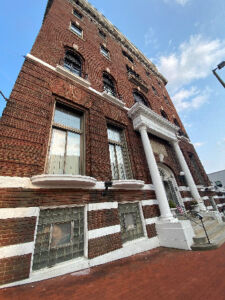
“This building is steeped in over a century of helping meet women, families, and men where they are. Over the years, we have grown and morphed to meet the changing needs of the community, and in order to continue this hard work, we need to make changes to our historic Chapline Street location,” said Lori Jones, Executive Director of the YWCA Wheeling.
The YWCA currently serves 7,400 participants each year through a range of programs, including a non-treatment residential substance use recovery program, case management services, youth empowerment, a no-cost clothing and shoe bank for individuals and families, an emergency shelter, and support services for women and families experiencing domestic violence.
The renovation of the century-old YWCA of Wheeling building will enhance the quality of life for employees, residents, and community members and support an additional 1,200 women and families each year. Critical renovations include expanded and enhanced programming space, expanded and refreshed residential and shelter space, which will provide space for up to 55 women and families, new HVAC, and upgraded plumbing and electrical – all to ensure the YWCA’s sustainability in its mission to provide vital services for women and families in need.
NTCIC provided a $10 million NMTC allocation for the project and facilitated the investment of the $6.1 million in both state and federal HTCs generated by the revitalization efforts. The swift closing facilitated by NTCIC enabled the YWCA to begin construction promptly, limiting program disruption and enabling the organization to quickly expand its crucial services and provide a safe haven for women and families at risk.
“YWCA of Wheeling has provided life-saving services for so many over its history and serves as a beacon of hope and positive change for so many women and children,” said Kathleen Galvan, NTCIC Acquisitions Manager. “NTCIC is honored to play a part in supporting its mission and enabling this important organization to grow.”
In undertaking this project, the YWCA continues its long history of progressive action and service to the underrepresented members of the Wheeling community. The renovation of the YWCA facility not only preserves a piece of Wheeling’s history but also ensures that the building continues to function as a vital resource for women and families in the area. Click here to read more about the history of the building.
ABOUT YWCA OF WHEELING
Since 1906, the YWCA of Wheeling has provided services to individuals regardless of race, gender, age, or religion in the West Virginia Northern Panhandle, including Ohio, Marshall, Brooke, Wetzel, Hancock Counties, and Belmont and Jefferson Counties in Ohio.
HTC Advocacy Leaders Eye Upcoming Economic Package
as Marker for Bipartisan Tax Deal Later this Year
May 16, 2023: Despite national attention focused on the debt limit negotiations between House Republicans and President Biden, the Historic Tax Credit Growth and Opportunity Act (HTC-GO) is steadily gaining support from both Republicans and Democrats.
In March, Representatives Darin LaHood (R-IL) and Earl Blumenauer (D-OR) and Senators Ben Cardin (D-MD) and Bill Cassidy (R-LA) introduced HTC-GO (H.R.1785/S.639). The House and Senate bills include four permanent provisions that will add value to the Historic Tax Credit (HTC), improve access to the credit, and increase investment in smaller rehabilitation projects. The House bill also includes a provision that will temporarily increase the tax incentive amount to help address the significant challenges currently facing historic rehabilitation projects throughout the nation. Presently, the legislation has 20 cosponsors in the House and eight cosponsors in the Senate.
The House Ways & Means Committee is expected to mark up a partisan economic package soon, the scale of which remains to be seen. The bill will likely include individual and small business relief, an extension of certain expired tax provisions (e.g., bonus depreciation, deductibility of business interest and Research & Development expensing), and Inflation Reduction Act repeal. This package is expected to be voted upon by the full House as early as June.
DC advocacy coalitions are determining if community development improvements can be added to these discussions and be considered in the legislation. Democrats will not support many of the provisions and how the provisions are funded. This bill will serve as a Republican marker for possible future tax bill negotiations later this year. HTC advocates will continue to monitor these efforts to determine what legislative tax vehicle might come forward this summer and later this year. An abundance of Members of Congress demonstrating support for HTC-GO through cosponsorship will elevate HTC-GO’s chances of being considered in any year-end tax legislation.
Join us for HTC Lobby Day in DC on Wednesday, June 14th
The Historic Tax Credit Coalition is hosting its annual HTC Lobby Day in DC on June 14th. If you are a resident in any of the following states: AL, AZ, AR, CA, FL, ID, IN, IA, KS, KY, LA, ME, MS, MO, MT, NE, NY, NC, ND, OH, OK, OR, SC, SD, TN, TX, WV, WI, WY, please consider participating to voice strong support for HTC-GO provisions to be included in future moving tax legislation. Since June 14th is the day before many in the HTC industry are in town for the IPED Historic Tax Credit Conference, the Coalition anticipates a strong showing from the historic rehabilitation industry and Main Street and preservation advocates on Capitol Hill.
The Coalition will set up your meetings and provide educational materials, including maps and lists of projects for each state and congressional district. To allow most participants to fly in on the morning of the 14th, the Coalition will host a mid-morning breakfast briefing and then head to Capitol Hill between 11 am – Noon for an afternoon of meetings.
CLICK HERE for more details on upcoming HTC advocacy events!
Washington, D.C. – May 15, 2023: National Trust Community Investment Corporation (NTCIC) is excited to announce the successful financial closing of Findlay Parkside, a $27 million adaptive reuse project in the Over-The-Rhine neighborhood of Cincinnati, OH. NTCIC provided a $10 million New Markets Tax Credit (NMTC) allocation and equity investments in the $9 million in federal and state Historic Tax Credits (HTCs) generated by the initiative to support the creation of mixed-income housing and commercial spaces in one of the country’s most intact urban historic districts.
The Findlay Parkside project showcases a unique use of tax credit financing by revitalizing nine scattered site low-rise buildings within a single transaction. Once complete, they will become 51 apartments, with 26 designated as affordable housing, and over 16,000 square feet of ground-floor commercial retail space supporting up to 10 small businesses, primarily focused on BIPOC entrepreneurs.
“Buildings with project costs under $5 million are underrepresented in the NMTC industry,” said NTCIC Project Manager Tony Maruca. “It takes a visionary developer such as The Model Group to package nine such buildings (comprising 10 building permits and 11 separate NPS applications) into an efficient NMTC/HTC twin deal. The Model Group was able to marshal all the necessary public and private sources because of their unwavering commitment to delivering on the community impacts. This project builds on their previous work in Over-the-Rhine, creating affordable housing and supporting small businesses, which are what makes the neighborhood special.”
A prime example of historic preservation, sustainable development, and social impact, the Findlay Parkside project will generate 160 construction and permanent jobs and is designed to achieve LEED Silver certification, emphasizing the importance of retaining and repurposing existing structures to reduce waste, decrease the consumption of raw materials, and lower carbon emissions compared to new construction or demolition.
NTCIC supported the project completion by sourcing, underwriting, and facilitating the equity investment in the $9 million in federal and state Historic Tax Credits generated by the revitalization efforts. NTCIC also provided $10 million in New Markets Tax Credit (NMTC) allocation from their 2019 allocation round, which prioritizes investments in impactful commercial and mixed-use projects that serve as centerpieces for local redevelopment plans, elimination of blight, and the stimulation of economic activity.
Other financing sources included NMTC source debt, HTC bridge debt, sponsor equity, and additional NMTC allocation from RBC Community Capital and Truist Community Capital. TIF financing from the City of Cincinnati is also anticipated.
NTCIC’s Historic Tax Credit Investment Supports the $80 Million Mercantile Project
Washington, D.C. – March 25, 2023: The National Trust Community Investment Corporation (NTCIC) is excited to announce the successful financial closing of The Mercantile, an $80 million adaptive reuse project in downtown Cincinnati, Ohio. This project showcases how historic preservation can effectively combat the growing housing crisis by transforming two historic office buildings into much-needed housing in Cincinnati’s urban core. NTCIC provided an equity investment in the $12.7 million in federal Historic Tax Credits (HTCs) to revitalize the historic Mercantile Library Building and Formica Building in the heart of the city.
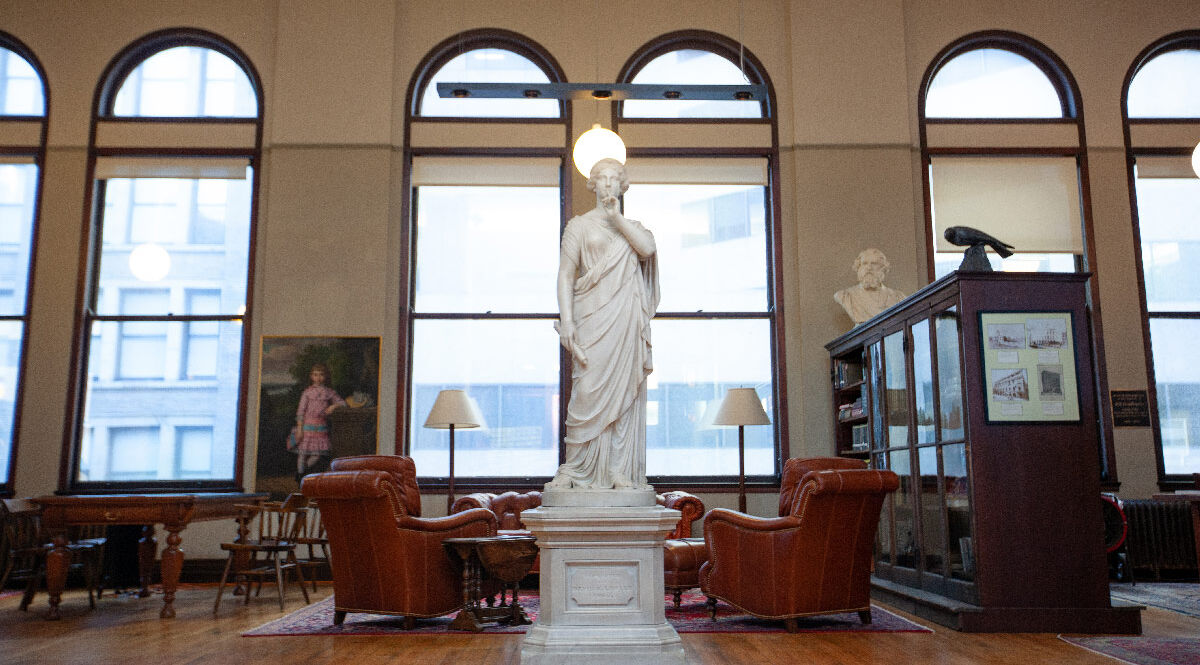
The project includes a unique combination of two adjacent historic buildings, the 13-story beaux-arts Mercantile Library Building, dating from 1903, and the 13-story high modern Formica Building, built in 1970. Once complete, the revitalized spaces will create market-rate housing and commercial spaces while preserving the historic integrity of both structures.
The Model Group, a Cincinnati-based leader in historic preservation, mixed-use urban development, and affordable housing, is the project partner responsible for the revitalization efforts. The Mercantile will feature commercial space on the first two floors, with the remaining floors being adaptively reused for market-rate rental apartments. The exception is the 11th and 12th floors, in which the project will expand and enhance the legendary Mercantile Library, a cultural institution that has been the center of Cincinnati’s literary community for over 200 years.
In the wake of the pandemic, the need for housing has been exacerbated, and the Mercantile project demonstrates the future of adaptive reuse – converting office buildings, which are becoming more and more vacant as many companies shift to remote environments.
“We’re proud to participate in this project that will prove it is possible to convert downtown office buildings, even modernist office buildings, to housing with distinct appeal,” said NTCIC Project Manager Tony Maruca. “Expertise not just in project finance but also design, construction, and operations make the Model Group the ideal steward of both our investment and these treasured historic buildings.”
The Mercantile project highlights the challenges and successes of office conversions, particularly in the case of the Formica Building, a modern office building from the 70s. The Model Group, an innovative partner in this project, has demonstrated the ability to envision new uses for a contemporary office building while respecting its historic character.
This transformative project will contribute to the ongoing revitalization of downtown Cincinnati, stimulating economic growth and attracting new investment. NTCIC’s financing, combined with traditional debt, sponsor equity, state HTCs, the recently created Ohio Transformational Mixed-Use Development (TMUD), and Ohio Opportunity Zone financing, will help ensure successful project completion.
Click here to read more about the project development.
About National Trust Community Investment Corporation (NTCIC)
NTCIC is an industry leader in providing investment capital, asset management, and innovative financing solutions for historic preservation and community development. Since its inception, NTCIC has contributed to the rehabilitation of more than 22 million square feet of historic real estate, creating nearly 80 thousand jobs and generating more than $2 billion in project financing.
Talking Points, Outreach Guides, and Resources for HTC-GO Advocacy
Now more than ever, advocates need your support to urge members of Congress to Cosponsor the Historic Tax Credit Growth & Opportunity Act (HTC-GO). To help, we have put together a collection of resources, outreach guides, and talking points to help you take action for the HTC-GO and help make this bill a reality.
History of the Historic Tax Credit
The federal Historic Tax Credit (HTC) is a critical community development tool used to encourage investment in the rehabilitation of historic buildings nationwide. Since the program’s establishment in 1976, the HTC has leveraged nearly $235 billion in private investment to preserve more than 49,000 historic properties and support more than 3.2 million jobs.
Unfortunately, the value of the HTC has diminished over the past decade because of IRS rulings, administrative burdens, and other legislative changes. In an effort to expand and enhance this critical community development program, Congress introduced the Historic Tax Credit Growth & Opportunity Act (HTC-GO). It includes provisions that would encourage more building reuse and redevelopment nationwide and would be particularly impactful for small, midsize, and rural communities.
Learn About the Historic Tax Credit, Advocacy Efforts, and the HTC-GO
- Learn about the provisions within the HTC-GO: What is the Historic Tax Credit Growth & Opportunity Act?
- Connect with NTCIC and stay up to date on HTC-GO advocacy efforts: HTC-GO Advocacy Updates from NTCIC
- Meet other organizations in support of the bill: Preservation Organizations Support the HTC-GO.
- Check to see if your House or Senate representatives are already supporting the HTC-GO.
- Learn about successful Historic Tax Credit-supported projects in your area: Federal Historic Tax Credit Projects by State.
Take Action for the HTC-GO
- Search for local and political events or join a local political party’s email list to learn about events your members of Congress might be attending.
- Connect with NTCIC for assistance in obtaining the contact information of the scheduling office for your members of Congress.
- Invite your Representative to tour successful Historic Tax Credit-supported projects.
- Request cosponsorship through the National Trust for Historic Preservation’s E-Advocacy Tool.
- Utilize the suggested talking points below for your conversations with your members of Congress.
HTC-GO Talking Points & Advocacy Requests
- The number of historic preservation projects has significantly decreased over the past several years – by as much as 20%.
- In addition to skyrocketing costs of materials and labor and rising interest rates, the Historic Tax Credit – our country’s most powerful tool for preservation has lost power and value.
- Historic Tax Credits have lost value over the past ten years due to IRS revenue procedures and other recent federal policies.
- Pricing of the credits has dropped 20-25% over the last ten years.
- “Now is the time to strengthen the Historic Tax Credit to address the slowdown and challenges in rehabilitation projects across the country.”
- The HTC has not been positively modernized since 1986. In light of other federal investment tax credits being significantly enhanced recently, it is important to improve this incentive.
- “Would you please cosponsor House Bill H.R. 1785/Senate Bill S. 639 – The Historic Tax Credit Growth and Opportunity Act (HTC-GO) and work to include these provisions in year-end legislation?”
- The Historic Tax Credit Growth and Opportunity Act (HTC-GO H.R. 1785/S. 639) would bring more value to the credit, make more historic buildings eligible to use the HTC, further incentivize smaller projects and nonprofit projects, and make the credit easier to use.
Historic Illinois Building will Become InterContinental Hotel with Historic Tax Credit Investment
WASHINGTON, DC, March 30, 2023 – The National Trust Community Investment Corporation (NTCIC) is excited to announce the successful financial closing of the Illinois Building, an iconic office building located in the heart of the Mile Square business district of Indianapolis, Indiana. The revitalization project, led by Keystone Group, a development, construction, property management, and investments company specializing in transformational mixed-use projects, will transform the building into a 170-key full-service luxury InterContinental hotel and restaurant space. NTCIC provided an equity investment in federal Historic Tax Credits (HTC) generated by the preservation efforts.

Historic Origins
Constructed in 1926, the Illinois Building was designed by the renowned architectural firm Rubush & Hunter, who were responsible for several iconic landmarks in Indianapolis, such as the Masonic Temple, City Hall, Circle Theater, Indiana Theater, and the Stutz Motor Company complex. Commissioned by the president of what is now Levi Strauss & Company, the building served as luxurious office space for nearly 70 years before becoming predominantly vacant by the mid-2000s. Indiana Landmarks listed the building on its 10 Most Endangered list in 2006, spurring interest in its revitalization.
The Revitalization of Downtown Indianapolis
Keystone Group will oversee the transformation of the 10-story, 135,004 square-foot Illinois Building into a 170-key luxury InterContinental hotel managed by IHG. The project will retain the two ground-floor restaurants currently occupying and operating the space, add a 2nd-floor hotel restaurant and bar, and create a rooftop bar and venue.
“The restoration of the Illinois Building is a testament to our commitment to preserving the architectural heritage of downtown Indianapolis,” said Ersal Ozdemir, Keystone Group CEO. “With the transformational development of this long-vacant historic treasure, we are not only reinvigorating the central business district but also attracting more activity and fostering a vibrant, thriving urban core that benefits residents and visitors alike.”
NTCIC’s Historic Support
To facilitate the restoration of the Illinois Building, NTCIC financed federal Historic Tax Credits generated by the project through its Climate Impact and Revitalization Fund. NTCIC provided underwriting and transaction management services and will provide asset management services through the HTC compliance period.
“We are proud to collaborate with Keystone Group for the Illinois Building restoration, who have demonstrated exceptional stewardship, commitment to quality preservation, and dedication to the local community,” said Amanda Bloomberg, NTCIC’s Senior Acquisition Manager. “Their track record of thoughtful development reinforces our confidence in the project’s potential to make a lasting impact on downtown Indianapolis.”
The conversion of the historic downtown Illinois Building into a hotel exemplifies the shift of companies to more remote and flexible work arrangements and a reduction in the demand for traditional office spaces. This trend has led to an increased interest in repurposing these historic spaces into other types of properties, such as hotels, housing, and retail, which can cater to the evolving needs of urban centers.
Urge your Representative and Senators to Cosponsor
March 27, 2023: Late last week, Representatives Darin LaHood (R-IL) and Earl Blumenauer (D-OR), Mike Kelly (R-PA), Terri Sewell (D-AL), Mike Turner (R-OH), and Brian Higgins (D-NY) reintroduced the House version of Historic Tax Credit Growth and Opportunity Act (HTC-GO/H.R. 1785). The bill includes similar permanent provisions as the Senate version and an additional temporary provision to address recent challenges facing historic rehabilitation projects.
In early March, Senators Cardin (D-MD), Cassidy (R-LA), Cantwell (D-WA), and Collins (R-ME) reintroduced HTC-GO (S. 639). Both the House and Senate bills include four permanent provisions that will add value to the Historic Tax Credit (HTC), improve access to the credit, make more projects eligible to use the credit, and increase investment in smaller rehabilitation projects.
How You Can Help Advocate for the HTC-GO
- Contact your Representative and Senators:
- To locate your House Representative, visit: www.house.gov/representatives
- To locate your Senators, visit: www.senate.gov/senators/senators-contact
- Send a message through their website and select “tax” or “taxation” as the issue area, OR
- Call (during office hours) the office, introduce yourself as a constituent, and ask for the email address of tax staff members.
- Talking Points to Encourage Your Members of Congress to Cosponsor the HTC-GO:
- “The Historic Tax Credit Growth and Opportunity Act (HTC-GO), H.R. 1785/ S. 639, is needed now more than ever.”
- “The Historic Tax Credit is a vital community revitalization tool in both small towns and large urban areas but has lost value due to federal policies over the last ten years.”
- “The HTC has not been positively modernized since 1986. HTC-GO provisions would bring more value to the credit, make more buildings eligible to use the credit, and make the HTC easier to use.”
- “Would the Representative/Senator please cosponsor the Historic Tax Credit Growth and Opportunity Act (H.R. 1785/S. 639)?”
- “Please look for opportunities to include these provisions in future tax legislation.”
- “Share the National Preservation Organizations HTC-GO Reintroduction Release with offices.”
About the Provisions of the HTC-GO Legislation
The federal HTC is the largest federal investment in historic preservation and a critical economic development tool used to revitalize our communities. Unfortunately, the value of the HTC incentive has diminished over the past decade because of IRS rulings, administrative burdens, changes in the credit structure, as well as spreading the distribution of the credit over five years as modified by the Tax Cuts and Jobs Act of 2017. As a result, the HTC has lost 20 – 25% of its investment value as interest rates continue to climb and materials and labor costs soar.
National Park Service statistics indicate that HTC applications are down 20% compared to pre-pandemic levels (2019), and the number of projects continues to decline even as the economy is rebounding.
Historic buildings have simply become more difficult to rehabilitate.
HTC-GO Temporary Provisions (House Bill Only)
The HTC-GO legislation temporarily increases the rehabilitation credit (IRC § 47) to address profound challenges facing the historic rehabilitation sector.
- This provision increases the HTC percentage from 20% to 30% for 2023 through 2026.
- The credit percentage is phased down to 26% in 2027, 23% in 2028, and returns to 20% in 2029 and thereafter.
HTC-GO Permanent Provisions (House and Senate Bills)
The permanent provisions will make important changes to the HTC to encourage more building reuse and redevelopment nationwide and would be particularly impactful for small, midsize, and rural communities. These provisions would:
- Make the credit easier to use by increasing the credit from 20% to 30% for projects with less than $2.5 million in qualified rehabilitation expenses.
- Make more projects eligible to use the HTC by lowering the substantial rehabilitation threshold.
- Increase the value of HTCs and promote affordable housing development by eliminating the requirement that the value of the HTC must be deducted from a building’s basis (property’s value for tax purposes), making it easier to pair with the federal Low-Income Housing Tax Credit.
- Enable further nonprofit use of the HTC by eliminating IRS restrictions that make it challenging for nonprofits to partner with developers. This change will create more opportunities for workforce development facilities, job/small business incubators, community health centers, local arts centers, affordable housing, and homeless services to be supported by the HTC.
Resources
- HTC State Maps and Project Lists FY2002-2022
- National Preservation Organizations’ Release in Support
For further assistance with your advocacy, please contact Mike Phillips, Shaw Sprague, and Patrick Robertson
March 2, 2023: Today, Senators Cardin (D-MD), Cassidy (R-LA), Cantwell (D-WA), and Collins (R-ME) reintroduced the Historic Tax Credit Growth and Opportunity Act (HTC-GO/ S. 639), in the Senate. The bill includes four permanent provisions that will add value to the Historic Tax Credit (HTC), improve access to the credit, make more projects eligible to use the credit, and increase investment in smaller rehabilitation projects.
Representatives Darin LaHood (R-IL) and Earl Blumenauer (D-OR) are expected to reintroduce a House companion HTC-GO bill next week. The bill will include similar permanent provisions and an additional temporary provision to address recent challenges facing historic rehabilitation projects.
How You Can Help Advocate for the HTC-GO
- Contact your Senators:
- Visit the senate.gov contact list to locate your Senators
- Send a message through their website and select “tax” or “taxation” as the issue area, OR
- Call (during office hours) the office, introduce yourself as a constituent, and ask for the email address of tax staff members.
- Talking Points to Encourage Your Senators to Cosponsor the HTC-GO:
- The Historic Tax Credit Growth and Opportunity Act (HTC-GO/ S. 639) is needed now more than ever.
- The Historic Tax Credit is a vital community revitalization tool in small towns and large urban areas but has lost value due to federal policies over the last ten years.
- The HTC has not been positively modernized since 1986. HTC-GO provisions would bring more value to the credit, make more buildings eligible to use the credit, and make the HTC easier to use.
- Would the Senator please cosponsor the Historic Tax Credit Growth and Opportunity Act (S. 639)?
- Please look for opportunities to include these provisions in future tax legislation.
About the Provisions of the HTC-GO Legislation
The federal HTC is the largest federal investment in historic preservation and a critical economic development tool used to revitalize our communities. Unfortunately, the value of the HTC incentive has diminished over the past decade because of IRS rulings, administrative burdens, changes in the credit structure, as well as spreading the distribution of the credit over five years as modified by the Tax Cuts and Jobs Act of 2017. As a result, the HTC has lost 20 – 25% of its investment value as interest rates continue to climb and materials and labor costs soar.
National Park Service statistics indicate that HTC applications are down 20% compared to pre-pandemic levels (2019), and the number of projects continues to decline even as the economy is rebounding.
Historic buildings have simply become more difficult to rehabilitate.
HTC-GO Permanent Provisions
The permanent provisions will make important changes to the HTC to encourage more building reuse and redevelopment nationwide and would be particularly impactful for small, midsize, and rural communities.
These provisions would:
- Make the credit easier to use by increasing the credit from 20% to 30% for projects with less than $2.5 million in qualified rehabilitation expenses.
- Make more projects eligible to use the HTC by lowering the substantial rehabilitation threshold.
- Increase the HTC’s value and promote affordable housing development by eliminating the requirement that the value of the HTC must be deducted from a building’s basis (property’s value for tax purposes), making it easier to pair with the federal Low-Income Housing Tax Credit.
- Enable further nonprofit use of the HTC by eliminating IRS restrictions that make it challenging for nonprofits to partner with developers. This change will create more opportunities for workforce development facilities, job/small business incubators, community health centers, local arts centers, affordable housing, and homeless services to be supported by the HTC.
Resources
For further assistance with your advocacy, please contact Mike Phillips, Shaw Sprague, and Patrick Robertson
The federal Historic Tax Credit (HTC) is a critical community development tool used to encourage investment in the rehabilitation of historic buildings nationwide. Since the program’s establishment in 1976, the HTC has leveraged nearly $120 billion in private investment to preserve more than 48,000 historic properties and support more than 3 million jobs. The credit is also often paired, or “twinned,” with other programs such as the Low-Income Housing Tax Credit and the New Markets Tax Credit, which has helped to create nearly 200,000 units of low- and moderate-income housing units and increase access to vital community goods and services.
Unfortunately, the value of the HTC has diminished over the past decade because of IRS rulings, administrative burdens, changes in the credit structure, and spreading the distribution of the credit over five years as modified by the Tax Cuts and Jobs Act of 2017. As a result, the HTC has lost 20 – 25% of its investment value as interest rates continue to climb and materials and labor costs soar. National Park Service statistics indicate that HTC applications over the last two fiscal years are down 20 percent when compared to 2019 and prior years. Historic buildings have simply become more difficult to rehabilitate.
So, What is the Historic Tax Credit Growth & Opportunity Act?
In an effort to expand and enhance this critical community development program, Congress introduced the Historic Tax Credit Growth & Opportunity Act (HTC-GO). It includes provisions that would bring five more tools to the HTC: More Credits, More Value, More Buildings, More Nonprofit Use, and More Simplicity.
Let’s take a look at what the Historic Tax Credit Growth & Opportunity Act will do to enhance and expand the power of the Historic Tax Credit.
HTC Percentage Increase
Currently, the HTC provides a 20% credit to project costs directly associated with the repair or improvement of historic structural and architectural features of a building, also known as qualified rehabilitation expenditures (QREs). This percentage is the foundation for all equations for determining the value of the HTC through the rehabilitation process.
For example, under the current law, a project with $200,000 in historic rehabilitation costs could receive up to $40,000 in HTCs ($200,000 x 20% = $40,000).
If passed, this bill will increase the HTC percentage from 20% to 30% through 2025. This is a 50% increase in value and benefit to historic preservation projects, so that same project with $200,000 in rehab costs would generate $60,000 in credits ($200,000 x 30% = $60,000). For projects generating more than $2.5 million in QREs, the increase would be in effect from 2020 through 2025 before gradually returning to 20% in 2028. Properties must complete the rehabilitation efforts after March 31, 2021, to be eligible for this provision.
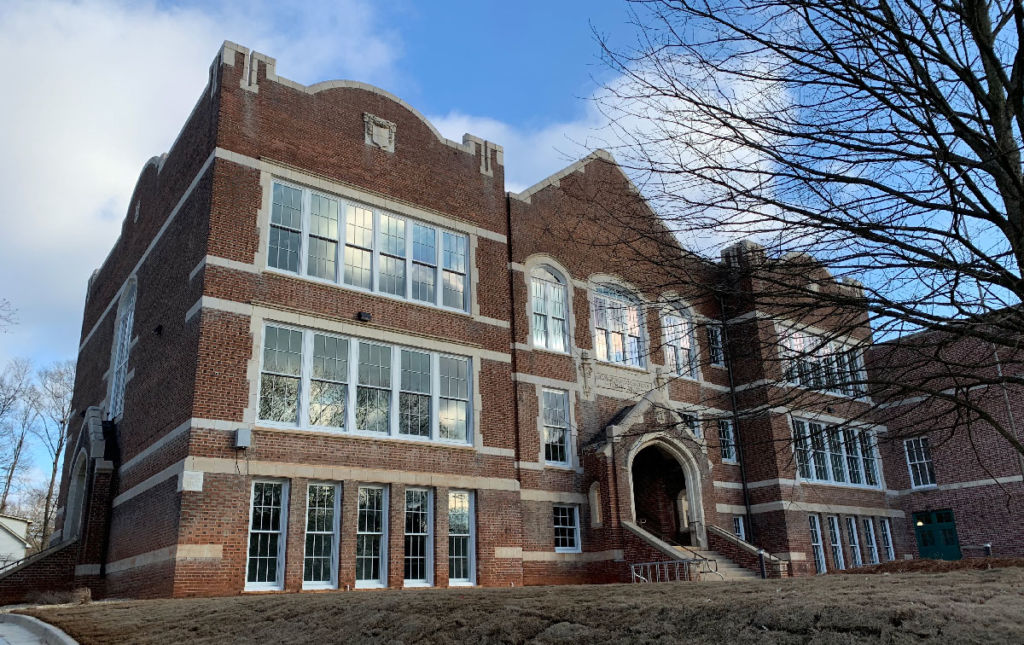
The Historic Tax Credit enhancements will better support community development projects like the Academy Lofts building in Atlanta, GA, the new home to The Creatives Project, a nonprofit organization providing quality arts-based education & outreach through artist-in-residency programs.
Permanent Increase in the Rehabilitation Credit for Small Projects
The HTC is not just for large-scale projects and developers. In fact, over half of all completed historic projects that utilized the HTC were under $2.5 million in qualified costs.
For these smaller projects, after December 31, 2023, a taxpayer would be able to elect a “small project credit” and receive the 30% tax credit for projects with qualified costs up to $2.5 million or less. This increase for small projects would be permanent. This change would ensure rural and non-urban areas are better positioned to benefit from utilizing HTCs even after the temporary 30% credit for larger projects expires in 2025.
Redefinition of “Substantial Rehabilitation”
To be eligible for HTCs, a project must pass the “Substantial Rehabilitation” test. Generally, this means that a project must spend the greater of either $5,000 or the pre-rehabbed worth of the building itself, also known as the “adjusted basis.” Currently, a project can determine its adjusted basis by completing the equation A-B-C+D = Adjusted Basis, where:
A. Purchase price of the property, both building and land
B. The cost of the land at the time of purchase
C. Depreciation taken for an income-producing property
D. Costs of improvements made to the property since its purchase
The new provision cuts the substantial rehabilitation requirement in half so that qualified rehabilitation expenditures must exceed the greater of 50% of the adjusted basis of the building rather than 100%. This reduction effectively updates the adjusted basis equation to (A-B-C+D)/2 = Adjusted Basis.
Lowering the rehabilitation cost requirements will greatly increase the HTC eligibility for countless projects and make the cost of entry much more approachable.
For example, an individual purchased a historic building for $200,000 ($150,000 for the building and $50,000 for the land). Under current law, the building’s new owners would need to incur at least $150,000 in rehabilitation costs to qualify for the credit. The new bill provision would reduce this threshold to $75,000 in rehabilitation costs.
Elimination of Rehabilitation Credit Basis Adjustment
For a larger-scale project to generate project funding at the onset of development using the HTC, rather than claiming the credits come tax season, a building owner needs to partner with an investor that has both the ability to use the credits themselves and available funding. The investor can then provide financing to the project, typically a percentage of a dollar per credit, in exchange for the ability to claim the credits themselves – lowering the amount of taxes the investor owes at the end of the year.
Currently, the financial and legal process of a building owner and investor partnering in this way requires an investor to recognize income in the amount of credits they can claim, which often results in a lower price per credit the investor can offer to a project. Essentially, the current law lowers the dollar value of the HTC, and the amount of funding a project can receive from an investor.
With the new provision, an investor no longer needs to recognize income in the amount of the HTC to claim the credit. By eliminating this adjustment, an investor can provide more funding per credit to a project. Though complex, this change would place the HTC in line with other development credits like the Low Income Housing Tax Credit (LIHTC) and make it easier to use with such programs.
Modifications Regarding Certain Tax-Exempt Use Property
Currently, to generate HTCs, a building owner and its tenants must be taxable entities. This requirement prevents many nonprofit healthcare centers, daycare organizations, arts organizations, and community service providers from engaging in historic preservation activities, especially if they already own and use their historic property.
This provision would amend and remove certain leasing and tax-exempt use restrictions, making the HTC easier to access by nonprofits that provide critical community services and other tax-exempt entities.