



WASHINGTON, DC, February 24, 2025: The National Trust Community Investment Corporation (NTCIC) is pleased to announce the successful financial closing for the revitalization of the historic Emery Theater to become the new year-round home of The Children’s Theatre of Cincinnati (TCT). The $52.1 million renovation will transform the Emery Theater into a state-of-the-art, 1,500-seat facility that will function as a hub for children’s theater performances and arts education while helping to preserve and revitalize a cultural landmark in the heart of Cincinnati.
The Children’s Theatre of Cincinnati Returns Home to Emery Theater
“We are beyond thrilled to begin this new chapter of The Children’s Theatre of Cincinnati as we return home to the iconic Emery Theater,” said Kim Kern, TCT President & CEO. “This transformative renovation will not only breathe new life into a piece of Cincinnati history, but will also significantly expand our ability to serve our community. The new space will

allow us to deepen our commitment to arts education, making the theater even more accessible to children of all ages and backgrounds.”
NTCIC provided an $8 million in New Markets Tax credit allocation and facilitated an equity investment in the $7.5 million in federal Historic Tax Credits anticipated to be generated by the project to support the revitalization of the iconic space and expansion of TCT’s arts programming for children and families in Cincinnati.
“We are incredibly grateful to all of our many supporters and to NTCIC for their role in making this renovation possible,” said Roderick Justice, TCT Artistic Director. “With the completed renovation of the Emery Theater, we will be able to impact more children through expanded programming, original and new works, and theatre for specific age groups such as children under the age of four and middle schoolers. This new space will help us nurture the next generation of young artists and future arts patrons in ways we never could before.”
Community-Driven Impact
For more than 50 years, TCT has been operating out of a rented location, limiting their productions to just 40 days throughout the year. The renovation of the Emery Theater will allow for year-round productions, expanding their schedule to nearly 150 shows annually. With a capacity to serve more than 200,000 patrons each year, the renovated theater will provide even more opportunities for arts education experiences for young people, presenting children’s theatre programming never before seen in Cincinnati. Over 97,000 Cincinnati public school students will have the opportunity to benefit from access to performing arts programs annually, with a special focus on Title 1 schools and low-income families.
“The Children’s Theatre of Cincinnati is an extraordinary organization that is doing vital work in their community, providing transformative arts education and access to the children and families who need it most,” says David Clower, CEO of NTCIC. “We are grateful to have played a part in helping the Children’s Theatre realize their dream of becoming a world-class performance venue that will serve generations to come.”
As the once-shuttered Emery Theater reopens its doors and welcomes TCT back home, it promises to become a hub of creativity and community, providing a space for families and students of all backgrounds to learn and grow while experiencing the magic of live theatre together.
Learn more about the project here.
About NTCIC
The National Trust Community Investment Corporation (NTCIC), a subsidiary of the National Trust for Historic Preservation, is a mission-driven, impact investment asset management firm focused on the adaptive reuse of historic properties and renewable energy solutions across the country. Founded in 2000, NTCIC makes transformational impact investments in low-income & disinvested communities, promoting a brighter more equitable future by revitalizing historic properties and expanding our nation’s renewable energy accessibility through innovative community development & tax credit investment strategies.
About The Children’s Theatre of Cincinnati
The Children’s Theatre of Cincinnati (TCT) has been creating lifelong memories for families with children and school audiences since 1919. TCT’s mission is to educate, entertain, and engage audiences of all ages through professional theatrical productions and arts education programming.
Image Credits: The Children’s Theatre of Cincinnati
So You Have a Historic Building… Now What?
NTCIC assists developers and individuals seeking tax credits for historic rehabilitation, and our varied and stable investor base provides ready access to capital for qualified projects. If your knowledge of Historic Tax Credits is limited, take a look below to learn more about the tax credits that NTCIC works with. If you feel you have an eligible project and would be interested in working with us, please fill out this form and a member of our acquisitions team will be in touch.
Let’s Start With the Basics.
What are Tax Credits?
- Generally designed to encourage or reward certain types of investment and development that are considered beneficial to the economy, the environment or to further any other purpose the government deems important
- Tax credits reduce the amount of income tax dollar-for-dollar that individuals or companies owe to federal and state governments
- Investors with a large tax liability want to buy tax credits to lower taxes – e.g. large banks
- Historic restoration projects need inexpensive capital
Acronyms to know
As you look more into the tax credit world, it’s important to know a few frequently used acronyms.
- Low-Income Housing Tax Credit (LIHTC) – Used to finance construction and/or rehabilitation of affordable rental housing
- Historic Tax Credit (HTC) – Encourages rehabilitation and re-use of historic buildings
- New Markets Tax Credit (NMTC) – Provides an incentive for investment in low-income communities
What do Historic Tax Credits (HTCs) do?
- Encourage redevelopment of historic buildings
- Federal since 1976 and 35 state programs
- FHTC is administered by the National Park Service
- Credit is earned by the developer for qualified rehabilitation expenses
- 20% credit taken over a single or five-year period with a five-year compliance and recapture period
Is my project eligible to utilize HTCs?
Check the following qualifications to see if your project could be eligible to utilize HTCs.
- The building must be a “Certified Historic Structure
- Individually listed on the National Register, or
- A contributing building in a National Register Historic District
- The project must be a “Certified Rehabilitation”
- Renovation adheres to the Secretary of the Interior’s Standards for Historic Rehabilitation
- The property must be income-producing
- Apartments, hotels, offices, retail, theaters, etc.
- Owner-occupied residences do not qualify.
- The project must be a “Substantial Rehabilitation”
- Spend > $5,000 or the “Adjusted Basis” of the building
To qualify as a “Certified Rehabilitation”, developers must complete a three-part application that is approved by the state SHPO and the NPS.
- Part One:
- Presents information about the significance and appearance of the building
- Part Two:
- Describes the condition of the building and the planned rehabilitation work
- Proposed work is based on the Secretary of the Interior’s Standards for Rehabilitation
- Part Three:
- Submitted after the project is complete and documents that the work was completed as described in part 2
- Typically awarded when the project is “placed in service”
- Officially when the HTC credits are awarded
- Tax credits are equal to 20% of the qualified rehabilitation expenditures (QREs)
- QREs are tax credit eligible development costs on which the HTC is calculated
- What counts?
- Hard Costs: Construction, Electrical, Plumbing, HVAC, etc
- Some Soft Costs: Architectural Fees, Insurance, Construction Period Interest, Taxes, Application Fees, Project Management Fees, etc
- What doesn’t count?
- Acquisition costs, demolition costs, leasing expenses, new construction, and some non-historic construction
- If the project is eligible, the building owner is able to attract capital from investors in exchange for these credits
The Compliance Period.
In order to receive HTCs, the finished project must make it through a five year compliance period, during which the credits are delivered.
- Credit delivery
- The HTC is generated when the building is placed in service (PIS), receives its Certificate of Occupancy
- Credit is earned 4% per year over 5 years, but investors will typically schedule the equity payments over the development and construction period
- Five year compliance period
- Period in which credits are subject to recapture
- Cannot make material alterations to the building
- Cannot transfer ownership via sale or foreclosure
- Recapture amount decreases by 20% each year
How can NTCIC help you with your eligible tax credit project?
- NTCIC provides guidance to developers and individuals seeking tax credits for historic rehabilitation
- Evaluates specifics of development projects and identifies additional sources of capital available
- Connects individuals to investors actively seeking historic projects to support and finance
- Supports projects through their ongoing compliance periods from financial closing to exit
So you have a historic building… now you know what to do! Do you think your building would qualify for HTCs? Reach out to us below and someone from our acquisitions team will be in touch.
So you have a historic building… now you know what to do! Do you think your building would qualify for HTCs? Reach out to us below and someone from our acquisitions team will be in touch.
Ready to Get Started? Let's Talk
We bring clear insight, deep experience, and strategic focus to every project,whether you're structuring complex capital or shaping long-term, legacy-driven development.


WASHINGTON, DC, January 28, 2025: NTCIC is proud to announce the successful financing of the Tivoli Theatre in Chattanooga, Tennessee. The $73 million restoration will transform the historic theater and adjoining Trigg-Smartt buildings into a state-of-the-art performing arts center, revitalizing a key cultural asset in the heart of the downtown district. NTCIC provided a $9 million New Markets Tax Credit (NMTC) allocation and an equity investment in the $12.5 million in federal Historic Tax Credits (HTCs) generated by the project.
Chattanooga’s Iconic Tivoli Theatre Set for Grand Revival
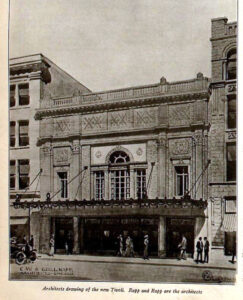 Chattanooga’s Tivoli Theatre, “the Jewel of the South,” opened its doors to the public in 1921 as a 1,750-seat state-of-the-art performance space and is notably regarded as the first public building in the south, and one of the first in the country, to have air conditioning. After decades of changing ownership and experiencing varying levels of usage, the Tivoli Theatre Foundation closed the space in 2022 to begin a full restoration.
“In order to truly improve the Tivoli and the impact it will have on the hundreds of thousands of people we serve annually, a complete renovation and expansion was necessary. The creation of the new Tivoli Performing Arts Center will allow us to feature enhanced and diverse programming, including our new education department and other outreach efforts,” Wilkinson continued. “As the cultural anchor for the performing arts in Chattanooga for over a century, this project will breathe new life into the Tivoli Theatre and create a new, more accessible community venue that will house rehearsal and education spaces, ultimately creating increased access for all Chattanoogans to witness and be a part the magic of the performing arts.”
Upon completion, the performing arts center will include a new 190-seat cinema and studio, an expanded lobby, a restaurant, six bar spaces, additional event areas, and upgrades to all service and mechanical systems, including bathrooms, HVAC, and more. Outside, the iconic Tivoli Theatre marquee will be restored and modernized to light up the city streets once again.
The Tivoli Theatre Foundation will use its new space to expand upon partnerships with organizations like the Chattanooga Symphony & Opera, Chattanooga Ballet, and the Chattanooga Boys Choir. This expansion of programming and partnerships is expected to increase the theatre’s annual patronage by more than 32,000 people, boosting revenue by nearly 60% within five years.
Community-Driven Impact
“The Tivoli Theatre Foundation is incredibly grateful to NTCIC for their long-term commitment to this important project for the Chattanooga community,” said Nick Wilkinson, CEO of the Tivoli Theatre Foundation. “From the start, NTCIC has been unwavering in its help to facilitate tax credit investment necessary to restore and improve these historic landmark buildings. It is a testament to their belief in our organization and mission and we quite literally could not commence such a transformative project without them.”
NTCIC’s involvement helped to ease the Tivoli Theatre Foundation capital campaign burden and ensure low-cost access to performances and programming for low-income families. The Tivoli Theatre Foundation has raised over $20 million so far through a successful capital campaign, and nearly $12 million in PACE financing is supporting energy-efficient upgrades to the building.
“The Tivoli Foundation has done amazing work creating a space for the people of Chattanooga to enjoy the theatre arts, while simultaneously serving their community and investing in the future of their local students,” says David Clower, CEO of NTCIC. “NTCIC is proud to have played a part in the restoration of this iconic theatre, ensuring that it remains a center of arts and culture for generations to come.”
When the Tivoli Theatre reopens its doors, visitors are sure to be impressed not only by the state-of-the-art upgrades and expansion of the facility, but by the mission-driven goals of the Tivoli Theatre Foundation and its commitment to making performing arts education accessible to all of Chattanooga’s youth.
Click here to learn more about the historic of the building and its next chapter
About NTCIC
The National Trust Community Investment Corporation (NTCIC), a subsidiary of the National Trust for Historic Preservation, is a mission-driven, impact investment asset management firm focused on the adaptive reuse of historic properties and renewable energy solutions across the country. Founded in 2000, NTCIC makes transformational impact investments in low-income & disinvested communities, promoting a brighter more equitable future by revitalizing historic properties and expanding our nation’s renewable energy accessibility through innovative community development & tax credit investment strategies.
About The Tivoli Theatre Foundation
The Tivoli Theatre Foundation was formed by Chattanooga Mayor Andy Berke in 2015 to ensure the sustainability of two city-owned historic sites, The Tivoli Theatre and Soldiers & Sailors Memorial Auditorium, while promoting them as vibrant attractions that add to the quality of life in Chattanooga.
Image Credits: Tivoli Theatre Foundation
Partner with the Historic Tax Credit Coalition as they gear up to strengthen and defend the Historic Tax Credit in 2025
Advocacy for the Historic Tax Credit (HTC) has never been more crucial. With many provisions of the Tax Cuts and Jobs Act set to expire this year, it’s critical that we use our voices to advocate for preserving and enhancing the credit. Soon, legislators from both sides of the aisle will have the opportunity to support the HTC as part of a broader tax reform package, and as legislation begins, historic preservation advocates are calling for 1,000 meaningful interactions with Members of Congress during the first 100 days of the 119th Congress.
This is where you come in. By volunteering to advocate, you can help ensure that the Historic Tax Credit continues to benefit our communities. The Historic Tax Credit Coalition will provide you with personalized outreach materials to help you engage with your elected officials. It’s time to ensure that this vital tool for community development and historic preservation remains strong for years to come. Sign up at the link below to volunteer and be part of the movement to protect and enhance the HTC.

BACKGROUND
The federal Historic Tax Credit (HTC) has long been a vital tool for the preservation and revitalization of historic properties across the United States. Established in 1981, this incentive has been instrumental in the revitalization of communities, turning neglected buildings into vibrant spaces. However, despite its success, the value of the HTC has decreased significantly over the past decade. A combination of rising material costs, labor shortages, and legislative changes has led to a drop in the credit’s value.
Despite these challenges, the HTC continues to provide immense value to communities. Approximately half of HTC projects each year involve rehabilitation costs of less than $1 million, and these projects are often the lifeblood of small towns looking to preserve their historic structures while attracting new investment. The HTC has been credited with transforming more than 50,000 historic properties across the nation while supporting affordable housing, fostering community development, and creating jobs.
The only annual lobby day exclusively devoted to
improving the Historic Tax Credit on Capitol Hill
The Historic Tax Credit Coalition is hosting its annual HTC Lobby Day in DC on June 12th, the day before many in the HTC industry are in town for the IPED Historic Tax Credit Conference.
With numerous expired tax incentives and incentives set to expire in 2025, Washington insiders are referring to 2025 as the “Superbowl of Tax.” Though much will depend on the political landscape after the election, 2025 is likely our opportunity to bring needed improvements to the HTC.
All HTC advocates are encouraged to participate. The Coalition will set up your meetings and provide educational materials, including maps and lists of projects for each state and congressional district. If your House member is on the tax-writing committee, or you live in the following states, you are HIGHLY encouraged to attend:
AL, AR, FL, IA, ID, IN, KS, KY, LA , ME, MO, MS, MT, NC, ND, NE, TN, OH, OK, TX, UT, SC, SD, WI, WV, WY
The Coalition is hosting a mid-morning breakfast briefing and will then head to Capitol Hill for an afternoon of meetings and advocacy. Later that evening, NTCIC is partnering with CohnReznick and Ryan, LLC to host the first annual Congressional Reception on Capitol Hill.
Click below to email NTCIC Director of Public Policy Michael Phillips for more information or to learn how you can participate in advocacy efforts.

BACKGROUND
As Congress prepares for the 2024 elections and a major tax policy overhaul in 2025, the urgency to address expiring tax provisions from the 2017 Tax Cuts and Jobs Act increases. Despite delays, the upcoming legislative session will be crucial for major tax decisions affecting individuals and corporations.
The Historic Tax Credit (HTC) is vital for revitalizing historic properties and preserving our heritage. However, its use has declined by over 20 percent compared to pre-pandemic levels. It’s crucial to emphasize the HTC’s positive impact on communities and push for improvements.
Support the Historic Tax Credit Growth and Opportunity Act (H.R. 1785 / S.639) to enhance the HTC, ensuring its effectiveness and reversing the decline in use. Strengthening the HTC will promote economic growth and preserve historic landmarks for future generations. Join us in advocating for this vital legislation to secure the future of historic preservation in America.
“Pontiac is a comeback city, writing the story of its recovery. We are doing our part by growing healthy food, making sure neighbors are known, kids are resourced, and services are accessible.”
Originally built in 1921 during Pontiac, Michigan’s automotive boom, the historic Webster School is set to embark on a new chapter as the Webster Community Center. Led by local community development corporation Micah 6 Community, the Center will combine over a dozen service- and development-oriented providers and nonprofits under one roof, creating a transit-oriented integrated hub of health, education, and opportunity.
The National Trust Community Investment Corporation (NTCIC), a tax credit syndicator and subsidiary of the National Trust for Historic Preservation, is proud to support the project development through a $7 million New Markets Tax Credit allocation and an equity investment in the $5.5 million of Historic Tax Credits generated from the preservation efforts.
Continuing a Legacy of Education and Opportunity
The historic 54,000-square-foot Webster School opened during Pontiac’s population boom, as tens of thousands flocked from the south to work in the rapidly growing automotive manufacturing industry that originally put the city on the map. After the school eventually closed in 2008 and stood vacant for over a decade, this historic building is set for a new life.
Once complete, the Webster Community Center will be a vibrant ecosystem of over a dozen nonprofit and service-oriented organizations, all dedicated to providing critical resources to children and families.
The Center will feature a Federally Qualified Healthcare Center aimed at addressing the community’s lack of access to primary healthcare, a HeadStart program operated by Oakland Livingston Human Service Agency (OLHSA), and diverse youth enrichment programs including music, theater, art, sports, and STEM, all offered at minimal or no cost.
Webster will also include education and workforce training programs for adults, including a distance learning lab operated by Rochester Christian University and a commercial kitchen led by Micah 6 Community to support local food entrepreneurs while scaling up their existing food distribution services into a full food co-op.
“The Webster Community Center is going to provide essential services that our community has long needed,” stated Coleman Yoakum, developer of the project and leader at Micah 6 Community. “Moreover, our enrichment programs in arts, sports, and technology are tailored to foster creativity and learning in a nurturing environment and to give the children of the community a variety of developmental options. This project is about building a sustainable future where every resident has the resources they need to succeed.”
To improve access, the project will consolidate three bus stops at the center’s entrance and establish an indoor transportation hub with amenities like Plain and Fancy Food shop for food and coffee, another incoming tenant.
Community-Led Revitalization
Founded in 2012, Micah 6 Community is a neighborhood-based community development corporation dedicated to addressing key challenges in their community, such as limited access to healthy food, insufficient youth activities, and a lack of resources for unhoused individuals. The nearest grocery store to Webster Elementary is more than a mile away, a significant barrier given that nearly 30% of local residents do not own a car.
Recognizing these needs, Micah 6 Community initiated its first project by purchasing a vacant lot in 2013 to establish a community garden. This effort has since expanded to encompass over an acre of gardens and greenhouses, collaborating with local farms to provide thousands of pounds of fresh produce to the community at no cost. Micah 6 Community continues to make a meaningful impact through these initiatives and ongoing dialogue with residents. Over the years, they have established afterschool programs, a summer camp, and a holiday gift donation and distribution program.
“Micah 6 Community has demonstrated an extraordinary commitment to revitalizing Pontiac. Their passion for the community and unwavering dedication to delivering essential resources were crucial in making the Webster Community Center project a reality,” said Marcus Jones, Project Manager at NTCIC. “Working alongside such a motivated and community-focused group has been an inspiring experience.”
NTCIC is proud to have supported this project, recognizing the profound impact that the Webster Community Center will have on Pontiac’s local community. The project exemplifies the high-impact, community-led initiatives that the New Markets Tax Credit was designed to support, highlighting its role in facilitating transformative developments that truly benefit the community.
To learn more about the history of the building and its new use, click here.
Washington, D.C. – May 23, 2023: National Trust Community Investment Corporation (NTCIC) is thrilled to announce the successful New Markets Tax Credit (NMTC) and Historic Tax Credit (HTC) investment to support the revitalization and expansion of the historic YWCA of Wheeling, West Virginia.
Since its establishment in 1906, the YWCA of Wheeling has been a beacon of progressive ideals and champion for equal access regardless of race, even amidst the Jim Crow-era laws of the early 20th century. With a mission of “eliminating racism, empowering women, and promoting peace, justice, freedom, and dignity for all,” the YWCA of Wheeling has been operating from this historic location, growing its programs, and continuing to support the women and families of Wheeling. However, the century-old building now requires essential repairs and upgrades to ensure the YWCA can continue its mission into the future.
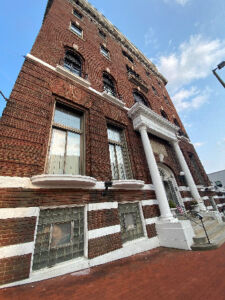
“This building is steeped in over a century of helping meet women, families, and men where they are. Over the years, we have grown and morphed to meet the changing needs of the community, and in order to continue this hard work, we need to make changes to our historic Chapline Street location,” said Lori Jones, Executive Director of the YWCA Wheeling.
The YWCA currently serves 7,400 participants each year through a range of programs, including a non-treatment residential substance use recovery program, case management services, youth empowerment, a no-cost clothing and shoe bank for individuals and families, an emergency shelter, and support services for women and families experiencing domestic violence.
The renovation of the century-old YWCA of Wheeling building will enhance the quality of life for employees, residents, and community members and support an additional 1,200 women and families each year. Critical renovations include expanded and enhanced programming space, expanded and refreshed residential and shelter space, which will provide space for up to 55 women and families, new HVAC, and upgraded plumbing and electrical – all to ensure the YWCA’s sustainability in its mission to provide vital services for women and families in need.
NTCIC provided a $10 million NMTC allocation for the project and facilitated the investment of the $6.1 million in both state and federal HTCs generated by the revitalization efforts. The swift closing facilitated by NTCIC enabled the YWCA to begin construction promptly, limiting program disruption and enabling the organization to quickly expand its crucial services and provide a safe haven for women and families at risk.
“YWCA of Wheeling has provided life-saving services for so many over its history and serves as a beacon of hope and positive change for so many women and children,” said Kathleen Galvan, NTCIC Acquisitions Manager. “NTCIC is honored to play a part in supporting its mission and enabling this important organization to grow.”
In undertaking this project, the YWCA continues its long history of progressive action and service to the underrepresented members of the Wheeling community. The renovation of the YWCA facility not only preserves a piece of Wheeling’s history but also ensures that the building continues to function as a vital resource for women and families in the area. Click here to read more about the history of the building.
ABOUT YWCA OF WHEELING
Since 1906, the YWCA of Wheeling has provided services to individuals regardless of race, gender, age, or religion in the West Virginia Northern Panhandle, including Ohio, Marshall, Brooke, Wetzel, Hancock Counties, and Belmont and Jefferson Counties in Ohio.
HTC Advocacy Leaders Eye Upcoming Economic Package
as Marker for Bipartisan Tax Deal Later this Year
May 16, 2023: Despite national attention focused on the debt limit negotiations between House Republicans and President Biden, the Historic Tax Credit Growth and Opportunity Act (HTC-GO) is steadily gaining support from both Republicans and Democrats.
In March, Representatives Darin LaHood (R-IL) and Earl Blumenauer (D-OR) and Senators Ben Cardin (D-MD) and Bill Cassidy (R-LA) introduced HTC-GO (H.R.1785/S.639). The House and Senate bills include four permanent provisions that will add value to the Historic Tax Credit (HTC), improve access to the credit, and increase investment in smaller rehabilitation projects. The House bill also includes a provision that will temporarily increase the tax incentive amount to help address the significant challenges currently facing historic rehabilitation projects throughout the nation. Presently, the legislation has 20 cosponsors in the House and eight cosponsors in the Senate.
The House Ways & Means Committee is expected to mark up a partisan economic package soon, the scale of which remains to be seen. The bill will likely include individual and small business relief, an extension of certain expired tax provisions (e.g., bonus depreciation, deductibility of business interest and Research & Development expensing), and Inflation Reduction Act repeal. This package is expected to be voted upon by the full House as early as June.
DC advocacy coalitions are determining if community development improvements can be added to these discussions and be considered in the legislation. Democrats will not support many of the provisions and how the provisions are funded. This bill will serve as a Republican marker for possible future tax bill negotiations later this year. HTC advocates will continue to monitor these efforts to determine what legislative tax vehicle might come forward this summer and later this year. An abundance of Members of Congress demonstrating support for HTC-GO through cosponsorship will elevate HTC-GO’s chances of being considered in any year-end tax legislation.
Join us for HTC Lobby Day in DC on Wednesday, June 14th
The Historic Tax Credit Coalition is hosting its annual HTC Lobby Day in DC on June 14th. If you are a resident in any of the following states: AL, AZ, AR, CA, FL, ID, IN, IA, KS, KY, LA, ME, MS, MO, MT, NE, NY, NC, ND, OH, OK, OR, SC, SD, TN, TX, WV, WI, WY, please consider participating to voice strong support for HTC-GO provisions to be included in future moving tax legislation. Since June 14th is the day before many in the HTC industry are in town for the IPED Historic Tax Credit Conference, the Coalition anticipates a strong showing from the historic rehabilitation industry and Main Street and preservation advocates on Capitol Hill.
The Coalition will set up your meetings and provide educational materials, including maps and lists of projects for each state and congressional district. To allow most participants to fly in on the morning of the 14th, the Coalition will host a mid-morning breakfast briefing and then head to Capitol Hill between 11 am – Noon for an afternoon of meetings.
CLICK HERE for more details on upcoming HTC advocacy events!
Washington, D.C. – May 15, 2023: National Trust Community Investment Corporation (NTCIC) is excited to announce the successful financial closing of Findlay Parkside, a $27 million adaptive reuse project in the Over-The-Rhine neighborhood of Cincinnati, OH. NTCIC provided a $10 million New Markets Tax Credit (NMTC) allocation and equity investments in the $9 million in federal and state Historic Tax Credits (HTCs) generated by the initiative to support the creation of mixed-income housing and commercial spaces in one of the country’s most intact urban historic districts.
The Findlay Parkside project showcases a unique use of tax credit financing by revitalizing nine scattered site low-rise buildings within a single transaction. Once complete, they will become 51 apartments, with 26 designated as affordable housing, and over 16,000 square feet of ground-floor commercial retail space supporting up to 10 small businesses, primarily focused on BIPOC entrepreneurs.
“Buildings with project costs under $5 million are underrepresented in the NMTC industry,” said NTCIC Project Manager Tony Maruca. “It takes a visionary developer such as The Model Group to package nine such buildings (comprising 10 building permits and 11 separate NPS applications) into an efficient NMTC/HTC twin deal. The Model Group was able to marshal all the necessary public and private sources because of their unwavering commitment to delivering on the community impacts. This project builds on their previous work in Over-the-Rhine, creating affordable housing and supporting small businesses, which are what makes the neighborhood special.”
A prime example of historic preservation, sustainable development, and social impact, the Findlay Parkside project will generate 160 construction and permanent jobs and is designed to achieve LEED Silver certification, emphasizing the importance of retaining and repurposing existing structures to reduce waste, decrease the consumption of raw materials, and lower carbon emissions compared to new construction or demolition.
NTCIC supported the project completion by sourcing, underwriting, and facilitating the equity investment in the $9 million in federal and state Historic Tax Credits generated by the revitalization efforts. NTCIC also provided $10 million in New Markets Tax Credit (NMTC) allocation from their 2019 allocation round, which prioritizes investments in impactful commercial and mixed-use projects that serve as centerpieces for local redevelopment plans, elimination of blight, and the stimulation of economic activity.
Other financing sources included NMTC source debt, HTC bridge debt, sponsor equity, and additional NMTC allocation from RBC Community Capital and Truist Community Capital. TIF financing from the City of Cincinnati is also anticipated.
NTCIC’s Historic Tax Credit Investment Supports the $80 Million Mercantile Project
Washington, D.C. – March 25, 2023: The National Trust Community Investment Corporation (NTCIC) is excited to announce the successful financial closing of The Mercantile, an $80 million adaptive reuse project in downtown Cincinnati, Ohio. This project showcases how historic preservation can effectively combat the growing housing crisis by transforming two historic office buildings into much-needed housing in Cincinnati’s urban core. NTCIC provided an equity investment in the $12.7 million in federal Historic Tax Credits (HTCs) to revitalize the historic Mercantile Library Building and Formica Building in the heart of the city.
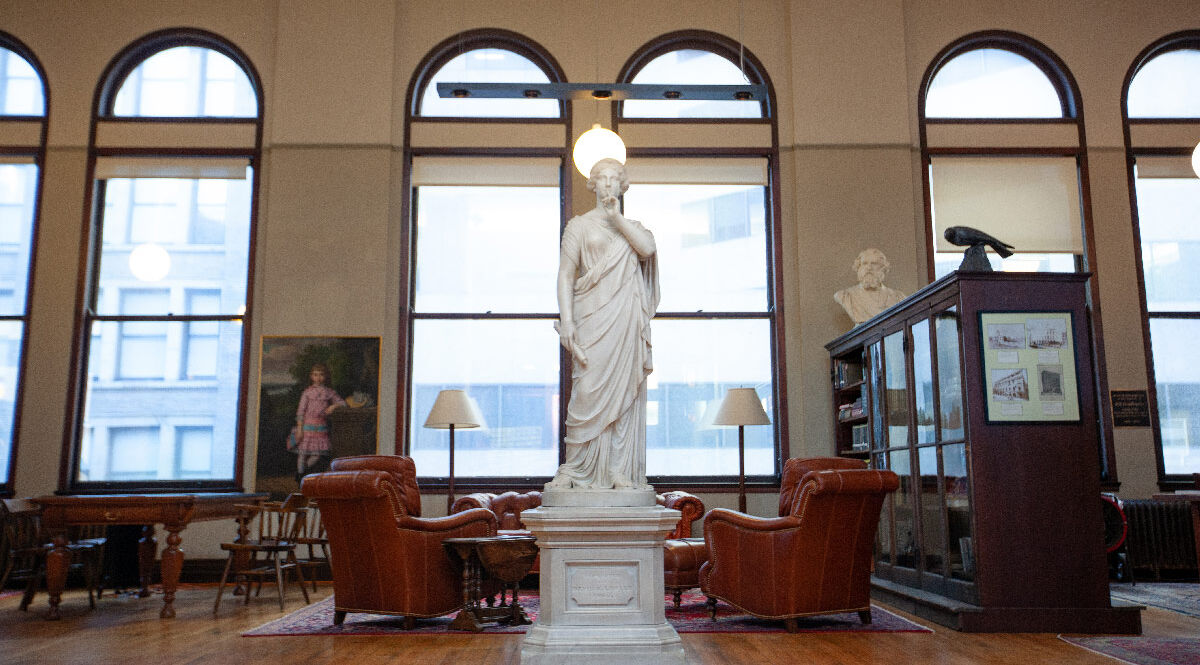
The project includes a unique combination of two adjacent historic buildings, the 13-story beaux-arts Mercantile Library Building, dating from 1903, and the 13-story high modern Formica Building, built in 1970. Once complete, the revitalized spaces will create market-rate housing and commercial spaces while preserving the historic integrity of both structures.
The Model Group, a Cincinnati-based leader in historic preservation, mixed-use urban development, and affordable housing, is the project partner responsible for the revitalization efforts. The Mercantile will feature commercial space on the first two floors, with the remaining floors being adaptively reused for market-rate rental apartments. The exception is the 11th and 12th floors, in which the project will expand and enhance the legendary Mercantile Library, a cultural institution that has been the center of Cincinnati’s literary community for over 200 years.
In the wake of the pandemic, the need for housing has been exacerbated, and the Mercantile project demonstrates the future of adaptive reuse – converting office buildings, which are becoming more and more vacant as many companies shift to remote environments.
“We’re proud to participate in this project that will prove it is possible to convert downtown office buildings, even modernist office buildings, to housing with distinct appeal,” said NTCIC Project Manager Tony Maruca. “Expertise not just in project finance but also design, construction, and operations make the Model Group the ideal steward of both our investment and these treasured historic buildings.”
The Mercantile project highlights the challenges and successes of office conversions, particularly in the case of the Formica Building, a modern office building from the 70s. The Model Group, an innovative partner in this project, has demonstrated the ability to envision new uses for a contemporary office building while respecting its historic character.
This transformative project will contribute to the ongoing revitalization of downtown Cincinnati, stimulating economic growth and attracting new investment. NTCIC’s financing, combined with traditional debt, sponsor equity, state HTCs, the recently created Ohio Transformational Mixed-Use Development (TMUD), and Ohio Opportunity Zone financing, will help ensure successful project completion.
Click here to read more about the project development.
About National Trust Community Investment Corporation (NTCIC)
NTCIC is an industry leader in providing investment capital, asset management, and innovative financing solutions for historic preservation and community development. Since its inception, NTCIC has contributed to the rehabilitation of more than 22 million square feet of historic real estate, creating nearly 80 thousand jobs and generating more than $2 billion in project financing.