



Urge your Representative and Senators to Cosponsor
March 27, 2023: Late last week, Representatives Darin LaHood (R-IL) and Earl Blumenauer (D-OR), Mike Kelly (R-PA), Terri Sewell (D-AL), Mike Turner (R-OH), and Brian Higgins (D-NY) reintroduced the House version of Historic Tax Credit Growth and Opportunity Act (HTC-GO/H.R. 1785). The bill includes similar permanent provisions as the Senate version and an additional temporary provision to address recent challenges facing historic rehabilitation projects.
In early March, Senators Cardin (D-MD), Cassidy (R-LA), Cantwell (D-WA), and Collins (R-ME) reintroduced HTC-GO (S. 639). Both the House and Senate bills include four permanent provisions that will add value to the Historic Tax Credit (HTC), improve access to the credit, make more projects eligible to use the credit, and increase investment in smaller rehabilitation projects.
How You Can Help Advocate for the HTC-GO
- Contact your Representative and Senators:
- To locate your House Representative, visit: www.house.gov/representatives
- To locate your Senators, visit: www.senate.gov/senators/senators-contact
- Send a message through their website and select “tax” or “taxation” as the issue area, OR
- Call (during office hours) the office, introduce yourself as a constituent, and ask for the email address of tax staff members.
- Talking Points to Encourage Your Members of Congress to Cosponsor the HTC-GO:
- “The Historic Tax Credit Growth and Opportunity Act (HTC-GO), H.R. 1785/ S. 639, is needed now more than ever.”
- “The Historic Tax Credit is a vital community revitalization tool in both small towns and large urban areas but has lost value due to federal policies over the last ten years.”
- “The HTC has not been positively modernized since 1986. HTC-GO provisions would bring more value to the credit, make more buildings eligible to use the credit, and make the HTC easier to use.”
- “Would the Representative/Senator please cosponsor the Historic Tax Credit Growth and Opportunity Act (H.R. 1785/S. 639)?”
- “Please look for opportunities to include these provisions in future tax legislation.”
- “Share the National Preservation Organizations HTC-GO Reintroduction Release with offices.”
About the Provisions of the HTC-GO Legislation
The federal HTC is the largest federal investment in historic preservation and a critical economic development tool used to revitalize our communities. Unfortunately, the value of the HTC incentive has diminished over the past decade because of IRS rulings, administrative burdens, changes in the credit structure, as well as spreading the distribution of the credit over five years as modified by the Tax Cuts and Jobs Act of 2017. As a result, the HTC has lost 20 – 25% of its investment value as interest rates continue to climb and materials and labor costs soar.
National Park Service statistics indicate that HTC applications are down 20% compared to pre-pandemic levels (2019), and the number of projects continues to decline even as the economy is rebounding.
Historic buildings have simply become more difficult to rehabilitate.
HTC-GO Temporary Provisions (House Bill Only)
The HTC-GO legislation temporarily increases the rehabilitation credit (IRC § 47) to address profound challenges facing the historic rehabilitation sector.
- This provision increases the HTC percentage from 20% to 30% for 2023 through 2026.
- The credit percentage is phased down to 26% in 2027, 23% in 2028, and returns to 20% in 2029 and thereafter.
HTC-GO Permanent Provisions (House and Senate Bills)
The permanent provisions will make important changes to the HTC to encourage more building reuse and redevelopment nationwide and would be particularly impactful for small, midsize, and rural communities. These provisions would:
- Make the credit easier to use by increasing the credit from 20% to 30% for projects with less than $2.5 million in qualified rehabilitation expenses.
- Make more projects eligible to use the HTC by lowering the substantial rehabilitation threshold.
- Increase the value of HTCs and promote affordable housing development by eliminating the requirement that the value of the HTC must be deducted from a building’s basis (property’s value for tax purposes), making it easier to pair with the federal Low-Income Housing Tax Credit.
- Enable further nonprofit use of the HTC by eliminating IRS restrictions that make it challenging for nonprofits to partner with developers. This change will create more opportunities for workforce development facilities, job/small business incubators, community health centers, local arts centers, affordable housing, and homeless services to be supported by the HTC.
Resources
- HTC State Maps and Project Lists FY2002-2022
- National Preservation Organizations’ Release in Support
For further assistance with your advocacy, please contact Mike Phillips, Shaw Sprague, and Patrick Robertson
Welcome to the National Trust Community Investment Corporation’s (NTCIC) 2023 Main Street Community Survey. We are excited to hear from community stakeholders across the United States about their needs and experiences.
The Main Street Community Survey is an opportunity for us better to understand the needs of communities across the United States and to help us make informed investment decisions that align with our preservation-based community development mission. The data collected through this survey will be used to help advise our geographic and programmatic focus for our future tax credit investments.
This survey should take no more than 5 minutes to complete, and as a thank you for your participation, you will be entered to win a $100 gift card. The survey will be open from March 20, 2023, to April 30, 2023.
Please share this survey with other community stakeholders, so that we may gain a comprehensive understanding of community needs across the United States. We believe that community input is critical in shaping the future of our investment strategies, and we value your feedback.
Thank you for your time, and for your continued support of NTCIC’s mission!
Click Here to Take the Survey.
About NTCIC
As a sister organization to the National Main Street Center, NTCIC is committed to community development and economic growth of Main Street-oriented communities across the country. We accomplish this through financing adaptive reuse and preservation of historic buildings using a combination of New Markets Tax Credits (NMTC) and Historic Tax Credits (HTC) to attract private investment capital for underserved areas.
Our NMTC allocation has provided over $2 billion in capital to over 200 high-impact rehabilitation efforts supported in the U.S. These efforts have led to the creation of over 80,000 jobs and have revitalized over 12 million square feet of historic buildings.
March 2, 2023: Today, Senators Cardin (D-MD), Cassidy (R-LA), Cantwell (D-WA), and Collins (R-ME) reintroduced the Historic Tax Credit Growth and Opportunity Act (HTC-GO/ S. 639), in the Senate. The bill includes four permanent provisions that will add value to the Historic Tax Credit (HTC), improve access to the credit, make more projects eligible to use the credit, and increase investment in smaller rehabilitation projects.
Representatives Darin LaHood (R-IL) and Earl Blumenauer (D-OR) are expected to reintroduce a House companion HTC-GO bill next week. The bill will include similar permanent provisions and an additional temporary provision to address recent challenges facing historic rehabilitation projects.
How You Can Help Advocate for the HTC-GO
- Contact your Senators:
- Visit the senate.gov contact list to locate your Senators
- Send a message through their website and select “tax” or “taxation” as the issue area, OR
- Call (during office hours) the office, introduce yourself as a constituent, and ask for the email address of tax staff members.
- Talking Points to Encourage Your Senators to Cosponsor the HTC-GO:
- The Historic Tax Credit Growth and Opportunity Act (HTC-GO/ S. 639) is needed now more than ever.
- The Historic Tax Credit is a vital community revitalization tool in small towns and large urban areas but has lost value due to federal policies over the last ten years.
- The HTC has not been positively modernized since 1986. HTC-GO provisions would bring more value to the credit, make more buildings eligible to use the credit, and make the HTC easier to use.
- Would the Senator please cosponsor the Historic Tax Credit Growth and Opportunity Act (S. 639)?
- Please look for opportunities to include these provisions in future tax legislation.
About the Provisions of the HTC-GO Legislation
The federal HTC is the largest federal investment in historic preservation and a critical economic development tool used to revitalize our communities. Unfortunately, the value of the HTC incentive has diminished over the past decade because of IRS rulings, administrative burdens, changes in the credit structure, as well as spreading the distribution of the credit over five years as modified by the Tax Cuts and Jobs Act of 2017. As a result, the HTC has lost 20 – 25% of its investment value as interest rates continue to climb and materials and labor costs soar.
National Park Service statistics indicate that HTC applications are down 20% compared to pre-pandemic levels (2019), and the number of projects continues to decline even as the economy is rebounding.
Historic buildings have simply become more difficult to rehabilitate.
HTC-GO Permanent Provisions
The permanent provisions will make important changes to the HTC to encourage more building reuse and redevelopment nationwide and would be particularly impactful for small, midsize, and rural communities.
These provisions would:
- Make the credit easier to use by increasing the credit from 20% to 30% for projects with less than $2.5 million in qualified rehabilitation expenses.
- Make more projects eligible to use the HTC by lowering the substantial rehabilitation threshold.
- Increase the HTC’s value and promote affordable housing development by eliminating the requirement that the value of the HTC must be deducted from a building’s basis (property’s value for tax purposes), making it easier to pair with the federal Low-Income Housing Tax Credit.
- Enable further nonprofit use of the HTC by eliminating IRS restrictions that make it challenging for nonprofits to partner with developers. This change will create more opportunities for workforce development facilities, job/small business incubators, community health centers, local arts centers, affordable housing, and homeless services to be supported by the HTC.
Resources
For further assistance with your advocacy, please contact Mike Phillips, Shaw Sprague, and Patrick Robertson
The federal Historic Tax Credit (HTC) is a critical community development tool used to encourage investment in the rehabilitation of historic buildings nationwide. Since the program’s establishment in 1976, the HTC has leveraged nearly $120 billion in private investment to preserve more than 48,000 historic properties and support more than 3 million jobs. The credit is also often paired, or “twinned,” with other programs such as the Low-Income Housing Tax Credit and the New Markets Tax Credit, which has helped to create nearly 200,000 units of low- and moderate-income housing units and increase access to vital community goods and services.
Unfortunately, the value of the HTC has diminished over the past decade because of IRS rulings, administrative burdens, changes in the credit structure, and spreading the distribution of the credit over five years as modified by the Tax Cuts and Jobs Act of 2017. As a result, the HTC has lost 20 – 25% of its investment value as interest rates continue to climb and materials and labor costs soar. National Park Service statistics indicate that HTC applications over the last two fiscal years are down 20 percent when compared to 2019 and prior years. Historic buildings have simply become more difficult to rehabilitate.
So, What is the Historic Tax Credit Growth & Opportunity Act?
In an effort to expand and enhance this critical community development program, Congress introduced the Historic Tax Credit Growth & Opportunity Act (HTC-GO). It includes provisions that would bring five more tools to the HTC: More Credits, More Value, More Buildings, More Nonprofit Use, and More Simplicity.
Let’s take a look at what the Historic Tax Credit Growth & Opportunity Act will do to enhance and expand the power of the Historic Tax Credit.
HTC Percentage Increase
Currently, the HTC provides a 20% credit to project costs directly associated with the repair or improvement of historic structural and architectural features of a building, also known as qualified rehabilitation expenditures (QREs). This percentage is the foundation for all equations for determining the value of the HTC through the rehabilitation process.
For example, under the current law, a project with $200,000 in historic rehabilitation costs could receive up to $40,000 in HTCs ($200,000 x 20% = $40,000).
If passed, this bill will increase the HTC percentage from 20% to 30% through 2025. This is a 50% increase in value and benefit to historic preservation projects, so that same project with $200,000 in rehab costs would generate $60,000 in credits ($200,000 x 30% = $60,000). For projects generating more than $2.5 million in QREs, the increase would be in effect from 2020 through 2025 before gradually returning to 20% in 2028. Properties must complete the rehabilitation efforts after March 31, 2021, to be eligible for this provision.
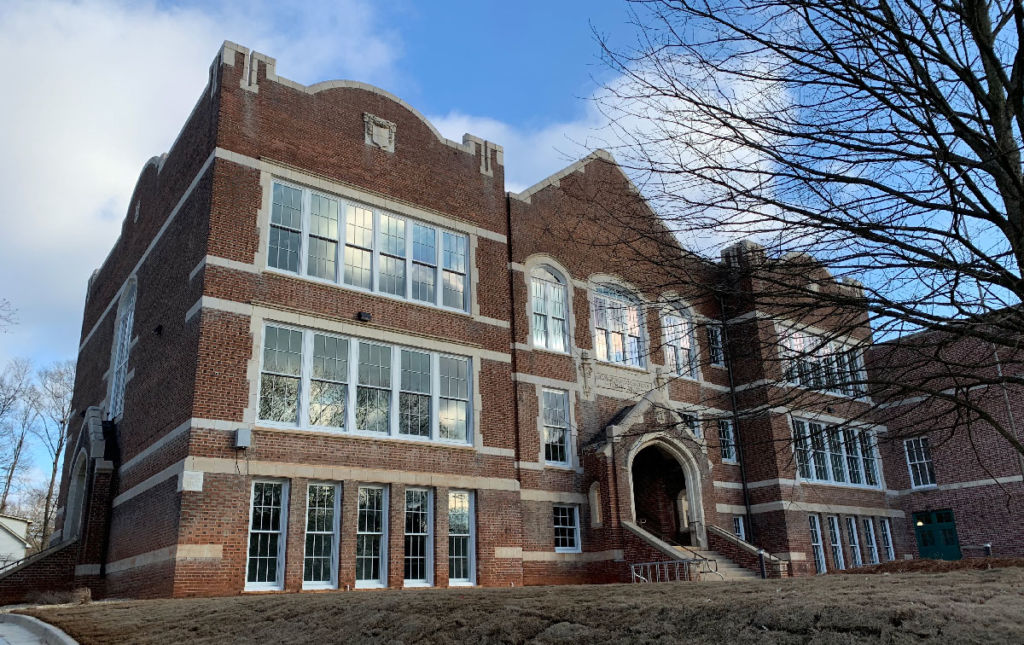
The Historic Tax Credit enhancements will better support community development projects like the Academy Lofts building in Atlanta, GA, the new home to The Creatives Project, a nonprofit organization providing quality arts-based education & outreach through artist-in-residency programs.
Permanent Increase in the Rehabilitation Credit for Small Projects
The HTC is not just for large-scale projects and developers. In fact, over half of all completed historic projects that utilized the HTC were under $2.5 million in qualified costs.
For these smaller projects, after December 31, 2023, a taxpayer would be able to elect a “small project credit” and receive the 30% tax credit for projects with qualified costs up to $2.5 million or less. This increase for small projects would be permanent. This change would ensure rural and non-urban areas are better positioned to benefit from utilizing HTCs even after the temporary 30% credit for larger projects expires in 2025.
Redefinition of “Substantial Rehabilitation”
To be eligible for HTCs, a project must pass the “Substantial Rehabilitation” test. Generally, this means that a project must spend the greater of either $5,000 or the pre-rehabbed worth of the building itself, also known as the “adjusted basis.” Currently, a project can determine its adjusted basis by completing the equation A-B-C+D = Adjusted Basis, where:
A. Purchase price of the property, both building and land
B. The cost of the land at the time of purchase
C. Depreciation taken for an income-producing property
D. Costs of improvements made to the property since its purchase
The new provision cuts the substantial rehabilitation requirement in half so that qualified rehabilitation expenditures must exceed the greater of 50% of the adjusted basis of the building rather than 100%. This reduction effectively updates the adjusted basis equation to (A-B-C+D)/2 = Adjusted Basis.
Lowering the rehabilitation cost requirements will greatly increase the HTC eligibility for countless projects and make the cost of entry much more approachable.
For example, an individual purchased a historic building for $200,000 ($150,000 for the building and $50,000 for the land). Under current law, the building’s new owners would need to incur at least $150,000 in rehabilitation costs to qualify for the credit. The new bill provision would reduce this threshold to $75,000 in rehabilitation costs.
Elimination of Rehabilitation Credit Basis Adjustment
For a larger-scale project to generate project funding at the onset of development using the HTC, rather than claiming the credits come tax season, a building owner needs to partner with an investor that has both the ability to use the credits themselves and available funding. The investor can then provide financing to the project, typically a percentage of a dollar per credit, in exchange for the ability to claim the credits themselves – lowering the amount of taxes the investor owes at the end of the year.
Currently, the financial and legal process of a building owner and investor partnering in this way requires an investor to recognize income in the amount of credits they can claim, which often results in a lower price per credit the investor can offer to a project. Essentially, the current law lowers the dollar value of the HTC, and the amount of funding a project can receive from an investor.
With the new provision, an investor no longer needs to recognize income in the amount of the HTC to claim the credit. By eliminating this adjustment, an investor can provide more funding per credit to a project. Though complex, this change would place the HTC in line with other development credits like the Low Income Housing Tax Credit (LIHTC) and make it easier to use with such programs.
Modifications Regarding Certain Tax-Exempt Use Property
Currently, to generate HTCs, a building owner and its tenants must be taxable entities. This requirement prevents many nonprofit healthcare centers, daycare organizations, arts organizations, and community service providers from engaging in historic preservation activities, especially if they already own and use their historic property.
This provision would amend and remove certain leasing and tax-exempt use restrictions, making the HTC easier to access by nonprofits that provide critical community services and other tax-exempt entities.
Click Here to Contact Your Representative
Written by Tim O’Donnell of the National Trust for Historic Preservation
In its heyday, the Crescent Corset Company employed more than 700 women, many of them Italian immigrants, at a factory on South Main Street in Cortland, New York. The large industrial brick building, built in multiple stages starting in 1923, quickly became an anchor for the small city, which sits between Ithaca and Syracuse.
They came up with a plan to convert the factory into a mixed-used complex, believing there was demand for both residential and commercial units. The National Trust Community Investment Corporation (NTCIC) supported the companies with state and federal historic tax credit equity, which Lockwood says was necessary for getting the adaptive reuse project off the ground.
“In Cortland, which is 15,000 to 20,000 people, you can’t talk to too many people [whose] grandmother didn’t work there, or their sister, or their aunt,” said Ben Lockwood, president and CEO of Housing Visions, the nonprofit developer that has helped transform the rundown building into a vibrant commercial and residential space over the past several years.
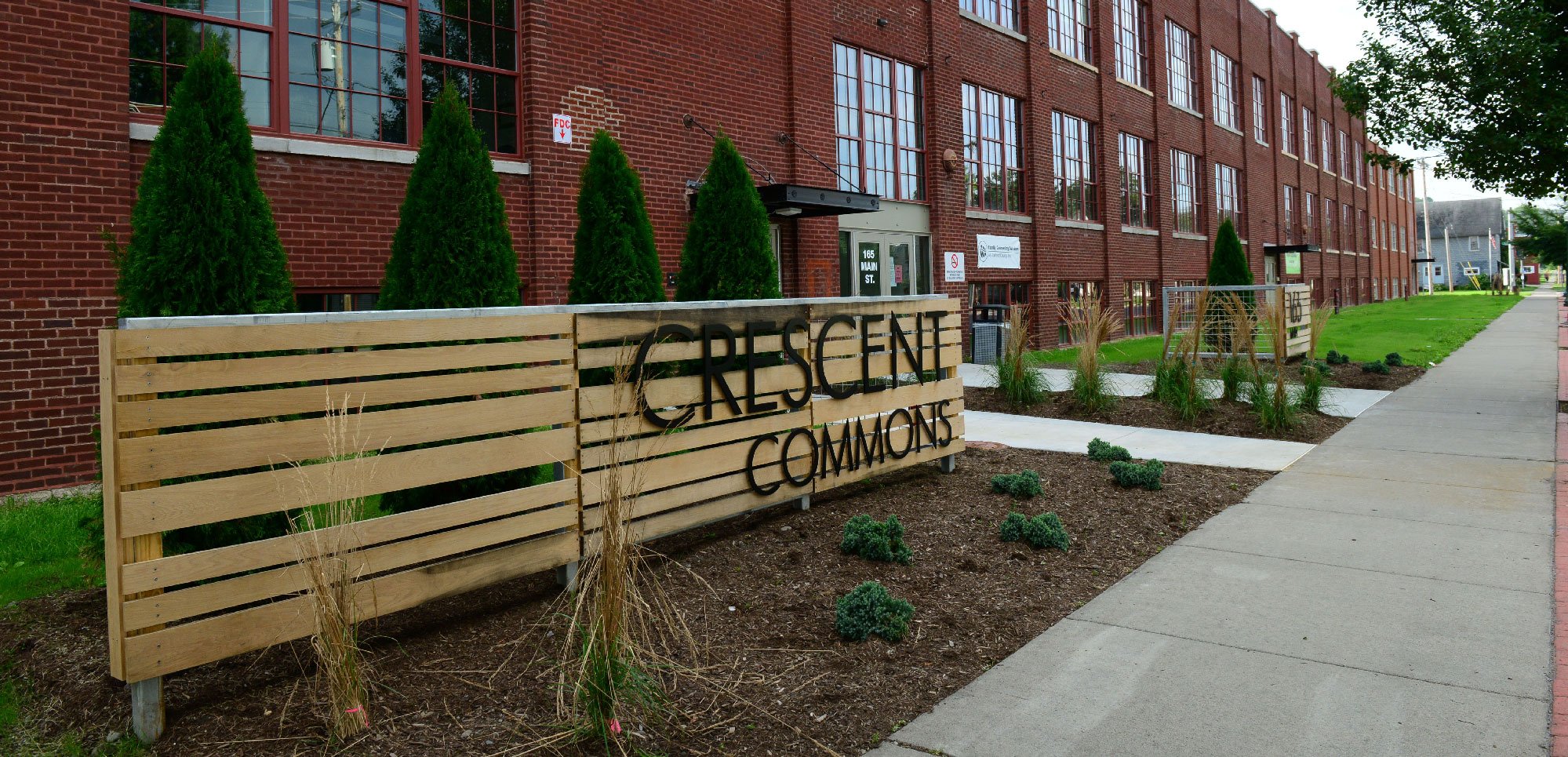
The saga of the Crescent Corset Company factory, as it was formerly known, is similar to that of many other manufacturing sites in American cities during the second half of the 20th century. Over the years, activity within the building slowly declined until it became vacant, and a once proud structure had become an eyesore.
But the factory’s fate changed when Housing Visions partnered with David Yaman Realty Services, a local firm. Together, they produced an adaptive reuse plan that brought the former factory back to life, once again making it a keystone in Cortland.
The Historic A. Hoen & Co. Lithograph building complex in East Baltimore was one of the last and oldest lithography printing facilities in the United States. Now, it is the Center for Neighborhood Innovation, a collaborative environment that brings together a diverse mix of industries, ideas, and people dedicated to enriching the lives of Baltimoreans.
The revitalized space:
- Supports new and existing jobs
- Promotes job training and career growth
- Attracts new residents, businesses, and future community investment
Watch how NTCIC transforms communities with the New Markets Tax Credit.
We partnered with Jubilee Baltimore to transform a historic commercial building into a community-owned asset, which brought new tenants, jobs, and educational opportunities to the Station North Arts & Entertainment District in Baltimore, MD.
Watch how NTCIC and the New Markets Tax Credit helped make it happen.