



WASHINGTON, DC, September 3, 2025 – The National Trust Community Investment Corporation (NTCIC) is proud to announce the launch of NT Impact Capital, a new impact asset investment management platform to bring mission-aligned, private credit capital solutions to fund inclusive economic growth, historic preservation, and renewable energy initiatives at scale.
“NT Impact Capital is a natural extension of NTCIC’s outstanding, 25-year track record, which includes nearly $3 billion in tax credit equity investments and the $1.5 billion in assets we currently manage for institutional investors,” said David Clower, President & CEO of NTCIC and NT Impact Capital. “We’ll be raising a series of thematic private credit impact funds to advance our work in preservation and sustainability-focused community development finance through several private credit strategies designed to deliver social outcomes and attractive, risk-adjusted returns.”
To lead this effort, NTCIC welcomes Adrian Ruiz as Managing Director of the newly-formed subsidiary, who will oversee and execute its business strategy by originating, structuring, and managing high-impact investments.
Adrian has over 15 years of leadership experience in nonprofit and community development finance. Prior to joining NTCIC, he served as Chief Investment Officer at the Raza Development Fund, a national, investment grade-rated CDFI, with over $625 million in assets under management. His deep expertise and national reputation in impact finance will be instrumental in scaling NT Impact Capital’s platform.
“We’re thrilled to launch NT Impact Capital and to have Adrian join our senior leadership team,” said Clower. “I’ve known and worked with him for many years. Adrian’s experience and values align perfectly with NTCIC’s organization culture and core values, and I know he’s committed to delivering catalytic capital to communities that need it most.”
“I’ve spent my career raising, structuring, and managing capital to drive meaningful outcomes in underserved communities,” said Ruiz. “I’ve led initiatives that bridged financial performance with social impact, developed underwriting frameworks for mission-driven investments, and collaborated across sectors to bring complex deals to fruition. These are the skills that are needed to build and scale NT Impact Capital’s private credit business model.”
In July 2025, NT Impact Capital extended a $7 million historic tax credit (HTC) equity bridge loan to support the $85 million redevelopment of an eight-story flour mill in Ellicott City, Maryland. Additionally, NTCIC contributed $10 million in federal HTC funding and $3 million in state HTC funding to the project.
About NTCIC
The National Trust Community Investment Corporation (NTCIC), a subsidiary of the National Trust for Historic Preservation, is a mission-driven, impact investment asset management firm focused on the adaptive reuse of historic properties and renewable energy solutions across the country. Founded in 2000, NTCIC makes transformational impact investments in low-income & disinvested communities, promoting a brighter, more equitable future by revitalizing historic properties and expanding our nation’s renewable energy accessibility through innovative community development & tax credit investment strategies.
Meet Alba Castillo, NTCIC’s Summer 2025 Open Access Fellow.
At the conclusion of her fellowship this summer, we sat down with Alba to learn more about her background and future in community development. Read her interview below!

Can you talk a little bit about your background and what brought you into the community development world?
My background has not been a linear path by any means. Years ago, I was a mortgage underwriter, and then I worked for a real estate attorney. Then I found the CDFI industry, and that changed everything. I had always been interested in economic development and creating opportunities for people and communities, so when I found out about the community development finance industry, it just kind of clicked. I ended up working at the Housing Development Fund (HDF), an affordable housing CDFI in Connecticut, and eventually that led me to find the Opportunity Finance Network (OFN), which is what brought me to the DC area.
What are some of your professional strengths and interests?
My roles in community development have been focused on program management, cross-functional coordination, and bringing people and processes together. I really enjoy the challenge of taking a lot of moving parts or loose ends to create something cohesive. A professional strength is identifying where systems can work better and creating structure that helps things flow more smoothly.
As far as interests go, early this year I started taking a community development finance professional certification with Grow America. Pretty much immediately after the first course, I realized that I was drawn to the real estate finance portion of the work. I went on to take another course in the program that was solely focused on community development real estate finance, and really enjoyed learning how projects are structured, how the financing works, and how it all ties back to creating long-term benefits for communities. Actually, right as I was starting that second course is when I found out that I had been accepted to the Open Access program and would be working in the asset management team at NTCIC. Through the resources of the Open Access Fellowship, I’ve completed Novogradac trainings in HTC, NMTC, and LIHTC, including the NMTC 101 workshop at the Novogradac conference in DC. I’ve also completed coursework in financial modeling and NMTC underwriting. It all feels like an aligned next step that builds on my professional experience and allows me to go deeper into parts of community development work that really energize me.
What did you learn during your time at NTCIC?
In addition to the technical training the fellowship provided, I’ve been working closely with the Asset Management team on a couple of key projects focused on process mapping and how project data is tracked and organized. As I got further into my deliverables, I had the chance to explore how the team captures and uses data and how it connects to the rest of the organization – it’s something I’ve really enjoyed digging into.
One thing that stood out is how clearly this work connects with my long-term goals. I’m interested in the commercial real estate side of community development finance and my time at NTCIC has given me a deeper understanding of that work – both technically and operationally. It’s helped me feel more connected to the purpose behind it and more confident that I’m moving in the right direction. I also really appreciated working in a welcoming and supportive environment and seeing how deeply rooted NTCIC’s work is in community development. That alignment confirmed that this is the kind of organization I would love to keep growing with.
What are some of your goals and next steps now that you’ve finished the fellowship?
My goal is to find a full-time job where I can keep growing in the commercial real estate space – especially work that connects to creating jobs, fostering stability, and keeping wealth in communities. I’ve been very influenced by my time at NTCIC, and I’m particularly interested in tax credit finance and want to deepen my understanding of how these deals are structured and managed.
I’ve been intentional about this career pivot and I’m excited to continue learning, contribute meaningfully to a mission-aligned team, and deepen my expertise in this sector of the community development finance industry – an industry where I strongly believe I belong and where I want to help create long-term impact.
Who or what inspires you the most?
I think people who are unapologetically themselves. When someone is just fully themselves, whether that’s in the way they express themselves or hobbies they like to do in their spare time, and they know and embrace who they are – that’s really inspiring to me on a personal level.
And when I think of something that inspires me career-wise, it’s the CDFI industry. When I started in community development finance, it was on the more regional, “boots on the ground” side at HDF, then I moved on to the national stage with OFN, and I got to witness the work of CDFIs from across sectors and across the country. And now I’m learning more about the tax credits and the commercial real estate side, and all that experience just confirms that the industry we work in is amazing and impactful – and more people need to know about it!
Would you recommend the fellowship? And if so, who is the ideal candidate?
I definitely recommend the Open Access Fellowship. The founders and the board have been really thoughtful about what a professional needs to be successful in the community development real estate industry. The fellowship provides great networking and mentorship opportunities, plus targeted training – like the Novogradac trainings and financial modeling and underwriting coursework I mentioned earlier. Really, I think the fellowship has the ability to make a great impact on a professional’s life.
Since we are talking about the CDFI industry, I think the ideal candidate would be someone who is interested in building up communities – even if they don’t know a ton about the industry. I think the technical side of the job can be taught, but at their core, anyone who wants to participate should care about communities and about building them up. I think those are the kind of people who would thrive during and after the fellowship.
Alba — we’re so grateful for all of the contributions you made to our Asset Management team this summer! Best of luck in all your future endeavors!
July 2025 Policy Update
WASHINGTON, DC, July 16, 2025 – The House Republican Reconciliation Bill, “One Big Beautiful Bill”, was signed into law on July 4th. Community development advocates are celebrating that the New Markets Tax Credit is now permanent and not subject to expiration as has been the case for the last 25 years. This is a huge legislative victory and a celebration for the NMTC advocacy community. The permanency of this credit will allow for continued and uninterrupted investment in economically distressed communities for years to come.
However, the bill also rolls back clean energy credits for wind and solar energy, requiring these projects to begin construction within one year of bill passage, or be placed in service by the end of 2027, to receive the tax credit. Wind and Solar projects that begin construction by July 2026 will have four years to begin operations and receive the credit. NTCIC expects this policy to create a “pull-forward” effect, resulting in an especially active solar marketplace for the next few years. Notably, energy storage and other clean energy projects, including geothermal and hydro, still qualify for the full 48E credit through 2033.
Despite an outpouring of advocacy, no improvements for the Historic Tax Credit were included in the bill, but it is not overlooked that sustained advocacy has positively positioned the HTC to not be targeted for a rollback or elimination as it was in 2017.
There may be opportunities to improve these incentives in a bipartisan tax bill later this year or possibly another reconciliation bill. Our work is not done, and to remain in the tax code and to enact improvements, advocacy must continue and ramp up at the next opportunity for all these important incentives.
The National Trust Community Investment Corporation (NTCIC) is pleased to announce the successful financial closing for the $64.5 million renovation of the iconic Apollo Theater in Harlem, New York. A cornerstone of African American cultural history and a world-renowned performing arts venue, the Apollo will undergo an extensive interior and exterior restoration that honors its legacy while upgrading its facilities to better serve artists, audiences, and the surrounding community.
“On behalf of The Apollo Theater Foundation, Inc. Board of Directors and leadership, I express deep gratitude to Historic Theater lenders and capital campaign contributors for their generosity in support of The Apollo and the community of Harlem,” said Michelle Ebanks, President and Chief Executive Officer of The Apollo Theater Foundation, Inc. “The groundbreaking marks the beginning of a new chapter in The Apollo’s journey—a curtain drop in every sense of the word – taking us from a place of reverence to a place of relevance. As we prepare to renovate and reimagine this legacy space, we do so not to erase its history, but to elevate it. To honor the shoulders we stand on, while building a more modernized foundation for those who will come after us.”
Originally opened in 1914 as Hurtig & Seamon’s New Burlesque Theater and renamed the Apollo in 1934, the venue became a vital cultural hub amid Harlem’s evolution and a defining force in American music. The Apollo launched the careers of legendary artists such as Sarah Vaughan, James Brown, and the Jackson 5 through its famous Amateur Night, and played a central role in the rise of genres including R&B, bebop, and soul.
Even as the theater faced economic decline and closure in the 1970s, it was repeatedly revived through community and state partnerships. In recognition of its extraordinary cultural significance, the Kennedy Center honored the Apollo in 2024 for its lifetime contribution to American arts.
“The Apollo Theater is more than a stage—it’s a cultural icon that has shaped American history. Through the Historic Tax Credit program, we are honored to help preserve this legacy for future generations,” said David Clower, President of the National Trust Community Investment Corporation. “Supporting the Apollo Theater restoration reflects NTCIC’s commitment to revitalizing spaces that hold deep cultural and community significance. This project is a powerful example of how public-private partnerships can protect our nation’s historic fabric.”
The restoration will preserve and enhance the historic theater’s architectural and performance integrity, including the conversion of the iconic Apollo neon blade sign to energy-efficient LED, and interior improvements that will modernize the theatrical, environmental, and acoustical systems, install new seating and accessibility upgrades, renovate dressing rooms, and expand the lobby.
With the renovation, the Apollo will be able to support over 150 performances annually, expanding access to world-class cultural programming. Over 1,300 students will visit annually for educational tours, and the theater’s Job Readiness Pathway to the Arts program will grow from 50 to 75 high school participants each year. The Apollo will also continue its Ticket Access Program, distributing 10,000 free tickets annually through more than 300 NYC organizations serving underrepresented communities, and maintain its Half Off Harlem initiative for local residents. In alignment with environmental stewardship goals, the project will also pursue LEED Silver certification.
NTCIC supported this transformative project through equity investments in the $14.8 million state and federal Historic Tax Credits generated by the renovation, as well as an $8 million New Markets Tax Credit allocation (NMTC).
Additional project financing was provided by J.P. Morgan through a combination of $25 million in bridge debt financing, a $4.9 million NMTC allocation, and acted as the NMTC investor for the project. Octagon Finance supported project financing through a $9 million Historic Tax Credit bridge loan, and the New York City Economic Development Corporation (NYCEDC) provided $23 in NMTC allocation.
Additional funding includes $20.7 million in grant commitments from organizations such as the NYC Department of Cultural Affairs, a $10 million grant from Empire State Development, and a $5 million grant from SiriusXM.
“The Apollo Theater is a beacon of cultural innovation and community enrichment,” said Olivia Pipitone, Executive Director at J.P. Morgan Community Development Banking. “At J.P. Morgan, we are immensely proud to support its historic renovation, ensuring it continues to inspire and launch legendary talent for generations to come.”
This project reaffirms the Apollo’s role as a cultural anchor in Harlem and a national symbol of artistic excellence and resilience, preserving its historic legacy while equipping it to thrive for generations to come.
URGENT ADVOCACY NEEDED TO SUPPORT HTC-GO!
WASHINGTON, DC, June 26, 2025 – The Senate Finance Committee has released their text of the budget reconciliation tax bill and despite an outpouring of advocacy, no components of HTC-GO were included in the bill. Senator Cassidy (R-LA) is working hard to convince his colleagues to include HTC improvement provisions in the bill, however, he needs the support of other Republican Senators to get positive changes to the HTC included. Senate leadership is now working on the final changes to the bill before consideration by the full Senate. The tax portion of the bill will most likely be bundled with other non-tax related reconciliation provisions and go directly to the Senate floor for a vote. HTC advocates will need to take quick action to urge Republican Senators’ support of Senator Cassidy’s (R-LA) efforts to include HTC improvement provisions in the bill.
URGENT HELP NEEDED FROM THE FOLLOWING STATES:
If you reside in these states, please reach out to your Republican Senators: AK, AL, AR, FL, ID, IN, IA, KS, KY, ME, MS, MO, MT, NE, NC, ND, OH, OK, PA, SC, SD, TN, TX, WV, WI, WY and ask them to reach out to Senate Finance Committee, Chairman-Mike Crapo (R-ID) with their support.
EXAMPLE MESSAGE TO YOUR SENATOR:
“The Historic Tax Credit (HTC) is a critical tool for revitalization which has lost significant value over the last 12 years. Improvements provisions were not included in the Finance Committee bill text. The HTC needs to be improved to bring more value to the credits as we look at future projects. Senator Cassidy is working to include HTC improvements, outlined in the Historic Tax Credit Growth and Opportunity Act (HTC-GO/S. 1459), in the reconciliation bill. Will you please voice support to Senate Finance Committee Chairman, Mike Crapo (R-ID), for Sen. Cassidy’s efforts to improve the HTC?”
Feel free to include brief details on projects that would benefit from these improvements.
Thank you to all who have reached out to Republican Senate offices over the last few weeks and months, and we ask that you please follow up with your Senator using the above messaging.
Please activate other advocates to contact their Republican Senators. If you have the ability to contact a Republican Senator directly, please do so on behalf of the HTC.
If you are successful in your outreach, please let us know so we can follow up with Senator Cassidy and his staff.
For assistance with tax staff contacts, feel free to reach out to Mike Phillips at NTCIC (mphillips@ntcic.com) and/or sign up to join the HTC Advocacy Campaign: Click here
Please find the HTC-GO Fact Sheet for more details on the HTC-GO legislation and bill provisions.
NEW HTC-GO BILL INTRODUCED IN THE HOUSE AND SENATE
WASHINGTON, DC, April 23, 2025 – A new version of the Historic Tax Credit Growth and Opportunity Act (HTC-GO) was recently introduced by Sen. Cassidy (R-LA) and Sen. Warner (D-VA) in the Senate (S. 1459) and by Reps. LaHood (R-IL) and Suozzi (D-NY) in the House. New provisions include returning to a one-year delivery of the HTC, as well as a boost from 20% to 30% in credit and the ability to transfer credits for smaller and rural projects. Now that Congress has passed a budget resolution, the House Ways and Means Committee could pass a tax bill out of committee by early May. Urgent action is needed to compel Congress to include HTC-GO provisions in the tax bill!
HTC-GO Provisions
- Returns to a 1-year delivery of Historic Tax Credits for all projects: Since 2017, the 20% tax credit has been delivered over 5 years (4% per year); this provision will return delivery of the HTC to 1 year.
- Lowers the Substantial Rehab Test from 100% to 50% of a building’s basis: Lowers the substantial rehabilitation threshold, making more projects eligible to use the HTC.
- Eliminates the HTC Basis Adjustment Requirement: Eliminates the requirement that the amount of the HTC must be deducted from a building’s basis (the property’s cost for tax purposes), increasing the value of the HTC and making it much easier to pair with the federal Low-Income Housing Tax Credit.
- Modifies Tax Exempt Use Rules: Makes the HTC easier to use by nonprofits such as community health centers, local arts centers, affordable housing, homeless services, museums, theaters, and others by eliminating tax code restrictions that make it challenging for nonprofits to partner with developers.
- Increases the credit for smaller projects: Projects below $3.75 million will receive a 30% credit. Rural projects below $5 million will receive a 30% credit. (Rural Definition: Cities/towns with populations less than 50,000 and not contiguous and adjacent to cities/towns of 50,000 in population). All small projects are eligible for direct transfer, without need of a partnership-style investment.
Please ask your members of Congress to cosponsor the Historic Tax Credit Growth and Opportunity Act (HTC-GO) and urge its inclusion in the emerging tax bill.
ACT NOW: Join the 1000 Actions in 100 Days HTC Advocacy Effort
The Historic Tax Credit Coalition and partnering national preservation organizations are excited to share that we have exceeded 1000 contacts to Capitol Hill to strengthen and defend the Historic Tax Credit in 2025. Thank you to all who are participating in these advocacy efforts!
While this is a great victory, it’s not too late to join this effort! We need more people to vocalize their support for the HTC. Click here and fill in your 9-digit zip code to receive talking points, updates, and the legislative staff contacts of your members of Congress to take action.
We are facing one of the best opportunities to improve the HTC that we have had in many years. All members of Congress — both representatives and senators — must hear from advocates promptly to build support for the HTC-GO bill and urge inclusion in the emerging tax bill.
Please share the information in this blog with other preservation and historic rehab advocates willing to commit to contacting their members of Congress in the first 100 days of 2025.
HTCC DC Lobby Day: Wednesday, June 11
The Historic Tax Credit Coalition is hosting its annual HTC Lobby Day in Washington, D.C. on June 11. We are facing one of the best opportunities to improve the HTC that we have had in many years. Representatives and Senators need to hear from advocates like you to build support for the HTC-GO bill and urge inclusion in the emerging tax bill. If you are a resident or have projects in any of the following states: AK, AL, AZ, AR, FL, ID, IN, IA, KS, KY, LA, ME, MS, MO, MT, NE, NY, NC, ND, OH, OK, PA, SC, SD, TN, TX, WV, WI, WY, this is the year to come to D.C. Thank you to all who have already signed up! To participate, please email Mike Phillips at mphillips@ntcic.com. Since June 11 is the day before many in the HTC industry are in town for the IPED Historic Tax Credit Conference, the Coalition anticipates a strong showing from the historic rehabilitation industry and Main Street and preservation advocates on Capitol Hill.
The Coalition will set up your meetings and provide educational materials, including maps and lists of projects for each state and congressional district. Though most advocates fly in the night before, some participants will fly in early on June 11. The Coalition will host a mid-morning breakfast briefing, then head to Capitol Hill between 11 am and 12 pm for an afternoon of meetings. For more details on the IPED Historic Tax Credit Conference on June 12 and 13, click here.
Background on Budget Reconciliation-Tax Bill
Republicans are planning to use budget reconciliation to try to extend the $4.7 trillion Tax Cuts and Jobs Act (TCJA) provisions, along with other presidential and congressional tax priorities. Both the House and Senate passed a budget resolution unlocking the ability to pass FY25 budget reconciliation bills out of directed committees. At the end of this process, one large reconciliation bill will be considered by both chambers. The large bill will include border, energy, and defense funding in addition to tax extensions and new priorities. Committees are determining the details of about $1.5 – $2.0 trillion in budget offsets for what could likely be up to a $5 trillion bill. House Republicans have scheduled a vote on the House floor for the week of May 19th, which means the tax bill could pass the Ways and Means Committee as soon as early May.
Advocates are contacting offices, closely monitoring the reconciliation bill efforts, and working with our congressional champions to continue voicing support for enhancing HTC in the tax code. We have more support for historic tax credits than ever before. At the same time, with tremendous budget pressure to finance Republican priorities, we remain vigilant with HTC congressional champions in assessing potential rollbacks as cost-saving measures to community development incentives.
WASHINGTON, DC, February 24, 2025: NTCIC is thrilled to announce the successful financial closing of the historic Rialto Building in downtown Kansas City, Missouri. The building’s renovation transformed the iconic property into a 239-key AC Hotel by Marriott. The project includes modern amenities such as a full-service bar, meeting rooms, a business center, a fitness center, and a Bonvoy club lounge on the penthouse level. The current renovation of the 155,000 square-foot historic commercial building is part of a larger trend of repurposing historic office spaces in response to the growing demand for more flexible and remote work environments. As traditional  office use continues to decline, more and more historic buildings are being reimagined as hotels, housing, or retail spaces to accommodate the changing dynamics of urban life.
“Campo Architecture and Interior Design put its heart and our “New Orleans Soul” into the design of the magnificent Rialto building. Respectful of the historic character-defining features inherited from this building’s past, the Campo team created intentionally modern features that create a clear line of stylistic demarcation between old and new”, said John Campo Jr., President and Founder of Campo Architecture & Interior Design based in New Orleans.
NTCIC played a key role in the renovation by providing an equity investment in the $11.1 million federal Historic Tax Credits and $12.5 million State Historic Tax Credits generated by the project. NTCIC will continue to provide asset management services for the duration of the HTC investment.
“We are proud to have been a part of this transformative project in Kansas City,” said Tony Maruca, Senior Project Manager at NTCIC. “All of our project sponsors maintained an intentional and thoughtful approach to preserving the historic character of the building while meeting the needs of modern travelers makes the Rialto Hotel a fantastic addition to the Kansas City hospitality market.”
The renovation of the Rialto Building is set to invigorate the surrounding area, attracting visitors, residents, and business professionals alike and further cementing the building’s role as an essential part of Kansas City’s architectural and commercial landscape.
Learn more about the project here.
About NTCIC
The National Trust Community Investment Corporation (NTCIC), a subsidiary of the National Trust for Historic Preservation, is a mission-driven, impact investment asset management firm focused on the adaptive reuse of historic properties and renewable energy solutions across the country. Founded in 2000, NTCIC makes transformational impact investments in low-income & disinvested communities, promoting a brighter more equitable future by revitalizing historic properties and expanding our nation’s renewable energy accessibility through innovative community development & tax credit investment strategies.
WASHINGTON, DC, February 24, 2025: The National Trust Community Investment Corporation (NTCIC) is pleased to announce the successful financial closing for the revitalization of the historic Emery Theater to become the new year-round home of The Children’s Theatre of Cincinnati (TCT). The $52.1 million renovation will transform the Emery Theater into a state-of-the-art, 1,500-seat facility that will function as a hub for children’s theater performances and arts education while helping to preserve and revitalize a cultural landmark in the heart of Cincinnati.
The Children’s Theatre of Cincinnati Returns Home to Emery Theater
“We are beyond thrilled to begin this new chapter of The Children’s Theatre of Cincinnati as we return home to the iconic Emery Theater,” said Kim Kern, TCT President & CEO. “This transformative renovation will not only breathe new life into a piece of Cincinnati history, but will also significantly expand our ability to serve our community. The new space will

allow us to deepen our commitment to arts education, making the theater even more accessible to children of all ages and backgrounds.”
NTCIC provided an $8 million in New Markets Tax credit allocation and facilitated an equity investment in the $7.5 million in federal Historic Tax Credits anticipated to be generated by the project to support the revitalization of the iconic space and expansion of TCT’s arts programming for children and families in Cincinnati.
“We are incredibly grateful to all of our many supporters and to NTCIC for their role in making this renovation possible,” said Roderick Justice, TCT Artistic Director. “With the completed renovation of the Emery Theater, we will be able to impact more children through expanded programming, original and new works, and theatre for specific age groups such as children under the age of four and middle schoolers. This new space will help us nurture the next generation of young artists and future arts patrons in ways we never could before.”
Community-Driven Impact
For more than 50 years, TCT has been operating out of a rented location, limiting their productions to just 40 days throughout the year. The renovation of the Emery Theater will allow for year-round productions, expanding their schedule to nearly 150 shows annually. With a capacity to serve more than 200,000 patrons each year, the renovated theater will provide even more opportunities for arts education experiences for young people, presenting children’s theatre programming never before seen in Cincinnati. Over 97,000 Cincinnati public school students will have the opportunity to benefit from access to performing arts programs annually, with a special focus on Title 1 schools and low-income families.
“The Children’s Theatre of Cincinnati is an extraordinary organization that is doing vital work in their community, providing transformative arts education and access to the children and families who need it most,” says David Clower, CEO of NTCIC. “We are grateful to have played a part in helping the Children’s Theatre realize their dream of becoming a world-class performance venue that will serve generations to come.”
As the once-shuttered Emery Theater reopens its doors and welcomes TCT back home, it promises to become a hub of creativity and community, providing a space for families and students of all backgrounds to learn and grow while experiencing the magic of live theatre together.
Learn more about the project here.
About NTCIC
The National Trust Community Investment Corporation (NTCIC), a subsidiary of the National Trust for Historic Preservation, is a mission-driven, impact investment asset management firm focused on the adaptive reuse of historic properties and renewable energy solutions across the country. Founded in 2000, NTCIC makes transformational impact investments in low-income & disinvested communities, promoting a brighter more equitable future by revitalizing historic properties and expanding our nation’s renewable energy accessibility through innovative community development & tax credit investment strategies.
About The Children’s Theatre of Cincinnati
The Children’s Theatre of Cincinnati (TCT) has been creating lifelong memories for families with children and school audiences since 1919. TCT’s mission is to educate, entertain, and engage audiences of all ages through professional theatrical productions and arts education programming.
Image Credits: The Children’s Theatre of Cincinnati
So You Have a Historic Building… Now What?
NTCIC assists developers and individuals seeking tax credits for historic rehabilitation, and our varied and stable investor base provides ready access to capital for qualified projects. If your knowledge of Historic Tax Credits is limited, take a look below to learn more about the tax credits that NTCIC works with. If you feel you have an eligible project and would be interested in working with us, please fill out this form and a member of our acquisitions team will be in touch.
Let’s Start With the Basics.
What are Tax Credits?
- Generally designed to encourage or reward certain types of investment and development that are considered beneficial to the economy, the environment or to further any other purpose the government deems important
- Tax credits reduce the amount of income tax dollar-for-dollar that individuals or companies owe to federal and state governments
- Investors with a large tax liability want to buy tax credits to lower taxes – e.g. large banks
- Historic restoration projects need inexpensive capital
Acronyms to know
As you look more into the tax credit world, it’s important to know a few frequently used acronyms.
- Low-Income Housing Tax Credit (LIHTC) – Used to finance construction and/or rehabilitation of affordable rental housing
- Historic Tax Credit (HTC) – Encourages rehabilitation and re-use of historic buildings
- New Markets Tax Credit (NMTC) – Provides an incentive for investment in low-income communities
What do Historic Tax Credits (HTCs) do?
- Encourage redevelopment of historic buildings
- Federal since 1976 and 35 state programs
- FHTC is administered by the National Park Service
- Credit is earned by the developer for qualified rehabilitation expenses
- 20% credit taken over a single or five-year period with a five-year compliance and recapture period
Is my project eligible to utilize HTCs?
Check the following qualifications to see if your project could be eligible to utilize HTCs.
- The building must be a “Certified Historic Structure
- Individually listed on the National Register, or
- A contributing building in a National Register Historic District
- The project must be a “Certified Rehabilitation”
- Renovation adheres to the Secretary of the Interior’s Standards for Historic Rehabilitation
- The property must be income-producing
- Apartments, hotels, offices, retail, theaters, etc.
- Owner-occupied residences do not qualify.
- The project must be a “Substantial Rehabilitation”
- Spend > $5,000 or the “Adjusted Basis” of the building
To qualify as a “Certified Rehabilitation”, developers must complete a three-part application that is approved by the state SHPO and the NPS.
- Part One:
- Presents information about the significance and appearance of the building
- Part Two:
- Describes the condition of the building and the planned rehabilitation work
- Proposed work is based on the Secretary of the Interior’s Standards for Rehabilitation
- Part Three:
- Submitted after the project is complete and documents that the work was completed as described in part 2
- Typically awarded when the project is “placed in service”
- Officially when the HTC credits are awarded
- Tax credits are equal to 20% of the qualified rehabilitation expenditures (QREs)
- QREs are tax credit eligible development costs on which the HTC is calculated
- What counts?
- Hard Costs: Construction, Electrical, Plumbing, HVAC, etc
- Some Soft Costs: Architectural Fees, Insurance, Construction Period Interest, Taxes, Application Fees, Project Management Fees, etc
- What doesn’t count?
- Acquisition costs, demolition costs, leasing expenses, new construction, and some non-historic construction
- If the project is eligible, the building owner is able to attract capital from investors in exchange for these credits
The Compliance Period.
In order to receive HTCs, the finished project must make it through a five year compliance period, during which the credits are delivered.
- Credit delivery
- The HTC is generated when the building is placed in service (PIS), receives its Certificate of Occupancy
- Credit is earned 4% per year over 5 years, but investors will typically schedule the equity payments over the development and construction period
- Five year compliance period
- Period in which credits are subject to recapture
- Cannot make material alterations to the building
- Cannot transfer ownership via sale or foreclosure
- Recapture amount decreases by 20% each year
How can NTCIC help you with your eligible tax credit project?
- NTCIC provides guidance to developers and individuals seeking tax credits for historic rehabilitation
- Evaluates specifics of development projects and identifies additional sources of capital available
- Connects individuals to investors actively seeking historic projects to support and finance
- Supports projects through their ongoing compliance periods from financial closing to exit
So you have a historic building… now you know what to do! Do you think your building would qualify for HTCs? Reach out to us below and someone from our acquisitions team will be in touch.
So you have a historic building… now you know what to do! Do you think your building would qualify for HTCs? Reach out to us below and someone from our acquisitions team will be in touch.
Ready to Get Started? Let's Talk
We bring clear insight, deep experience, and strategic focus to every project,whether you're structuring complex capital or shaping long-term, legacy-driven development.


WASHINGTON, DC, January 28, 2025: NTCIC is proud to announce the successful financing of the Tivoli Theatre in Chattanooga, Tennessee. The $73 million restoration will transform the historic theater and adjoining Trigg-Smartt buildings into a state-of-the-art performing arts center, revitalizing a key cultural asset in the heart of the downtown district. NTCIC provided a $9 million New Markets Tax Credit (NMTC) allocation and an equity investment in the $12.5 million in federal Historic Tax Credits (HTCs) generated by the project.
Chattanooga’s Iconic Tivoli Theatre Set for Grand Revival
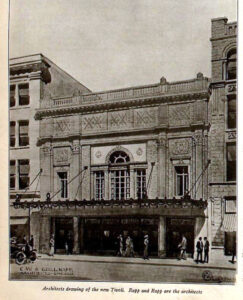 Chattanooga’s Tivoli Theatre, “the Jewel of the South,” opened its doors to the public in 1921 as a 1,750-seat state-of-the-art performance space and is notably regarded as the first public building in the south, and one of the first in the country, to have air conditioning. After decades of changing ownership and experiencing varying levels of usage, the Tivoli Theatre Foundation closed the space in 2022 to begin a full restoration.
“In order to truly improve the Tivoli and the impact it will have on the hundreds of thousands of people we serve annually, a complete renovation and expansion was necessary. The creation of the new Tivoli Performing Arts Center will allow us to feature enhanced and diverse programming, including our new education department and other outreach efforts,” Wilkinson continued. “As the cultural anchor for the performing arts in Chattanooga for over a century, this project will breathe new life into the Tivoli Theatre and create a new, more accessible community venue that will house rehearsal and education spaces, ultimately creating increased access for all Chattanoogans to witness and be a part the magic of the performing arts.”
Upon completion, the performing arts center will include a new 190-seat cinema and studio, an expanded lobby, a restaurant, six bar spaces, additional event areas, and upgrades to all service and mechanical systems, including bathrooms, HVAC, and more. Outside, the iconic Tivoli Theatre marquee will be restored and modernized to light up the city streets once again.
The Tivoli Theatre Foundation will use its new space to expand upon partnerships with organizations like the Chattanooga Symphony & Opera, Chattanooga Ballet, and the Chattanooga Boys Choir. This expansion of programming and partnerships is expected to increase the theatre’s annual patronage by more than 32,000 people, boosting revenue by nearly 60% within five years.
Community-Driven Impact
“The Tivoli Theatre Foundation is incredibly grateful to NTCIC for their long-term commitment to this important project for the Chattanooga community,” said Nick Wilkinson, CEO of the Tivoli Theatre Foundation. “From the start, NTCIC has been unwavering in its help to facilitate tax credit investment necessary to restore and improve these historic landmark buildings. It is a testament to their belief in our organization and mission and we quite literally could not commence such a transformative project without them.”
NTCIC’s involvement helped to ease the Tivoli Theatre Foundation capital campaign burden and ensure low-cost access to performances and programming for low-income families. The Tivoli Theatre Foundation has raised over $20 million so far through a successful capital campaign, and nearly $12 million in PACE financing is supporting energy-efficient upgrades to the building.
“The Tivoli Foundation has done amazing work creating a space for the people of Chattanooga to enjoy the theatre arts, while simultaneously serving their community and investing in the future of their local students,” says David Clower, CEO of NTCIC. “NTCIC is proud to have played a part in the restoration of this iconic theatre, ensuring that it remains a center of arts and culture for generations to come.”
When the Tivoli Theatre reopens its doors, visitors are sure to be impressed not only by the state-of-the-art upgrades and expansion of the facility, but by the mission-driven goals of the Tivoli Theatre Foundation and its commitment to making performing arts education accessible to all of Chattanooga’s youth.
Click here to learn more about the historic of the building and its next chapter
About NTCIC
The National Trust Community Investment Corporation (NTCIC), a subsidiary of the National Trust for Historic Preservation, is a mission-driven, impact investment asset management firm focused on the adaptive reuse of historic properties and renewable energy solutions across the country. Founded in 2000, NTCIC makes transformational impact investments in low-income & disinvested communities, promoting a brighter more equitable future by revitalizing historic properties and expanding our nation’s renewable energy accessibility through innovative community development & tax credit investment strategies.
About The Tivoli Theatre Foundation
The Tivoli Theatre Foundation was formed by Chattanooga Mayor Andy Berke in 2015 to ensure the sustainability of two city-owned historic sites, The Tivoli Theatre and Soldiers & Sailors Memorial Auditorium, while promoting them as vibrant attractions that add to the quality of life in Chattanooga.
Image Credits: Tivoli Theatre Foundation