



NTCIC’s Historic Tax Credit Investment Supports the $80 Million Mercantile Project
Washington, D.C. – March 25, 2023: The National Trust Community Investment Corporation (NTCIC) is excited to announce the successful financial closing of The Mercantile, an $80 million adaptive reuse project in downtown Cincinnati, Ohio. This project showcases how historic preservation can effectively combat the growing housing crisis by transforming two historic office buildings into much-needed housing in Cincinnati’s urban core. NTCIC provided an equity investment in the $12.7 million in federal Historic Tax Credits (HTCs) to revitalize the historic Mercantile Library Building and Formica Building in the heart of the city.
The project includes a unique combination of two adjacent historic buildings, the 13-story beaux-arts Mercantile Library Building, dating from 1903, and the 13-story high modern Formica Building, built in 1970. Once complete, the revitalized spaces will create market-rate housing and commercial spaces while preserving the historic integrity of both structures.
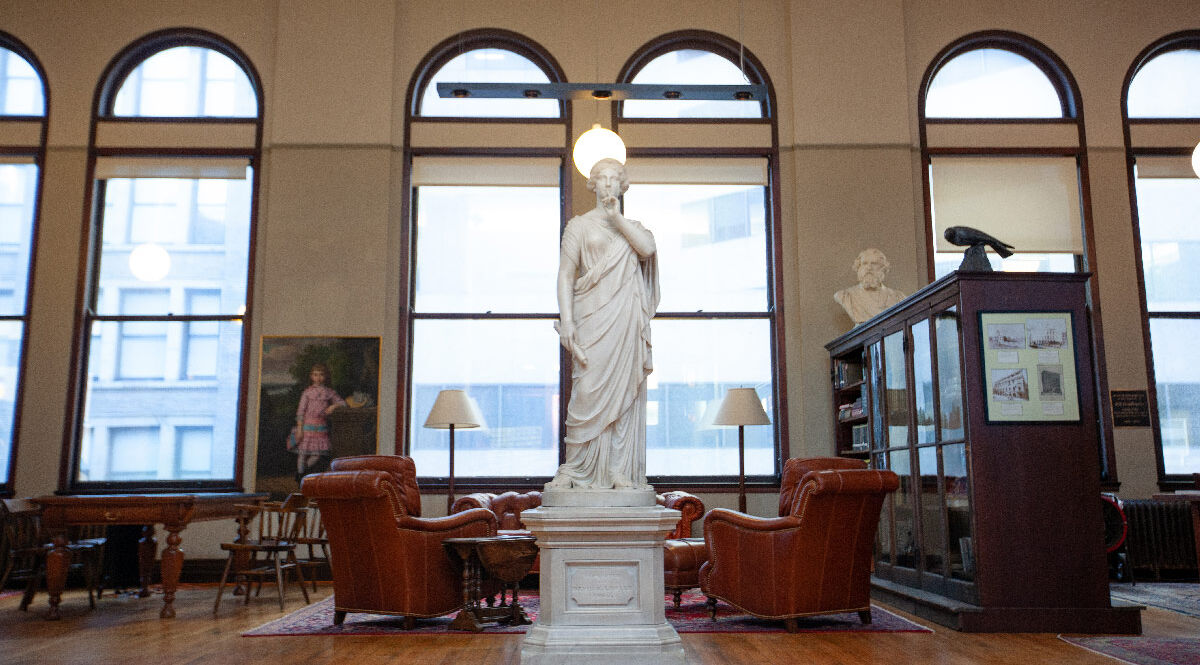
The Model Group, a Cincinnati-based leader in historic preservation, mixed-use urban development, and affordable housing, is the project partner responsible for the revitalization efforts. The Mercantile will feature commercial space on the first two floors, with the remaining floors being adaptively reused for market-rate rental apartments. The exception is the 11th and 12th floors, in which the project will expand and enhance the legendary Mercantile Library, a cultural institution that has been the center of Cincinnati’s literary community for over 200 years.
In the wake of the pandemic, the need for housing has been exacerbated, and the Mercantile project demonstrates the future of adaptive reuse – converting office buildings, which are becoming more and more vacant as many companies shift to remote environments.
“We’re proud to participate in this project that will prove it is possible to convert downtown office buildings, even modernist office buildings, to housing with distinct appeal,” said NTCIC Project Manager Tony Maruca. “Expertise not just in project finance but also design, construction, and operations make the Model Group the ideal steward of both our investment and these treasured historic buildings.”
The Mercantile project highlights the challenges and successes of office conversions, particularly in the case of the Formica Building, a modern office building from the 70s. The Model Group, an innovative partner in this project, has demonstrated the ability to envision new uses for a contemporary office building while respecting its historic character.
This transformative project will contribute to the ongoing revitalization of downtown Cincinnati, stimulating economic growth and attracting new investment. NTCIC’s financing, combined with traditional debt, sponsor equity, state HTCs, the recently created Ohio Transformational Mixed-Use Development (TMUD), and Ohio Opportunity Zone financing, will help ensure successful project completion.
Click here to read more about the project development.
About National Trust Community Investment Corporation (NTCIC)
NTCIC is an industry leader in providing investment capital, asset management, and innovative financing solutions for historic preservation and community development. Since its inception, NTCIC has contributed to the rehabilitation of more than 22 million square feet of historic real estate, creating nearly 80 thousand jobs and generating more than $2 billion in project financing.
Historic Illinois Building will Become InterContinental Hotel with Historic Tax Credit Investment
WASHINGTON, DC, March 30, 2023 – The National Trust Community Investment Corporation (NTCIC) is excited to announce the successful financial closing of the Illinois Building, an iconic office building located in the heart of the Mile Square business district of Indianapolis, Indiana. The revitalization project, led by Keystone Group, a development, construction, property management, and investments company specializing in transformational mixed-use projects, will transform the building into a 170-key full-service luxury InterContinental hotel and restaurant space. NTCIC provided an equity investment in federal Historic Tax Credits (HTC) generated by the preservation efforts.
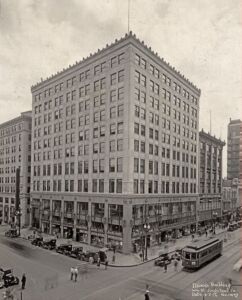
Historic Origins
Constructed in 1926, the Illinois Building was designed by the renowned architectural firm Rubush & Hunter, who were responsible for several iconic landmarks in Indianapolis, such as the Masonic Temple, City Hall, Circle Theater, Indiana Theater, and the Stutz Motor Company complex. Commissioned by the president of what is now Levi Strauss & Company, the building served as luxurious office space for nearly 70 years before becoming predominantly vacant by the mid-2000s. Indiana Landmarks listed the building on its 10 Most Endangered list in 2006, spurring interest in its revitalization.
The Revitalization of Downtown Indianapolis
Keystone Group will oversee the transformation of the 10-story, 135,004 square-foot Illinois Building into a 170-key luxury InterContinental hotel managed by IHG. The project will retain the two ground-floor restaurants currently occupying and operating the space, add a 2nd-floor hotel restaurant and bar, and create a rooftop bar and venue.
“The restoration of the Illinois Building is a testament to our commitment to preserving the architectural heritage of downtown Indianapolis,” said Ersal Ozdemir, Keystone Group CEO. “With the transformational development of this long-vacant historic treasure, we are not only reinvigorating the central business district but also attracting more activity and fostering a vibrant, thriving urban core that benefits residents and visitors alike.”
NTCIC’s Historic Support
To facilitate the restoration of the Illinois Building, NTCIC financed federal Historic Tax Credits generated by the project through its Climate Impact and Revitalization Fund. NTCIC provided underwriting and transaction management services and will provide asset management services through the HTC compliance period.
“We are proud to collaborate with Keystone Group for the Illinois Building restoration, who have demonstrated exceptional stewardship, commitment to quality preservation, and dedication to the local community,” said Amanda Bloomberg, NTCIC’s Senior Acquisition Manager. “Their track record of thoughtful development reinforces our confidence in the project’s potential to make a lasting impact on downtown Indianapolis.”
The conversion of the historic downtown Illinois Building into a hotel exemplifies the shift of companies to more remote and flexible work arrangements and a reduction in the demand for traditional office spaces. This trend has led to an increased interest in repurposing these historic spaces into other types of properties, such as hotels, housing, and retail, which can cater to the evolving needs of urban centers.
Written by Tim O’Donnell of the National Trust for Historic Preservation
In its heyday, the Crescent Corset Company employed more than 700 women, many of them Italian immigrants, at a factory on South Main Street in Cortland, New York. The large industrial brick building, built in multiple stages starting in 1923, quickly became an anchor for the small city, which sits between Ithaca and Syracuse.
They came up with a plan to convert the factory into a mixed-used complex, believing there was demand for both residential and commercial units. The National Trust Community Investment Corporation (NTCIC) supported the companies with state and federal historic tax credit equity, which Lockwood says was necessary for getting the adaptive reuse project off the ground.
“In Cortland, which is 15,000 to 20,000 people, you can’t talk to too many people [whose] grandmother didn’t work there, or their sister, or their aunt,” said Ben Lockwood, president and CEO of Housing Visions, the nonprofit developer that has helped transform the rundown building into a vibrant commercial and residential space over the past several years.
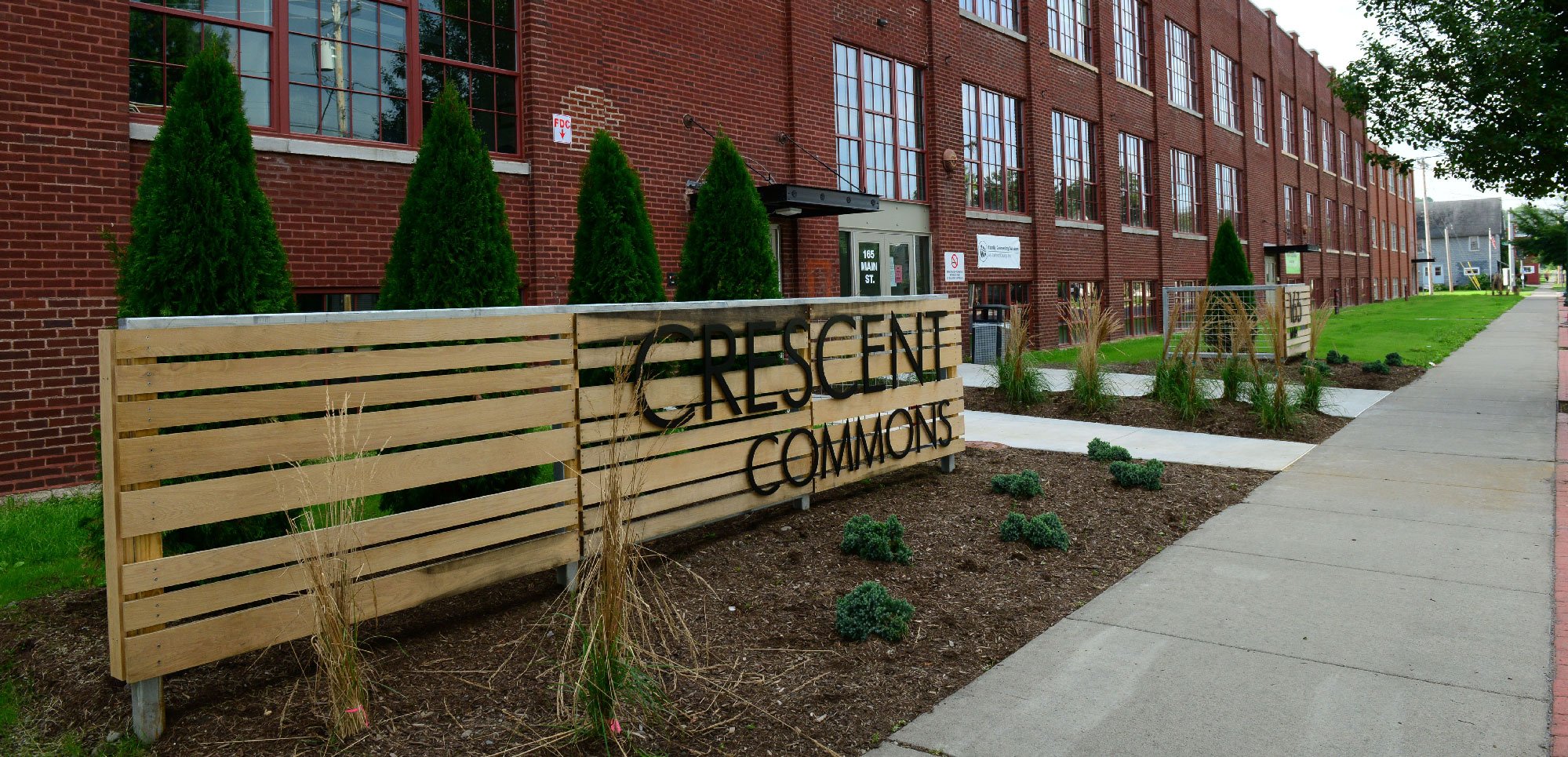
The saga of the Crescent Corset Company factory, as it was formerly known, is similar to that of many other manufacturing sites in American cities during the second half of the 20th century. Over the years, activity within the building slowly declined until it became vacant, and a once proud structure had become an eyesore.
But the factory’s fate changed when Housing Visions partnered with David Yaman Realty Services, a local firm. Together, they produced an adaptive reuse plan that brought the former factory back to life, once again making it a keystone in Cortland.