



Historic Tax Credits
$12 Million
Federal HTCs

Total Project Cost
$77 Million

Project Partner
Model Group

Impact
Economic Development
History
A 10,000 Year Lease
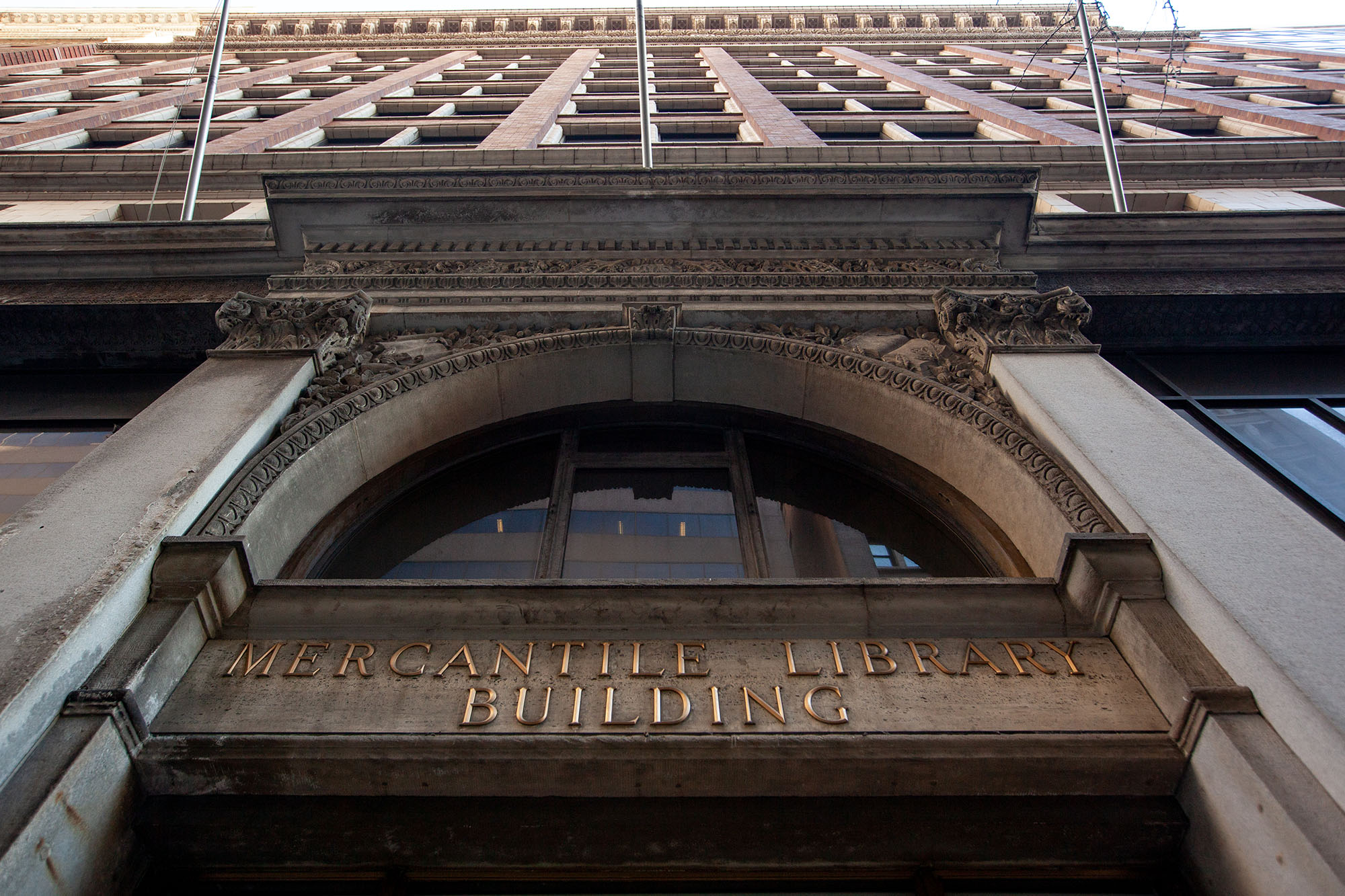
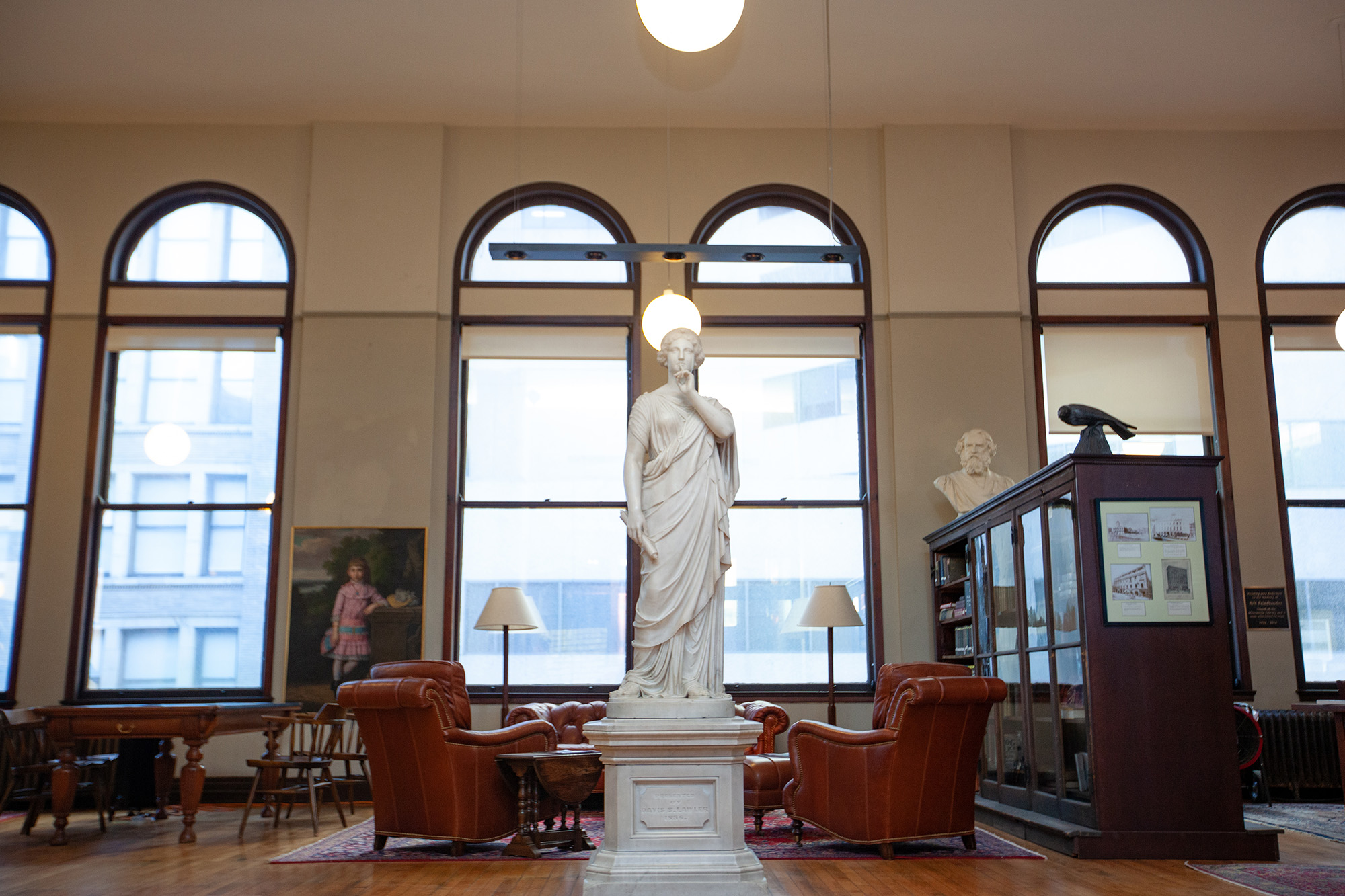
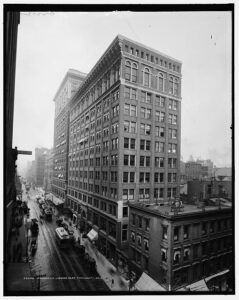 The Mercantile Library Building and the Formica Building have rich histories that are deeply intertwined with Cincinnati’s architectural and cultural heritage. The Mercantile Library was originally established in 1835 by a group of young men who pooled their resources to collect books, art, and host prominent speakers and authors. Over the years, the library has welcomed renowned figures such as Ralph Waldo Emerson, Herman Melville, and Harriet Beecher Stowe. As the collection grew to nearly 2,000 books, the need for a dedicated space led to the construction of the Mercantile Library Building at 414 Walnut Street in 1904. The building was designed by Joseph G. Steinkamp & Brother and was developed by Thomas Emery Sons, who contributed to the development of several skyscrapers in Downtown Cincinnati during the early 20th century. The building featured commercial space on the first floor and office space on the floors above. The 11th and a portion of the 12th floor were custom designed to house the Mercantile Library.
The institution has a perpetually renewable 10,000-year lease issued by Cincinnati College, thanks to the support provided by the men of the Mercantile Library Association after the college’s structure burned in 1845. The Mercantile Library Building was placed on the National Register of Historic Places in 2021.
The Formica Building, located at 120 East Fourth Street, along with the connected Crystal Arcade and Contemporary Arts Center at 255 East Fifth Street, were developed by Towne Properties and designed by Harry Weese & Associates of Chicago, a firm renowned for designing the Metro stations in Washington, DC. Completed in 1970, the Formica Building was constructed with travertine, glass, and bronze, showcasing modern, Miesian, and post-modern elements. The design incorporated elements from the neighboring Mercantile Library Building, such as eliminating the band of travertine between the 11th and 12th floors to mimic the double-height library. The Contemporary Arts Center (CAC) was housed in the Formica Building from 1970 to 2003, before moving into the newly constructed Lois & Richard Rosenthal Center for Contemporary Art in the spring of 2003.
Today, the Formica Building holds the distinction of being the most recently constructed building in Cincinnati to be listed on the National Register of Historic Places. As both the Mercantile Library Building and the Formica Building undergo an adaptive reuse transformation, their storied pasts will contribute to the revitalization of Cincinnati’s urban core and serve as a testament to the city’s architectural and cultural legacy.
Revitalization Efforts
Adaptive Reuse
The Mercantile and Formica buildings in downtown Cincinnati are set to undergo a remarkable transformation that will breathe new life into these historic landmarks. Upon completion, the mixed-use community will be rebranded as “The Historic Mercantile Building,” with the residential component as “Merc & Mica,” featuring 156 luxury rental apartments and over 76,000 square feet of commercial space. This exciting development will showcase the distinct eras of each building while catering to the modern, urban lifestyle.
NTCIC & Progress
Project Financing
To support the project completion, NTCIC was the primary project underwriter and sourced financing for the $12.7 million in federal Historic Tax Credits generated by the project. Additional project financing included traditional debt, sponsor equity, state Historic Tax Credits, TMUD credits, and Ohio Opportunity Zone Tax Credit financing.
The project is spearheaded by the Model Group, a recognized leader in historic preservation, mixed-use urban development, senior living communities, and affordable housing. Based in Cincinnati, the group
is responsible for several high-profileand award-winning historic preservation initiatives, such as the Dayton Arcade and the Jobs Café at Findlay Market, for which NTCIC provided New Markets Tax Credit allocation and HTC financing in 2018.
The project will also be utilizing the recently created Transformational Mixed-Use Development credit, a new incentive in Ohio that provides tax credits for projects that will be a catalyst for future development in their area.
Connect with Us
Curious About How Historic Tax Credit Investments Drive Real Impact?
Kandi Jackson leads tax credit investment activities with deep expertise in project finance, equity structuring, and compliance. When you speak with Kandi, expect clarity, honesty, and a clear roadmap for how your next investment can work in your portfolio.

Check Out Similar Projects Here
Browse all projects
Want to Discuss Your Next Project? Talk With Our Team Today.
We bring clear insight, deep experience, and strategic focus to every project—whether you're structuring complex capital or shaping long-term, legacy-driven development.